First Ship Seized For Undersea Cable Cutting Since NATO’s Baltic Sentry Began
Finnish authorities have seized a Turkish-owned cargo vessel suspected of damaging an undersea telecommunications cable running from Helsinki to Talinn, Estonia. This marks the first incident involving suspected sabotage of critical undersea infrastructure in the region since the creation of a NATO task force nearly a year ago to defend those cables, a NATO official told us.
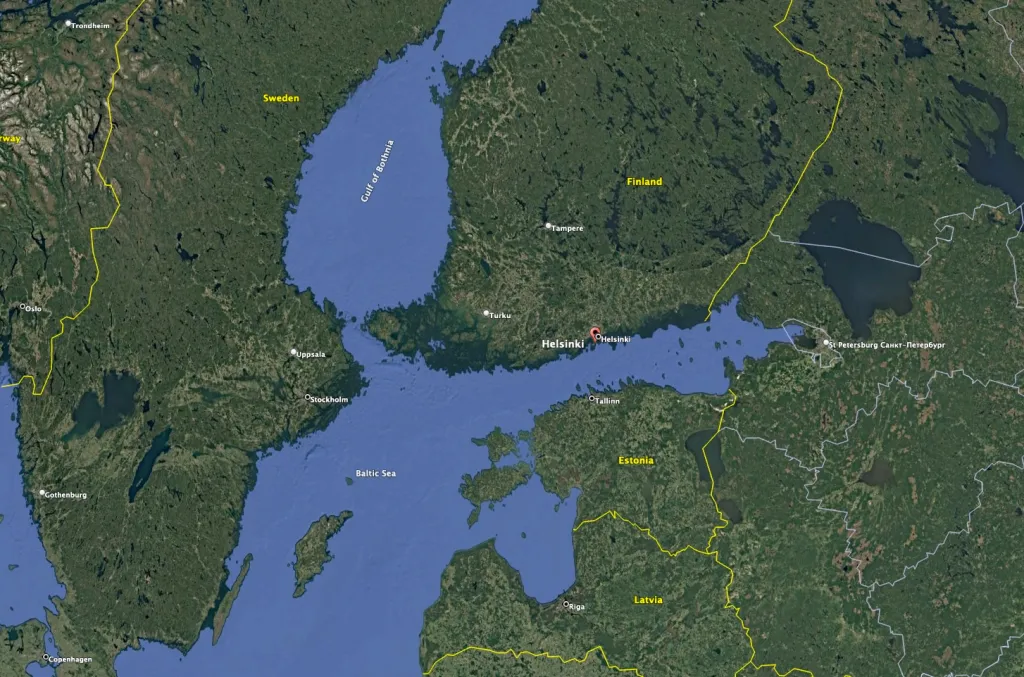
The situation began early Wednesday local time after the Finnish Elisa telecommunications company “detected a fault in its telecommunications cable between Helsinki and Tallinn,” according to the Finnish Border Guard. The cable runs for about 40 miles between the two nations under the strategically important Gulf of Finland, which is bordered by Russia, Finland and Estonia and leads to the Baltic Sea. The damage occurred somewhere in Estonia’s exclusive economic zone (EEZ), officials claim.
“Elisa reported the matter to the Border Guard’s command center. The Border Guard immediately began investigating the damage to the critical underwater infrastructure.”
The Border Guard’s offshore patrol vessel Turva and a helicopter found the suspect ship, a St. Vincent Grenadines-flagged general cargo vessel named Fitburg, inside Finland’s exclusive economic zone, officials explained. The vessel is “suspected of causing the damage to the cable through its operations,” the Border Guard added.
The vessel was enroute from St. Petersburg, Russia to Haifa, Israel, according to the MarineTraffic ship tracking site.
“The vessel’s anchor chain was found to be in the sea,” the Border Guard noted, adding that it “asked the vessel to stop and raise the anchor chain.”
The Fitburg was then ordered to move to Finnish territorial waters, where Finnish authorities “took possession of the vessel as a joint operation.”

“Finnish authorities have inspected the vessel suspected of causing the cable damage in the Gulf of Finland,” Finnish President Alexander Stubb stated on X. “Finland has prepared for various security challenges and we respond to them in the manner required by the situation.”
Responsibility for the case has since been transferred from the Gulf of Finland Coast Guard to the Helsinki Police Department.
“The police have been in contact with the Prosecutor General’s Office and the Prosecutor General has issued a relevant indictment,” the Border Guard stated. “The police are currently investigating the events under the criminal charges of suspected aggravated damage, suspected attempted aggravated damage and suspected aggravated interference with telecommunications.”
The Fitburg is owned and operated by the Turkish Albros Shipping & Trading company, according to BalticShipping.com. We reached out to the company for more details about the incident and will update this story with any pertinent details provided.
As of Wednesday evening local time, Finnish authorities had yet to offer a motive for the cable damage and did not assign any blame beyond the ship itself. However, the damage occurred amid growing concerns about Russian hybrid warfare against NATO nations. That is just below the threshold of armed conflict and comes at a time of mounting tensions between Moscow and the alliance as the war in Ukraine drags on.
Almost exactly a year ago, Finnish authorities seized the Russian-linked oil tanker Eagle S, accusing it of dragging its anchor on the sea floor to break an underwater cable running from Finland to Estonia. The ship was later found to be full of spy equipment. You can see the Eagle S being seized in the following video.

Police in Finland say Eagle S crew detained as Estlink-2 cable damage probe continues
That incident and a spate of others led NATO to stand up Baltic Sentry on Jan. 14. It is an effort “to deter any future attempts by a state or non-state actor to damage critical undersea infrastructure there,” according to NATO in a statement at the time.
Baltic Sentry has deployed warships and aircraft from several nations to help deter sabotage incidents. In addition, a U.K.-led 10-member consortium of northern European nations called the Joint Expeditionary Force (JEF) reactivated an AI-based system to track suspicious ships in these waters.
A NATO official we spoke with on Wednesday declined to comment on the specifics of today’s telecommunications cable break. However, he did reiterate that Baltic Sentry was created to keep incidents like this from happening
“Since Baltic Sentry began in early 2025, and before this current incident, still under investigation, there have been zero incidents of maligned damage to sea cables in the Baltic Sea,” a NATO official told us Wednesday morning.

“Baltic Sentry plays a role in our deterrence efforts along with expedient responses when suspicious incidents occur,” the official added. “In this case, NATO is supporting Finland with analysis and information exchange from our NATO shipping center to assist Finland with their response.”
“These incidents are more broadly actioned beyond just regional navies and militaries,” the NATO official noted. “As in the case of the current incident, this is a national and local police investigation led by national authorities.”
There is still much we don’t know about this incident. However, regardless of whether this was intentional or not, the episode again highlights the precarious nature of important undersea cables.
Contact the author: howard@thewarzone.com