Safari

I stayed in bucket list safari campsite surrounded by wildlife

I LISTEN in pitch darkness as a creature scuttles from one end of my canvas roof to the other.

Huntsman spider? Giant goanna lizard? A giant goanna lizard-sized spider? My mind is racing.

Sydney Opera House surrounded by the harbour and Royal Botanic GardenCredit: Destination NSW
Paperbark Camp is an ­eco-glamping retreat 120 miles south of Sydney, tucked away in dense woodlandCredit: Supplied

Finally Emma, our Australian host, answers my panicked WhatsApp. “It’s a possum, Stew. No one ever died from a possum.”

Reassured, I snuggle back down under the covers and drift off to sleep with the soundtrack of the Australian forest echoing around me.

I’m staying at Paperbark Camp, an ­eco-glamping retreat 120 miles south of Sydney, tucked away in dense woodland on the banks of Currambene Creek.

My “pod” — essentially a wooden base with canvas roof and walls — has a sumptuous double bed, a deck with chairs and tables to chill while watching the exotic birdlife and kangaroos, and a delightful bath and shower room at the rear that is fully open to the forest.

WAIL OF A TIME

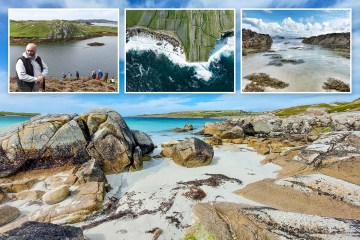
I drove Irish Route 66 with deserted golden beaches and pirate-like islands


SUN UP

8 holiday destinations Sun Travel team are eyeing up for March with flights from £13

And, yes, I did check under the loo seat for spiders!

The camp is our base for a week exploring the delights of rural New South Wales.

Yes, Sydney is a fantastic city but what if you want a ­little more adventure and authenticity?

It was certainly a chance to get close to the famous Aussie wildlife, with possums trotting up to the bar terrace and mobs of kangaroos grazing just yards away in the paddocks surrounding the camp.

Having honed our canoeing skills with the camp’s boats on the delightfully placid creek, we headed up the road to Kangaroo Valley for a paddle with a twist.

Here, we had two canoes lashed together either side of a picnic table, with two bottles of local fizz chilling and freshly-made hors d’oeuvres. How civilised.

The site is on the banks of Currambene Creek and when you’re bushed relax inside an eco podCredit: Supplied

Our sedate hour-long paddle up the river surrounded by steep tree-covered mountainsides in the morning sunshine was beautiful, with guide Travis acting as wildlife spotter and giving us an education on the ways of the Aussie bush.

Every stop we made shed more fascinating light on the history of the country’s indigenous people and each stop revealed more of their mind-blowing bushcraft and knowledge of the land.

Up in the Blue Mountains — a Unesco world heritage site — local tribal elder “Uncle Dave” gave us a warm welcome to Scenic World and an enthralling introduction to Aboriginal history.

Whether out in the bush or in Sydney, a tour encompassing Australia’s indigenous culture is well worth the time, with more than 300 distinct “nations” living side by side in harmony for thousands of years, each with their own spiritual connection to the country around them.

Uncle Dave had our group enthralled as he talked us through the customs and folklore of the breathtaking landscape around us from a cable car 800ft above the forest canopy.

The same was true as we toured the mangroves and woodlands of the beautiful coastal town of Jervis Bay.

Up the creek with a paddle in the canoeCredit: Supplied

Here, our guide Jacob fashioned a soothing ointment for insect bites from the sap of a bracken fern he’d pulled from the ground in front of us.

No plant goes to waste, he explained, pointing out some of the various unique uses for the wide range of trees and grasses around us.

The plentiful mangrove trees and their twisted branches are perfect for making boomerangs, for example.

If the idea of walking through a coastal forest with stunning views of the ocean is your thing, the 90-minute trek from Hyams Beach to Greenfield is well worth a look, with miles of beautiful white sand — the whitest in the world, the locals claim — and crystal-clear waters.

There are of course snorkelling spots in the area, and a quick boat trip out into the bay will almost guarantee a sight of dolphins, with migrating whales also around from May to November every year.

Jervis Bay’s beaches are also famous for stunning night-time displays of bioluminescence — in which a plankton “bloom” in the water glows in the dark — but that’s not an experience you can plan for!

Snorkelling in Currambene CreekCredit: Supplied

The local indigenous people’s name for Jervis Bay translates as “Bay of Plenty”, and the seafood on offer at renowned local watering hole The Huskisson Hotel certainly reflects that — a perfect way to refuel after a busy day and watch the sun set.

Exploring the stunning countryside of New South Wales will obviously require a car, and the average cost of hiring in Sydney is £45 a day.

And remember, they drive on the left Down Under so it’s easy for us Brits!

Back in the pitch darkness of the forest at Paperbark Camp, I’m woken from my well-earned slumber by a series of shrieks that sound not unlike the Demogorgon from Stranger Things.

I text Emma in the pod next door: “Did you hear that?”

As my ears pick up a rustling in the undergrowth just beyond my deck, her reply comes back: “If I told you that was just a possum, would you believe me?”

I don’t — but at least I know it can’t possibly be a 2ft Huntsman Spider.

A dolphin watching cruise in Jervis BayCredit: Supplied

Source link

Go off grid in plush safari tents & stargaze for days on this island gem

STARGAZE for days at this island gem, says Associate Editor Sarah Barns.

Tent-atively escape with the fam to Glamping The Wight WayCredit: Supplied by Glamping – The Wight Way

The Pad

With a slipper bath, outdoor shower and a cloud-like king-size bed, Glamping The Wight Way’s four plush safari tents are ideal for giving off-grid life a go.

Set in lush meadows between Yarmouth and Freshwater, expect solar-panel lighting and USB charging points, plus three spacious bedrooms, a sofa bed, a well-equipped kitchen and a wood burner.

Glamping The Wight Way’s four plush safari tents are ideal for giving off-grid life a goCredit: Supplied by Glamping – The Wight Way

We loved toasting marshmallows on the fire bowl overlooking the River Yar – one of the best paddleboarding spots in the UK – and gazing at the starry night skies.

There are also countryside walks, cycling trails and horse-riding opportunities, as well as binoculars in the dresser for spotting red squirrels and an Isle of Wight edition of Monopoly.

Nab the swing chair and watch the kids run around with the rounders set as the fairy lights twinkle.

WAIL OF A TIME

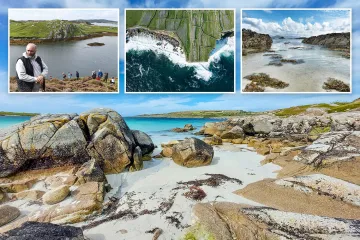
I drove Irish Route 66 with deserted golden beaches and pirate-like islands


RAIN, RAIN? GO AWAY

Six of the best holiday destinations to book for some quick Vitamin D

Explore

The golden beaches at Freshwater Bay, Compton Bay and Colwell Bay are nearby, and you’re only five minutes’ drive from Tapnell Farm Park with its go-karts, jumping pillows, sledge slides, soft play and an array of animals.

The Wallaby Walkabout, where you get to feed the marsupials, is a particular hit.

Feed the wallabies at Tapnell FarmCredit: Supplied by Tapnell Farm

Entry costs from £8 per adult, £10 per child (Tapnellfarm.com).

Robin Hill is a 30-minute drive away, offering 88 acres of adventure, with 35 rides, treetop walks, climbing walls, mini diggers and electric boats.

The exhilarating quarter-mile downhill toboggan ride will have even the big kids screaming.

Entry costs from £16.49 per person over 1m (Robin-hill.com).

No trip to the island is complete without a visit to The Needles, just 10 minutes’ drive from your tent.

Take a breathtaking chairlift down to Alum Bay beach to see the famous cliffs up close, from £6 one way, then putt your way around the 11-hole Jurassic Adventure Golf course or hop on the traditional horse carousel (Theneedles.co.uk).

Refuel

Follow in Kate Winslet and Benedict Cumberbatch’s footsteps and dine at The Hut in Colwell Bay, a beachfront restaurant dubbed the Chiltern Firehouse of the Solent.

The restaurant’s branded Jeep will pick you up in Yarmouth harbour, so you can enjoy a glass (or three) of Mirabello rosé, £37 a bottle.

Flying high over Alum BayCredit: Supplied Isle of Wight Tourist Board

The seafood is all sourced from the south coast – we devoured lemon sole, £36, with fries and tomato salad, £6 each, followed by banoffee pie, £10 (Thehutcolwell.co.uk).

Harbourside restaurant The Terrace in Yarmouth is another popular spot.

Order the divine Cornish cod with pea fritter and potato rosti, £27, and the rich dark chocolate mousse with salted chocolate crumble, £11 (Theterraceiow.co.uk).

For quick bites, Off The Rails, set on the old railway line in Yarmouth, does a cracking bacon sandwich, £8 (Offtherailsyarmouth.co.uk).

And PO41 Coffee House serves up island-brewed teas, home-made cake and delicious picnic essentials – we loved the orange and almond loaf, £8.75 (Po41coffeehouse.com).

Book It

Two-night stays for up to eight people at Glamping The Wight Way cost from £650 (Glampingthewightway.co.uk).

Two-night stays for up to eight people at Glamping The Wight Way cost from £650Credit: Supplied by Glamping – The Wight Way

Source link

New 1,000-acre British safari with bears, lynx and wolves is revealed in plans for top tourist spot

A MAJOR new safari park could be coming to the East Midlands.

The “ambitious” planning proposal would see bears, wolves, and even lynxes arriving to a 1,000-acre woodland.

Illustration of the proposed Wild Rutland attraction site showing farmland, parkland, and woods between Oakham bypass, Rutland Water, and Burley Wood.
The site would hold bears, wolves, and reptilesCredit: Gillespies

Wild Rutland Partnership hopes to open a new nature conservation and wildlife park in Rutland, near Leicester.

If given the green light, Wild Rutland would house Eurasian brown bears, lynxes and wolves inside holding pens, with animal lovers able to see the mammals from various different viewing platforms.

The proposed safari park would be built on a huge site stretching from Burley Wood to Oakham bypass.

A barn already on the land is expected to be refurbished to house small reptiles and insects.

PLENTY OF EGRETS

I went on Britain’s most unusual safari with whales, porpoises and swifts


ROAR & SNORE

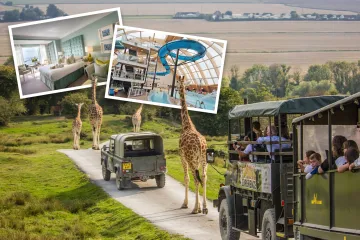
English safari lodges where you can sleep with LIONS gets green light

Plus, Wild Rutland is also seeking approval of its Visitor Village.

This would consist of a main reception area with a shop, a café, a restaurant, an indoor play area, as well as an education and exhibition building.

There will also be 22 self-catering guest lodges and a communal dining area for visitors who wish to stay the night.

A decision by the council is expected to be made in May.

CEO of Wild Rutland, Hugh Vere Nicoll, said: “Wild Rutland aspires to be an exemplar model of conservation-led ecological-tourism – one that restores heritage landscapes, reconnects people with nature and sets a benchmark for sustainable land management in the UK.

“Wild Rutland is driven by a team with a deep knowledge and respect for the site and the local area, working with experts in the fields of restoration, conservation, education, tourism, attraction development and management.”

Illustration of the proposed Wild Rutland attraction with buildings, boardwalks, and people in a natural landscape.
Planning permission has been requested to build a 1,000 acre safari parkCredit: Gillespies

Source link

A first look at Elephant Valley inside San Diego Zoo Safari Park

Before we see elephants at Elephant Valley in the San Diego Zoo Safari Park, we come face to face with destruction, only the wreckage is beautiful. A long, winding path takes guests around and under felled trees. Aged gray tree hunks form arches, for instance, over bridges that tower over clay-colored paths with hoof prints.

The design is meant to reorient us, to take us on a trail walked not by humans but traversed and carved by elephants, a creature still misunderstood, vilified and hunted for its cataclysmic-like ability to reshape land, and sometimes communities.

  • Share via

“It starts,” says Kristi Burtis, vice president of wildlife care for the Safari Park, “by telling the story that elephants are ecosystem engineers.”

Elephant Valley will open March 5 as the newest experience at the Escondido park, its aim to bring guests closer than ever to the zoo’s eight elephants, which range in age from 7 to 36, while more heavily focusing on conservation. The centerpiece of the 13-acre-plus parkland is a curved bridge overlooking a savanna, allowing elephants to walk under guests. But there are also nooks such as a cave that, while not previewed at a recent media event, will allow visitors to view elephants on their level.

In a shift from, say, the Safari Park’s popular tram tour, there are no fences and visible enclosures. Captive elephants remain a sometimes controversial topic, and the zoo’s herd is a mix of rescues and births, but the goal was to create a space where humans are at once removed and don’t impede on the relative free-roaming ability of the animals by keeping guests largely elevated. As an example of just how close people can get to the herd, there was a moment of levity at the event when one of the elephants began flinging what was believed to be a mixture of dirt and feces up onto the bridge.

An aerial view of Elephant Valley at the San Diego Zoo Safari Park, home to eight elephants.

An aerial view of Elephant Valley at the San Diego Zoo Safari Park, home to eight elephants.

(Allen J. Schaben / Los Angeles Times)

An elephant, viewed closely from the side.

“Our guests are going to be able to see the hairs on an elephant,” says Kristi Burtis, vice president of wildlife care for the Safari Park.

(Allen J. Schaben / Los Angeles Times)

“Our guests are going to be able to see the hairs on an elephant,” Burtis says. “They can see their eyes. They can see the eyelashes. They can see how muscular their trunks are. It’s really going to be a different experience.”

Elephant Valley, complete with a multistory lodge with open-air restaurants and bars, boasts a natural design that isn’t influenced by the elephant’s African home so much as it is in conversation with it. The goal isn’t to displace us, but to import communal artistry — Kenyan wood and beadwork can be found in the pathways, resting spaces and more — as a show of admiration rather than imitation.

“We’re not going to pretend that we’re taking people to Africa,” says Fri Forjindam, now a creative executive with Universal’s theme parks but previously a lead designer on Elephant Valley via her role as a chief development officer at Mycotoo, a Pasadena-based experiential design firm.

“That is a slippery slope of theming that can go wrong really fast,” she adds. “How do we recognize where we are right now, which is near San Diego? How do we populate this plane with plants that are indigenous to the region? The story of coexistence is important. We’re not extracting from Africa, we’re learning. We’re not extracting from elephants, we’re sharing information.”

But designing a space that is elephant-first yet also built for humans presented multiple challenges, especially when the collaborating teams were aiming to construct multiple narratives around the animals. Since meetings about Elephant Valley began around 2019, the staff worked to touch on themes related to migration and conservation. And there was also a desire to personalize the elephants.

“Where can we also highlight each of the elephants by name, so they aren’t just this huge herd of random gray creatures?” Forjindam says. “You see that in the lodge.”

Two of eight elephants eat during an Elephant Valley preview.

Two of eight elephants eat during an Elephant Valley preview.

(Allen J. Schaben / Los Angeles Times)

That lodge, the Mkutano House — a phrase that means “gathering” in Swahili — should provide opportunities for guests to linger, although zoo representatives say reservations are recommended for those who wish to dine in the space (there will also be a walk-up, to-go window). Menus have yet to be released, but the ground floor of the structure, boasting hut-like roofing designed to blend into the environment, features close views of the elephant grazing pool as well as an indoor space with a centerpiece tree beneath constellation-like lighting to mimic sunrises and sunsets.

Throughout there are animal wood carvings and beadwork, the latter often hung from sculptures made of tree branches. The ceiling, outfitted with colorful, cloth tapestries designed to move with the wind, aims to create less friction between indoor and outdoor environments.

There are, of course, research and educational goals of the space as well. The Safari Park works, for instance, with the Northern Rangelands Trust and Loisaba Conservancy in Kenya, with an emphasis on studying human-elephant conflict and finding no-kill resolutions. Nonprofits and conservation groups estimate that there are today around 415,000 elephants in Africa, and the African savanna elephant is listed as endangered by the International Union for Conservation of Nature.

Two of eight elephants are reflected in a pond while roaming around the grounds during an Elephant Valley preview

Water areas in Elephant Valley have been redesigned with ramps and steps to make it easier for the elephants to navigate. The hope is to inspire play.

(Allen J. Schaben / Los Angeles Times)

Studies of the zoo’s young elephants is shared with the Reteti Elephant Sanctuary in the hopes of delivering care to elephant youth to prevent orphanage. Additionally, the Safari Park has done extensive examination into the endotheliotropic herpes virus. “The data that we collect from elephants here, you can’t simply get from elephants in the wild,” Burtis says.

One of the two entrances to Elephant Valley is outfitted with bee boxes; bees are known to be a natural elephant deterrent and can help in preventing the animals from disrupting crops or communities. To encourage more natural behavior, the plane is outfitted with timed feeders in an attempt to encourage movement throughout the acreage and establish a level of real-life unpredictability in hunting for resources. Water areas have been redesigned with ramps and steps to make it easier for the elephants to navigate.

Visitors are silhouetted while dining at the Mkutano House

The view from Elephant Valley’s Mkutano House, a two-story dining destination in the new space at the San Diego Zoo Safari Park.

(Allen J. Schaben / Los Angeles Times)

With Elephant Valley, Forjindam says the goal was to allow visitors to “observe safely in luxury — whatever that is — but not from a position of power, more as a cohabitor of the Earth, with as much natural elements as possible. It’s not to impose dominance. Ultimately, it needed to feel natural. It couldn’t feel like a man-made structure, which is an antiquated approach to any sort of safari experience where animals are the product, a prize. In this experience, this is the elephant’s home.”

And the resulting feel of Elephant Valley is that we, the paying customers, are simply their house guests.

Source link