protections

Brazil’s Supreme Court to weigh cases that could weaken Amazon protections | Climate News

Brazil’s Supreme Court is set to hear several cases that could reshape protections for the Amazon rainforest, after a mostly conservative Congress overrode several of leftist Brazilian President Luiz Inacio Lula da Silva’s environmental vetoes.

The court will take up the cases on Wednesday, as lawmakers and environmental groups remain divided over how Brazil should balance economic development with environmental protections.

Recommended Stories

list of 3 itemsend of list

Deforestation in the Amazon has fallen to its lowest level in a decade during the first half of 2026. The cases put some of Brazil’s most consequential environmental fights before the country’s top court.

Indigenous land rights

On Friday, Brazil’s Supreme Court began reviewing final motions seeking clarification of a 2025 ruling that rejected the “time limit” thesis. The legal theory, backed by Brazil’s agribusiness lobby, restricts Indigenous land claims to territories occupied or under legal dispute when Brazil’s 1988 Constitution took effect.

The agribusiness caucus argues that a cutoff date would provide legal certainty for landowners. Indigenous groups say it ignores decades of forced displacement and violence that pushed communities from their ancestral lands. Indigenous communities across the Amazon, including the isolated and uncontacted Kawahiva people, could be affected by the ruling.

The justices are considering motions that seek clarification of the court’s ruling, addressing questions about compensation and possible deadlines for completing Indigenous land demarcations.

The soya farming moratorium

On Wednesday, the court will consider a legal fight over the future of Brazil’s soya moratorium, an agreement that barred major traders from buying soya grown on land deforested in the Amazon after 2008.

The agreement has been credited with helping curb deforestation, even as Brazil became an agricultural powerhouse. But states that are major soya producers passed laws in January revoking tax incentives for participating companies, prompting the Brazilian Association of Vegetable Oil Industries (ABIOVE) to withdraw from the moratorium.

Brazil is the world’s largest producer and leading exporter of soya beans. The Ministry of Environment and Climate Change has defended the soya moratorium, saying it helped reduce Amazon deforestation even as Brazil expanded production.

Environmental licensing

The court will also consider on Wednesday a challenge to a new environmental licensing law that took effect in February.

The law fast-tracks approval for projects including mines, highways and industrial plants, prompting environmental groups to warn that it could weaken safeguards in one of the world’s most important ecosystems.

Suely Araujo of the Climate Observatory said the law is already having tangible consequences in the Amazon, citing the paving of a controversial highway and plans to dredge the Tapajos River without adequate prior environmental review.
Source link

U.S. cancels protections for imperiled animals as critics warn of extinctions

The U.S. Interior Department on Friday canceled a rule meant to protect plants and animals that are determined to be threatened with extinction, the latest step by the Trump administration to dismantle key provisions of the landmark Endangered Species Act at the behest of industry.

Instead of receiving automatic protections, imperiled species will need individualized protection plans once they are added to the threatened species list. That’s a potentially lengthy process in which companies could seek exemptions for oil and gas drilling, mining and other development where those species live.

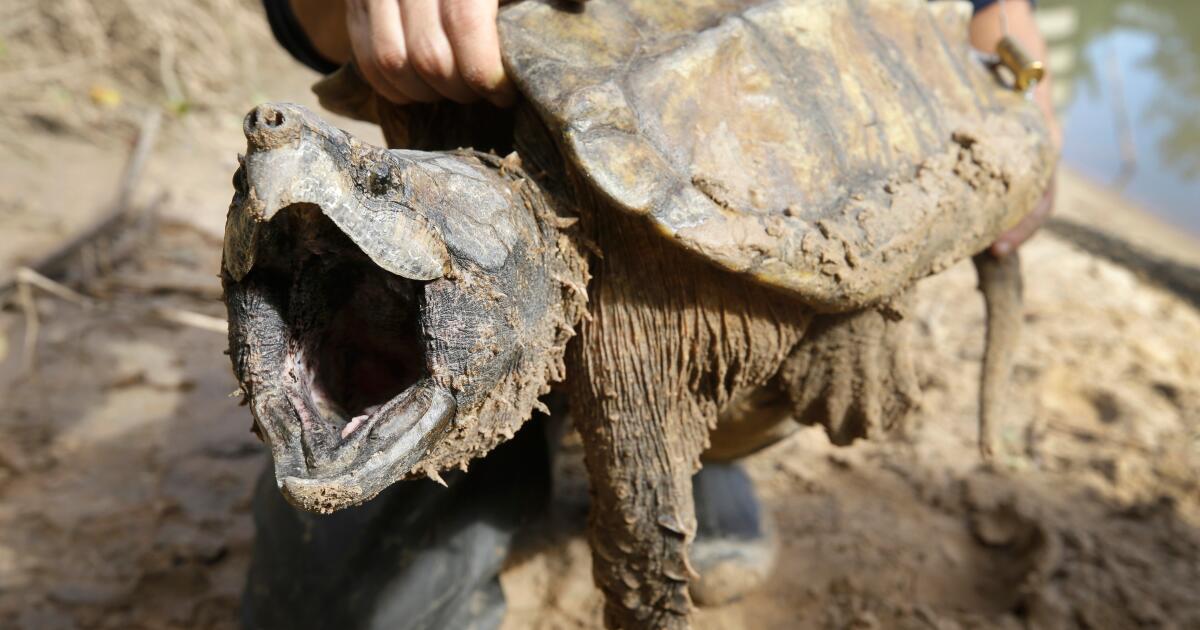
Opponents said it would make it harder to save wildlife awaiting federal protections and in danger of disappearing, such as monarch butterflies and alligator snapping turtles.

Interior Secretary Doug Burgum said in a statement that the Endangered Species Act had been used for too long “to stop almost any new project in America, driving up costs for families, weakening our competitiveness, and undermining our national security.”

“Success should be measured by species recovery and delisting, not by adding more species to the list,” Burgum added.

A second change finalized Friday requires officials to analyze economic effects when deciding whether habitat is critical to a species’ survival. Critics say it gives corporations an opportunity to put their thumb on the scale so officials will allow development in those areas.

“If you’re exempting certain industries that cause habitat destruction, in many instances you’ll be exempting the main threat to those species,” said Noah Greenwald with the environmental group Center for Biological Diversity.

Officials made similar changes during Trump’s first term, but they were reversed under the Biden administration.

The rules that gave what some consider “blanket protections” to threatened species were first adopted for wildlife in 1975 and for plants in 1977.

Two groups, the Rocky Mountain Elk Foundation and the Property and Environment Research Center, sued the Biden administration in 2024 after officials restored the blanket protections rule. They argued the rule unfairly imposed the same restrictions on landowners when a species’ status improves from endangered, which is more dire, to threatened.

That removed incentives for landowners to participate in species recovery, said Jonathan Wood, vice president at the Montana-based research center.

Wood said the Trump administration’s approach allows officials to “better reward progress and encourage proactive conservation.”

There have been no species added to the endangered or threatened lists in Trump’s second term. By comparison, more than 20 species were added in Trump’s first term, and about 60 under President Biden.

About 30 species are currently proposed to be listed as threatened. Besides monarchs and alligator snapping turtles, they include California spotted owls and various snakes, fish, clams and insects.

Changes to government policies for endangered plants and wildlife have come faster and extended further in Trump’s second term than in his first.

The administration in March exempted oil and gas drilling in the Gulf of Mexico from the Endangered Species Act after Defense Secretary Pete Hegseth said environmentalists’ lawsuits threatened to hobble domestic energy supplies as the U.S. wages war against Iran.

A week before the latest rule change, Interior officials sharply narrowed the definition of what constitutes “harm” to a species. The change would allow development in critical wildlife habitat so long as the animals themselves are not immediately killed or injured.

Officials this week sharply reduced the amount of critical habitat in the Rocky Mountains designated for Canada lynx, forest-dwelling wildcats that are threatened by climate change and other pressures.

Also this week, Burgum said in a visit to Montana that the U.S. Fish and Wildlife Service would turn over more management authority for grizzly bears to states where the bruins live. That’s been a long-standing priority for the Republican governors of Wyoming, Idaho and Montana.

The Endangered Species Act is credited with bringing back animals including the California condor, the bald eagle and the American alligator from the brink of extinction.

Burgum noted Friday that 97% of the species that have been given protections still have them. That’s a frustration for Republican lawmakers who say species should be taken off the endangered and threatened lists more quickly once they’ve recovered.

Brown writes for the Associated Press.

Source link

US ends deportation protections (TPS) for Haitians and Syrians | Politics News

NewsFeed

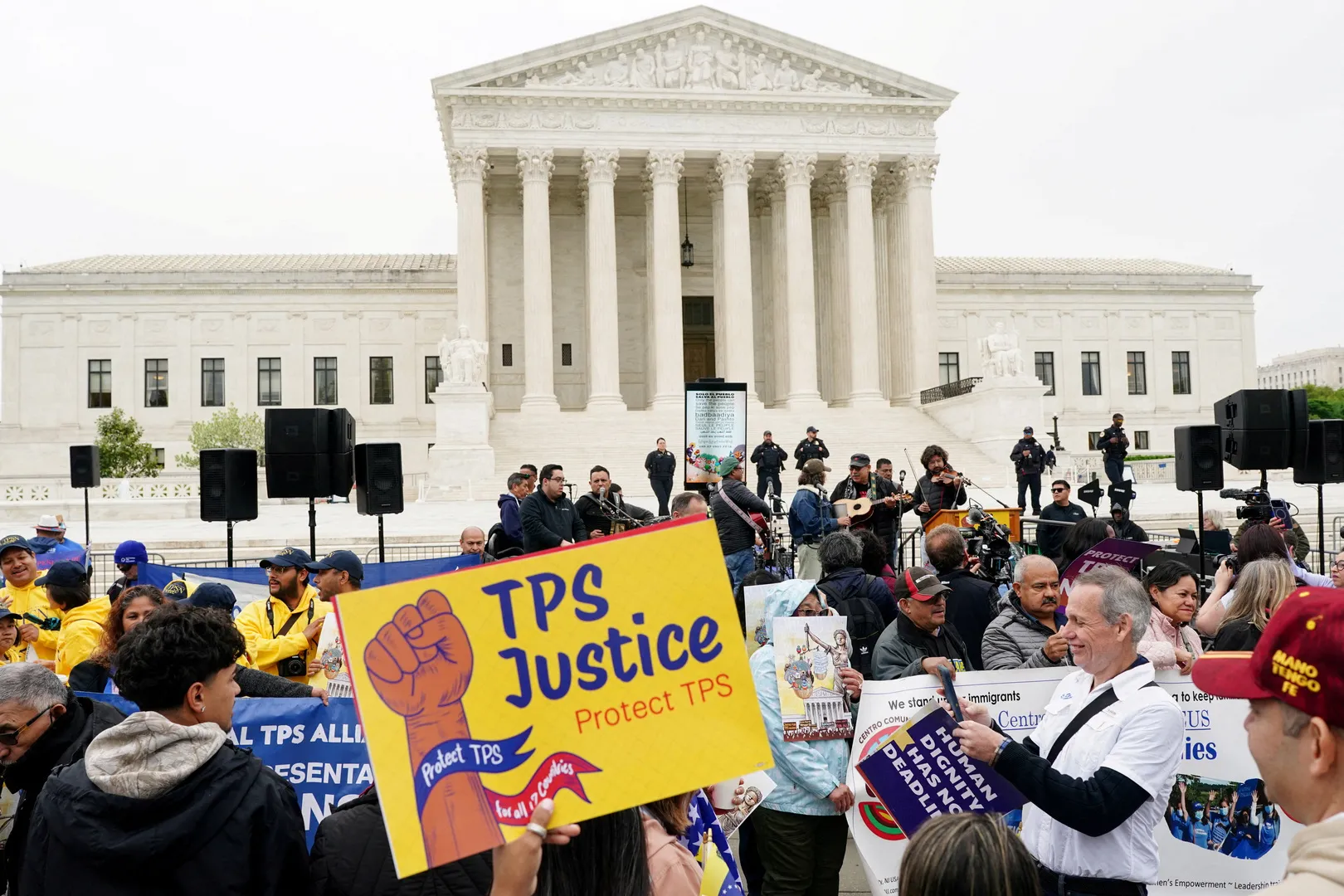
The US Supreme Court has sided with the Trump administration in its bid to end Temporary Protected Status (TPS) for Haitians and Syrians. The ruling allows the policy to take effect before the courts have reached a final decision on its legality.

Source link

Trump administration grants rare TPS reprieve, extending protections for 11,000 Lebanese

The Trump administration has extended protections shielding about 11,000 Lebanese from deportation, allowing them to stay and work in the United States for another six months.

The decision, announced Thursday by the Department of Homeland Security, marked a rare reprieve for people protected by temporary measures that have been harshly criticized by Republicans. The extension comes amid ongoing fighting in southern Lebanon between Israeli troops and Hezbollah fighters.

The decision was automatic, meaning that the administration missed the deadline by which it was supposed to decide on whether to extend the measure called Temporary Protected Status for Lebanese people living in the U.S. who are covered by the program. By statute, the status automatically extends for six months if the department misses the deadline.

It was an unusual outcome for an administration that has canceled the protections that had covered people from 13 countries, including Venezuela, Haiti, Nicaragua and Syria from deportation.

TPS was created by Congress in 1990 to prevent deportations to countries suffering from natural disasters or civil strife, giving people authorization to work in increments of up to 18 months. More than 1 million immigrants from 17 countries were protected by TPS at the beginning of the Trump administration, after the Biden administration greatly expanded its use.

The program has been at the center of a controversy.

Republicans and critics of TPS argue that the program and its protections deviate from their original temporary intent, taking on a quasi-permanent character when extended. Its defenders assert that it is a fundamental humanitarian program that prevents vulnerable individuals from being forced to return to dangerous conditions.

The DHS notice said that former DHS Secretary Kristi Noem and current Secretary Markwayne Mullin, who has led the department for the last two months, “were unable to make an informed determination on Lebanon’s TPS designation.”

The extension allows existing beneficiaries to keep their protections through Nov. 27, “if they still meet the eligibility requirements for TPS,” according to the notice. The work permits that were already issued for Lebanese TPS holders will be valid until the same day.

This is the second time the Trump administration has automatically extended a TPS designation. The first happened nearly a year ago with South Sudan, but the protections were terminated in November 2025, after the six-month extension period.

There are dozens of lawsuits challenging the termination of TPS at federal courts in different states. The Supreme Court is set to make a decision on TPS that protected Haitians and Syrians during the summer, and the result is expected to have an impact on all the other cases.

Advocates welcomed the extension.

“Extending Temporary Protected Status means Lebanese nationals in the United States will not be forced back into dangerous conditions but allowed to stay and continue supporting their families and contributing to their local communities,” said Kelly Razzouk, vice president of policy and advocacy at the International Rescue Committee.

José Palma, national coordinator of the National TPS Alliance — an advocacy group that has fought in federal courts against the cancellation of TPS for several countries—welcomed the extension of protections for the Lebanese.

“But we need to find a permanent solution for all TPS beneficiaries,” he warned.

Salomon writes for the Associated Press. AP writer Rebecca Santana contributed to this report.

Source link