The logo of state-owned petroleum company QatarEnergy in front of the headquarters, in Doha, Qatar, March 3. QatarEnergy has halted production of liquefied natural gas and related products due to military attacks on its facilities in Ras Laffan Industrial City and Mesaieed Industrial City. Photo by Hannibal Hanschke/EPA
March 19 (UPI) — Iran on Thursday attacked major energy facilities in Qatar and the United Arab Emirates after vowing to retaliate for Israel striking its gas field a day earlier, escalating a war that is driving up energy prices and rattling global markets.
Qatar said Iranian ballistic missiles struck its Ras Laffan Industrial City, the centerpiece of the nation’s LNG production and export, while the United Arab Emirates said its Habshan gas facilities and Bab field had come under attack.
Several liquefied natural gas facilities at the Ras Laffan Industrial City, which is responsible for about one-fifth of global LNG supplies, were struck early Thursday, igniting what state-owned QatarEnergy said in a statement were “sizeable fires.” Extensive damage was reported.
Two of three fires that ignited from the attack were contained as of 5 a.m. local time Thursday, according to a statement from Qatar’s Ministry of the Interior.
Iran attacked the complex’s Pearl gas-to-liquids facility late Wednesday, which was dealt “extensive damage” and prompted emergency teams to be deployed to the site.
Rockets launched at the UAE facilities were successfully intercepted, but falling debris prompted Abu Dhabi authorities to respond to unspecified incidents at the Habshan gas facilities and the Bab gas field, the Abu Dhabi Media Office said in a statement.
The facilities have been shut down in response, it said, adding that no casualties were reported.
Iran also targeted gas facilities in eastern Saudi Arabia, but all projectiles and drones were intercepted, its Ministry of Defense said in a statement.
The attacks mark an escalation in the war, and come after Israel attacked Iran’s South Pars gas field, one of the world’s largest resources of natural gas.
Israel’s attack was condemned by several countries, including Qatar. Foreign Ministry spokesman Majed Al Ansari said it was “a dangerous & irresponsible step amid the current military escalation in the region.”
“Targeting energy infrastructure constitutes a threat to global energy security, as well as to the peoples of the region & its environment,” he said in a statement.
Following Iran’s attack on Wednesday night, Qatar gave Tehran’s embassy officials 24 hours to leave the country.
The targeting of Persian Gulf energy facilities is expected to further drive surging energy costs. On Thursday, Brent crude reached nearly $110 a barrel, up sharply from $71 before the war began in late February.
Iran had vowed to attack the region’s energy facilities after Israel attacked its South Pars gas field.
Oil facilities “associated with America are now on par with American bases and will come under fire with full force,” Alireza Tangsiri, chief of Iran’s Islamic Revolutionary Guards Corps Navy, said on X.
“You have heard a lot about #hell; we will paint its picture for you,” the IRGC said Thursday in a social media statement.
“Stay away from energy facilities…”
Following the attacks, U.S. President Donald Trumpsaid on his Truth Social platform that there would be no more Israeli attacks on the South Pars field.
Trump claimed the United States “knew nothing” about Israel’s plan to attack the gas site and that Qatar was also neither involved.
He said Iran was unaware of that, but warned that if it again attacks Qatar, the United States will join Israel and “massively blow up the entirety of the South Pars gas field at an amount of strength and power that Iran has never seen or witnessed before.”
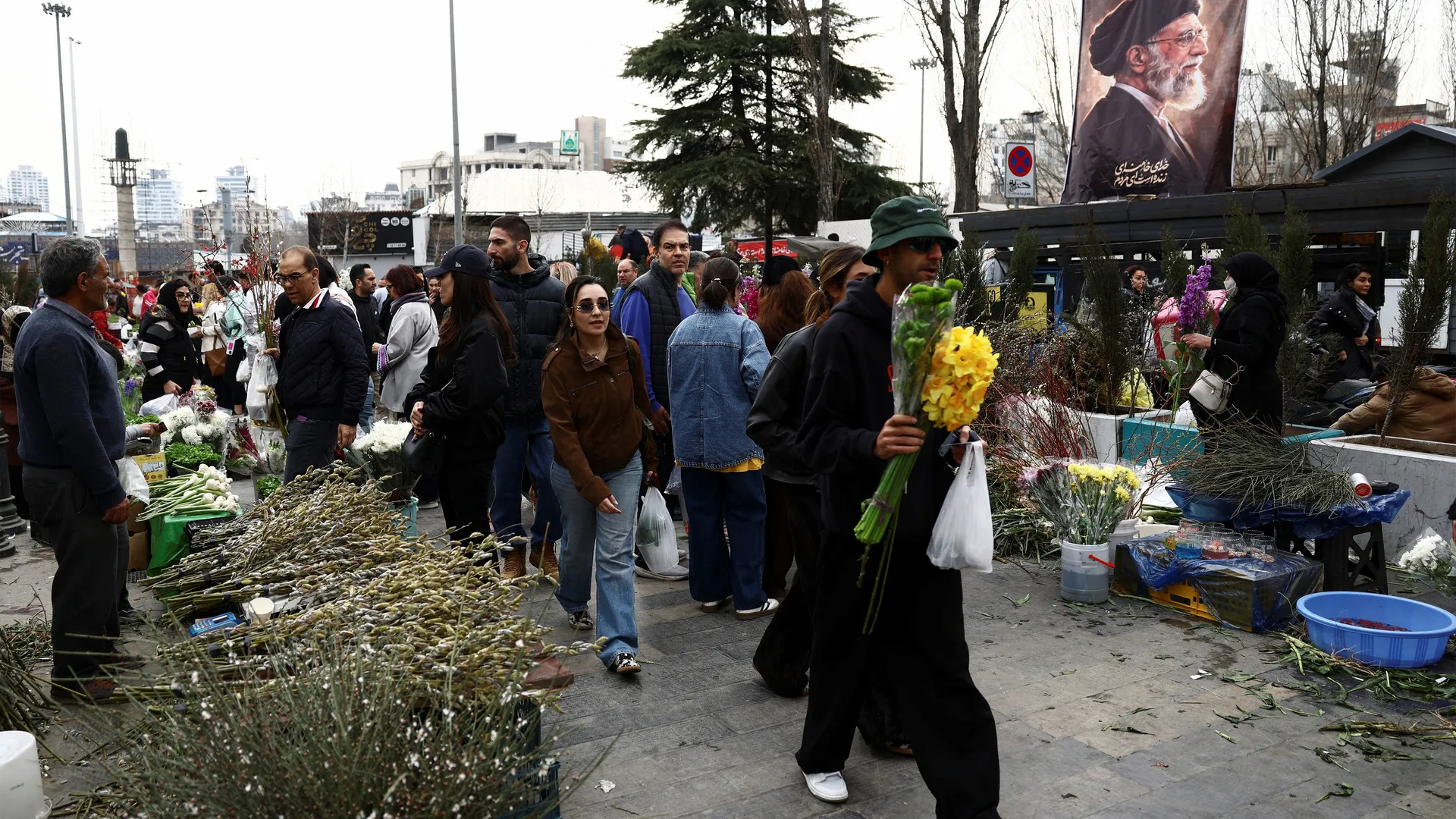
A crowd celebrating Chaharshanbe Suri in Tehran were forced to flee after gunshots disrupted their event. Iranian security forces have reportedly been breaking up gatherings marking the Persian festival this week.
Weekly insights and analysis on the latest developments in military technology, strategy, and foreign policy.
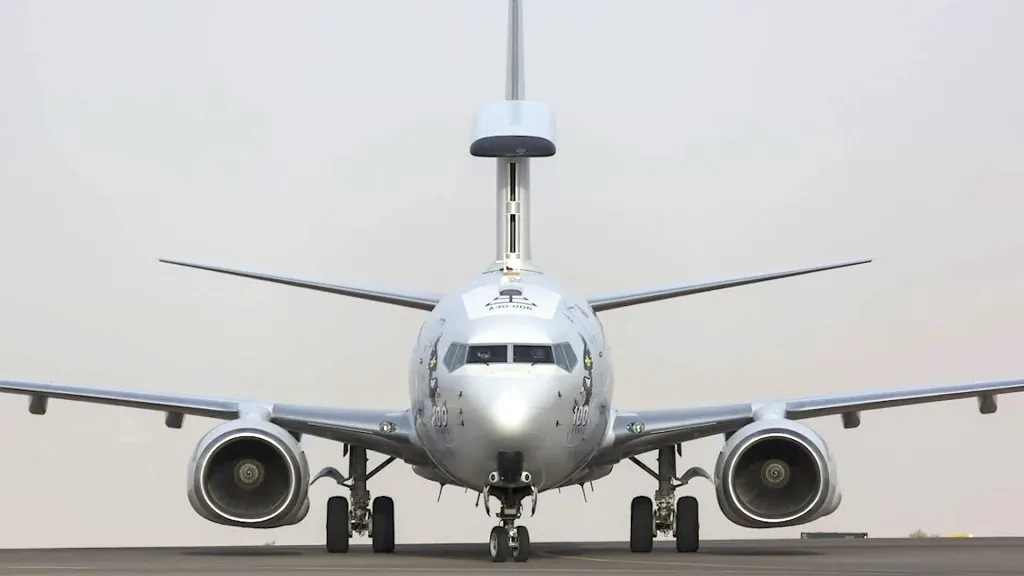
An Australian E-7A Wedgetail airborne early warning and control plane is headed for the Persian Gulf. This comes as Gulf Arab states continue to be subjected to Iran’s attacks in retaliation for ongoing U.S. and Israeli strikes. The E-7A is arguably the best airborne look-down sensor platform in the world at present, and will provide a particularly important boost in capability for spotting low-flying Iranian kamikaze drones and cruise missiles.
Australian Prime Minister Anthony Albanese announced the impending deployment of the E-7A to the Middle East at a press conference yesterday. The Royal Australian Air Force (RAAF) currently operates a fleet of six Wedgetails.
One of the RAAF’s six E-7s. RAAF
“Twelve countries across the region, from Cyprus through to the Gulf are continuing to be targeted. The United Arab Emirates alone has been forced to shoot down over 1,500 rockets and drones,” Albanese said. “This growing wave of dangerous and destabilising attacks from Iran puts civilian lives at risk, of course including Australian lives, of which there are more than 20,000 people based in the UAE.”
“In responding to requests, following a conversation that I had with the President [of the UAE,] Mohammed bin Zayed [Al Nahyan; also Crown Prince of Abu Dhabi], and other requests, Australia will deploy an E-7A Wedgetail, to the Gulf to help protect and defend Australians and other civilians,” Albanese continued. “The Wedgetail will provide long-range reconnaissance capability, which will help to protect and secure the airspace above the Gulf. The Wedgetail and supporting Australian Defence Force personnel will be deployed for an initial four weeks in support of the collective self-defense of Gulf nations.”
The E-7A is based on the Boeing 737-700 Next Generation airliner airframe. Its most prominent feature is the Northrop Grumman Multi-role Electronically Scanned Array (MESA) sensor installed on top of the fuselage, which offers 360-degree coverage and can scan for aerial and maritime threats. It also has an extensive suite of communications and data-sharing capabilities, backed by modern processing power, allowing for the rapid exchange of information with other friendly assets in the air and in other domains. You can read more about the aircraft here.
Northrop Grumman MESA Radar – Boeing E-7 AEWC
“As the Prime Minister has said at the request of the UAE, we will be deploying an E-7 Wedgetail to the Gulf. This is one of the leading capabilities in the world in terms of airborne long-range reconnaissance and command. And we are one of the leading nations in the use of the E-7,” Richard Marles, Deputy Prime Minister of Australia and the country’s Minister for Defense, also said at the press conference yesterday. “There will be in the order of 85 personnel who will go with this airframe and that’s the normal crew. The airframe will be leaving Australia today and the expectation is that it will be in the region in the middle of the week and operational by the end of the week.”
Albanese and Marles also said the Australian government planned to send a tranche of AIM-120 Advanced Medium Range Air-to-Air Missiles (AMRAAM) to the UAE. In addition to ground-based air defense, Emirati fighters have been working to intercept incoming Iranian threats.
As noted, the biggest boost in capability the RAAF’s E-7A will bring to the Gulf is its look-down sensor capability. From the aircraft’s high perch, the MESA sensor has an excellent field of view to spot low and slow-flying targets, even if they are relatively small. Wedgetail would also be able to see threats as far out into the Persian Gulf, or even possibly beyond.
So much garbage being passed around here in long jargon filled threads that sound like AI about E-7 Wedgetail and the potential RAAF deployment to the Middle East. Here is all you need to know:
it’s arguably the best low flying drone and CM detection sensor on earth.
Having another eye in the sky to provide additional alerts about incoming threats and more overall situational awareness will be a boon for defenders in the air and on the ground, in general. The E-7A can also be refueled in flight, meaning it can stay on station longer.
The UAE, which is the clear focus of the Australian deployment, does have a fleet of 5 Saab GlobalEye airborne early warning and control aircraft, but the extent to which they are operating now is unknown. While a modern and capable design, GlobalEye does not provide the same level of coverage and capability as the E-7A, and is also based on the smaller Bombardier Global 6000 business jet, which cannot refuel in flight.
GlobalEye on operational mission
There is more airborne warning and control coverage elsewhere in the Gulf, including six U.S. Air Force E-3 Sentry Airborne Warning and Control System (AWACS) aircraft forward-deployed to Saudi Arabia just ahead of the current conflict with Iran. Saudi Arabia has its own E-3s and GlobalEye jets. How effective the aging Cold War-era E-3, in particular, is at this point at spotting and tracking low-flying kamikaze drones is unclear. In general, the E-7’s active electronically-scanned array MESA sensor offers clear advantages over the Sentry’s older radar, especially when it comes to smaller, slower, and lower-flying targets.
For years now, the U.S. E-3 fleet, overall, has struggled with readiness issues, which you can read more about here. As an aside, the strain on the E-3 fleet, now magnified by the current conflict, together with Australia’s deployment of an E-7 to the region, makes the Pentagon’s attempt last year to cancel the U.S. Air Force’s Wedgetail program seem even more bizarrely short-sighted.
A US Air Force E-3 Sentry seen at Prince Sultan Air Base in Saudi Arabia in 2022. USAF
In speaking yesterday, Australia’s Marles drew a comparison between sending the E-7A to the Middle East now and the past deployment of a Wedgetail to Poland to provide coverage along that country’s border with Ukraine. However, that mission was ostensibly focused on watching for threats to cross-border transfers of aid to the government in Kyiv.
The need for E-7A in the Gulf now is substantially more pressing.
Since the current conflict began, the UAE has been providing particularly granular data about incoming Iranian missile and drone attacks, as well as interception rates, offering a good sense of the current threat ecosystem in the Gulf. As of the last official tally from the UAE’s Ministry of Defense, the country’s forces have intercepted 1,385 kamikaze drones, 241 ballistic missiles, and eight cruise missiles since February 28.
Overall, Iranian retaliatory attacks have notably slowed in recent days across the region, but they have not stopped. Based on its own data, the UAE saw a notably high number of Iranian drones get past its defenses yesterday. This comes amid persistent media reports of concerns among several Gulf Arab states, as well as the U.S. military, about the dwindling stockpile of anti-air interceptors and what has turned into a war of attrition with Iran. Publicly, American and regional authorities have pushed back on this reporting. At the same time, Australia’s plan to rush AIM-120s to the UAE is certainly evidence of demand for additional munitions.
Reasonable to ask what the raw numbers for ballistic missile and drone attempts vs. hits are, which are plotted in these figures. Again, all figures are from UAE MOD. pic.twitter.com/dhj86h6DbD
There is also a question of where the Australian E-7A will be based and what threats there might be as a result to the aircraft, aircrew, and the rest of the 85-person contingent. Albanese and Marles do not appear to have explicitly said where the jet will be flying from to provide coverage over the UAE and other parts of the Gulf region.
With Iran showing no intention of halting its drone and missile attacks across the Gulf, Australia’s E-7A Wedgetail, wherever it might be stationed, looks set to bring immensely valuable added look-down surveillance coverage to the region.
The escalation of the Iran conflict forced Danish container shipping giant Maersk to halt two key trade routes linking markets in the Middle East with Europe and Asia. File Photo by Jerry Lampen/EPA-EFE
March 6 (UPI) — Global shipping giant Maersk announced Friday it was temporarily halting two key routes linking the Middle East and Gulf region with the Far East and destinations in Europe as a precautionary step due to what it described as “the escalating” Iran conflict.
The company said in a news advisory that following an assessment of the risks to shipping in the Gulf region and an operational review, it had taken the decision “as a precautionary measure to ensure the safety of our personnel and vessels while minimizing operational disruption across our wider network.”
“For the ME11 [Middle East-Europe] and FM1 [Middle East-Far East] final eastbound voyage, we are finalizing the timing and vessel details and will update you as soon as this information is confirmed,” it added.
Maersk also said that it was suspending shuttle services within the Gulf region until further notice and that its ME1 service connecting the Middle East with Northern Europe would temporarily bypass Dubai in both directions and only stop in Oman before going straight on to India on the eastbound leg and Morocco on the return leg.
The suspensions ensure Maersk’s vessels stay clear of the Strait of Hormuz amid threats by Tehran to “set fire” to anything that tries to pass in or out of the Persian Gulf.
Markets see the Danish company as a bellwether of global trade, with the move adding to escalating supply chain disruptions due to the conflict engulfing the region following strikes launched against Iran by the United States and Israel at the weekend.
Shipping via the Strait of Hormuz, through which 20% of the world’s oil and gas is shipped out from Iraq, Saudi Arabia, Kuwait, Bahrain, the United Arab Emirates and Qatar to the rest of world, is effectively at a total stop.
At least 147 container ships are stranded on the wrong side of the strait, taking refuge in the Persian Gulf.
Security fears have prompted major shipping lines, including Switzerland’s MSC and France’s CMA CGM, to ditch plans to resume using the Suez Canal route and continue diverting the long way round via the tip of southern Africa. MSC has temporarily halted all bookings for the Middle East.
The disruption has thrown schedules, caused congestion at ports and sent freight rates for everything higher.
Shares in Maersk were trading 0.6% higher on the NASDAQ Copenhagen Exchange on Friday afternoon at $2,637 a share.
Founder of the Women’s Tennis Association and tennis great Billie Jean King (C) smiles with representatives after speaking during an annual Women’s History Month event in celebration of the 50th anniversary of Title IX in Statuary Hall at the U.S .Capitol in Washington on March 9, 2022. Women’s History Month is celebrated every March. Photo by Bonnie Cash/UPI | License Photo