China warns South Korea-U.S. nuclear sub talks risk nonproliferation

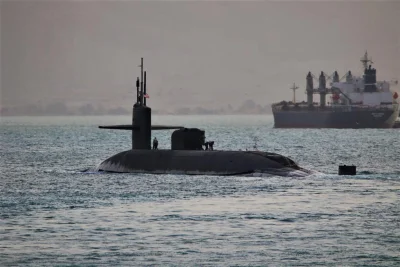
The guided-missile submarine USS Florida transits the Suez Canal en route to the Red Sea on Friday amid heightened tensions between the United States and Iran. File U.S. Navy photo by Mass Communication Specialist 2nd Class Elliot Schaudt
Dec. 22 (Asia Today) — China has voiced strong opposition to potential cooperation between South Korea and the United States on nuclear-powered submarines, warning it could undermine the global nuclear nonproliferation regime, Chinese state media reported.
Song Zhongping, a Chinese military analyst, said in an interview published Monday by the Global Times that consultations between Seoul and Washington on nuclear submarine-related cooperation could pose a “serious threat” to nuclear nonproliferation.
The Global Times cited South Korean media reports saying the two countries plan to begin sector-by-sector consultations next year related to leader-level understandings that include nuclear submarine construction, uranium enrichment and spent nuclear fuel reprocessing.
Song said the AUKUS nuclear submarine effort with Australia set a negative precedent and suggested a similar case could emerge with South Korea. He argued that U.S. support for allies’ access to nuclear technology and nuclear fuel would weaken the Nuclear Non-Proliferation Treaty.
Song also said Japan has raised the idea of acquiring nuclear-powered submarines and warned the trend could fuel an arms race. He said more countries operating nuclear-powered submarines would increase the risk of technology leakage and accidents.
He further argued South Korea has limited practical need for nuclear-powered submarines because of its restricted coastline, the report said.
In October, Chinese Foreign Ministry spokesperson Guo Jiakun said at a regular briefing that Beijing hopes South Korea and the United States will fulfill nonproliferation obligations and avoid actions that run counter to regional peace and stability, according to the report.
– Reported by Asia Today; translated by UPI
© Asia Today. Unauthorized reproduction or redistribution prohibited.