Nicolas Maduro

Photos: A Venezuelan family Christmas – from the US dream to poverty | Donald Trump News

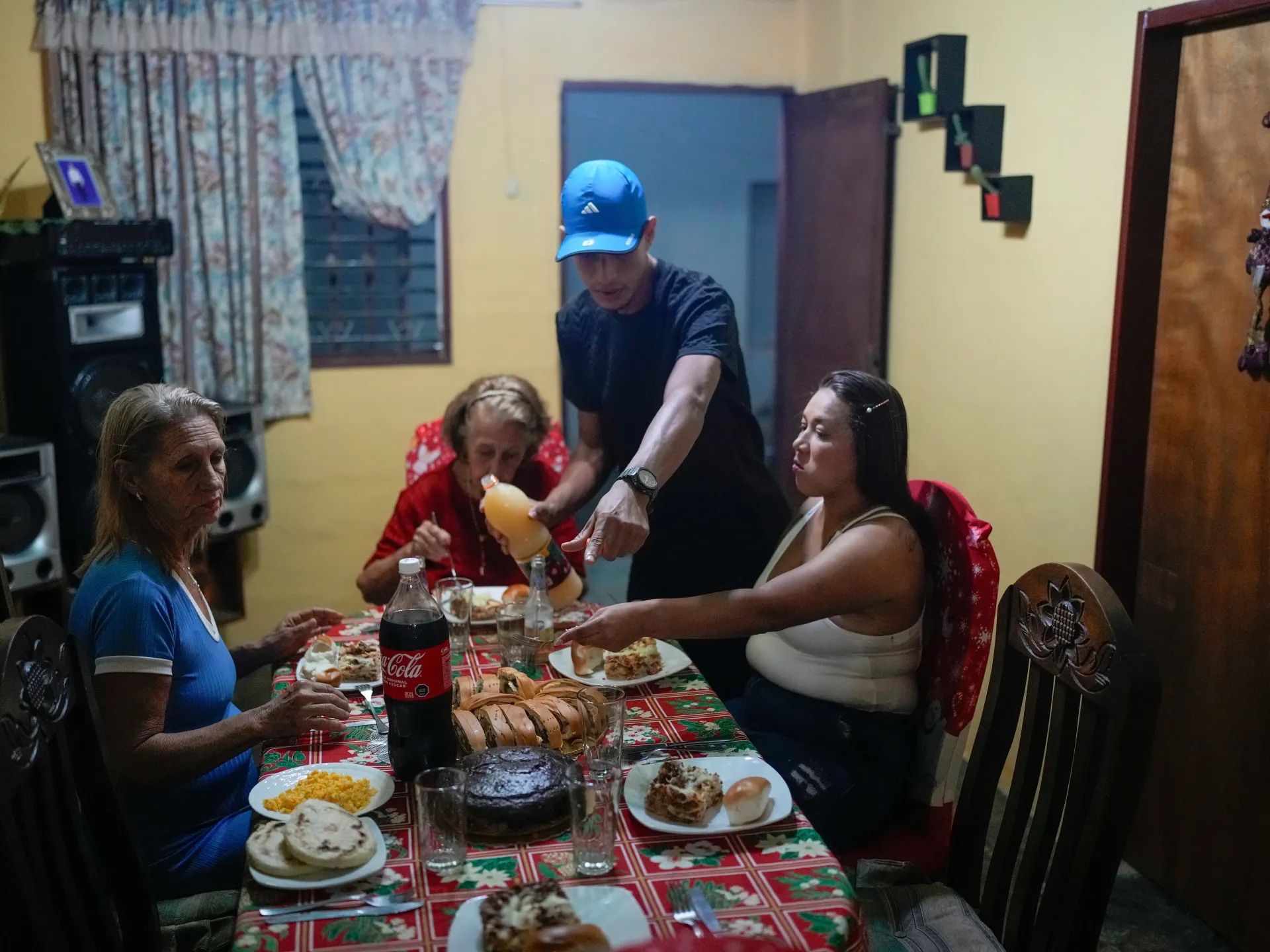
This was not the Christmas that Mariela Gomez would have imagined a year ago.

Or the one that thousands of other Venezuelan immigrants in the United States would have thought. But Donald Trump returned to the White House in January and quickly ended their US dream.

Gomez found herself spending the holiday in northern Venezuela for the first time in eight years. She dressed up, cooked, got her son a scooter and smiled for her in-laws. Hard as she tried, though, she could not ignore the main challenges facing returning migrants: unemployment and poverty.

“We had a modest dinner, not quite what we’d hoped for, but at least we had food on the table,” Gomez said of the lasagne-like dish she shared with her partner and in-laws instead of the traditional Christmas dish of stuffed corn dough hallacas. “Making hallacas here is a bit expensive, and since we’re unemployed, we couldn’t afford to make them.”

Gomez, her two sons and her partner returned to the city of Maracay on October 27 after crossing the US-Mexico border to Texas, where they were quickly swept up by US Border Patrol amid the Trump administration’s crackdown on immigration. They were deported to Mexico, from where they began the dangerous journey back to Venezuela.

They crossed Central America by bus, but once in Panama, the family could not afford to continue to Colombia via boat in the Caribbean. Instead, they took the cheaper route along the Pacific’s choppy waters, sitting on top of sloshing petrol tanks in a cargo boat for several hours and then transferring to a fast boat until reaching a jungled area of Colombia. They spent about two weeks there until they were wired money to make it to the border with Venezuela.

Gomez was among the more than 7.7 million Venezuelans who left their home country in the last decade, when its economy came undone as a result of a drop in oil prices, corruption and mismanagement. She lived in Colombia and Peru for years before setting her sights on the US with hopes of building a new life.

Steady deportations

Trump’s second term has dashed the hopes of many like Gomez.

As of September, more than 14,000 migrants, mostly from Venezuela, had returned to South America since Trump moved to limit migration to the US, according to figures from Colombia, Panama and Costa Rica. In addition, Venezuelans were steadily deported to their home country this year after President Nicolas Maduro, under pressure from the White House, did away with his longstanding policy of not accepting deportees from the US.

Immigrants arrived regularly at the airport outside the capital, Caracas, on flights operated by a US government contractor or Venezuela’s state-owned airline. More than 13,000 migrants returned this year on the chartered flights.

Gomez’s return to Venezuela also allowed her to see the now 20-year-old daughter she left behind when she fled the country’s complex crisis. They talked and drank beer during the holiday, knowing it might be the last time they shared a drink for a while – Gomez’s daughter will migrate to Brazil next month.

Gomez is hoping to make hallacas for New Year’s Eve and is also hoping for a job. But her prayers for next year are mostly for good health.

“I ask God for many things, first and foremost life and health, so we can continue enjoying our family,” she said.
Source link

Venezuela frees dozens detained during protests against Maduro | Human Rights News

Families celebrate Christmas releases while calling for full freedom of detainees.

Authorities in Venezuela have released at least 60 people arrested during protests against President Nicolas Maduro’s re-election, according to a human rights advocacy group, though campaigners say hundreds remain behind bars.

The releases began early on Thursday, over Christmas, according to the Committee for the Freedom of Political Prisoners, a group of rights activists and relatives of detainees arrested during unrest that followed July’s presidential election.

Recommended Stories

list of 3 itemsend of list

“We celebrate the release of more than 60 Venezuelans, who should never have been arbitrarily detained,” committee head Andreina Baduel told the AFP news agency.

“Although they are not entirely free, we will continue working for their full freedom and that of all political prisoners.”

Maduro secured a third term in office in the July 2024 vote, a result rejected by parts of the opposition amid allegations of fraud. The disputed outcome triggered weeks of demonstrations, during which authorities arrested about 2,400 people. Nearly 2,000 have since been released, according to rights groups.

Despite the latest releases, Venezuela still holds at least 902 political prisoners, according to Foro Penal, an NGO that monitors detentions.

Relatives said many of those freed had been held at Tocoron prison, a maximum-security facility in Aragua state, roughly 134km (83 miles) from the capital Caracas. Officials have not publicly clarified the conditions under which detainees were released.

“We must remember that there are more than 1,000 families with political prisoners,” Baduel said. Her father, Raul Isaias Baduel, a former defence minister and once an ally of the late president, Hugo Chavez, died in custody in 2021.

Source link

Honduras declares Trum-backed Asfura winner of presidential election

Honduran presidential candidate Nasry Asfura speaks during an election day event in Tegucigalpa on Nov. 30. He was declared the winner on Wednesday. Photo by EPA

Dec. 24 (UPI) — Nasry Asfura, with backing by U.S. President Donald Trump, on Wednesday was declared the winner of Honduras’ presidential election that took place one month ago and included fraud allegations.

The 67-year-old right-wing candidate received 40.27% of the vote, with center-right Salvador Nasralla getting 39.53%. The margin was 28,000 votes out of 3.7 million for the election on Nov. 30.

Naralla, 72, served as vice president in the current Liberty and Refoundation, or Libre, but joined the right-wing Liberal Party in his fourth bid for president. Nasralla is a sportscaster and host of the long-running game show on television.

Asfura, nicknamed Tito and Papi, is a construction magnate and former mayor of Tegucigalpa, the capital, from 2014 to 2022.

“Honduras, we now have the official declaration from the CNE [electoral council],” he posted on X. “I recognise the great work carried out by the councillors and the entire team that ran the election. Honduras: I am ready to govern. I will not let you down. God bless Honduras.

His four-year term will begin Jan. 27.

The electoral council declared him the winner before finishing an audit.

There was a review of all tally sheets under “special scrutiny” last week to recount ballots flagged as Inconsistent.”

The electoral council comprised three councillors: one aligned with Asfura’s party, one with Nasralla’s and one with the party of the leftist president, Xiomara Castro, whose candidate finished third, Rixi Moncada, with 19.2%.

Only two councillors declared him the winner. The representative linked to the president’s party alleged that an “electoral coup” was underway and filed a complaint with the public prosecutor’s office.

Nasralla, refusing to concede, alleged fraud in the counting process, including “forgery of public documents,” claiming “the data from the original tally sheets were altered.” He made the allegations in a series of posts on X.

The results could be challenged in court.

“I have not found proof of widespread or large-scale fraud,” Hector Corrales, the director of the Honduran research institute NODO, who worked for the European Union’s electoral observer mission, said Tuesday.

But there already were doubts about the election integrity, he said.

“That will have an impact on the government’s credibility,” Corrales said. “And that is going to ruin his administration if he doesn’t know how to handle it.”

The top two candidates were different politically than the leftist Libre party, focusing on concerns about crime and corruption.

U.S. Secretary of State Marco Rubio posted on X: The people of Honduras have spoken: Nasry Asfura is Honduras’ next president. The United States congratulates president-elect Asfura and looks forward to working with his administration to advance prosperity and security in our hemisphere.”

Like Asfura, Nasralla also tried to appeal to Trump. His wife was seen wearing a MAGA hat.

A few days before the election, Trump publicly backed Asfura, and the United States would only support the next government if he won. He called the other leading candidates communists or allies of Venezuela’s dictator, Nicolas Maduro.

On the day before the election, Trump pardoned former Honduran President Juan Orlando Hernandez, who was sentenced to 45 years in U.S. prison for allegedly creating a “cocaine superhighway to the United States.”

He was president for eight years until Jan. 27, 2022.

Source link

UN experts condemn US naval blockade of Venezuela as illegal aggression | Donald Trump News

UN experts criticise US blockade for endangering human rights and call for an investigation into alleged violations.

Four United Nations human rights experts have condemned the partial naval blockade of Venezuela by the United States, finding it an illegal armed aggression and calling on the US Congress to intervene.

“There is no right to enforce unilateral sanctions through an armed blockade,” the UN experts said in a joint statement on Wednesday.

Recommended Stories

list of 3 itemsend of list

The US has deployed a major military force in the Caribbean and intercepted oil tankers as part of a naval blockade against Venezuelan vessels it considers to be under sanctions.

A blockade is a prohibited use of military force against another country under the UN Charter, they added.

“It is such a serious use of force that it is also expressly recognised as illegal armed aggression under the General Assembly’s 1974 Definition of Aggression,” the experts said. “The illegal use of force, and threats to use further force at sea and on land, gravely endanger the human right to life and other rights in Venezuela and the region.”

US President Donald Trump accuses Venezuela of using oil, the South American country’s main resource, to finance “narcoterrorism, human trafficking, murders and kidnappings”.

Caracas denies any involvement in drug trafficking. It says Washington is seeking to overthrow its president, Nicolas Maduro, to seize Venezuela’s oil reserves, the largest in the world.

Since September, US forces have launched dozens of air strikes on boats that Washington alleges were transporting drugs. It has yet to provide evidence for those accusations. More than 100 people have been killed.

‘US Congress should intervene’

“These killings amount to violations of the right to life. They must be investigated and those responsible held accountable,” the experts said.

“Meanwhile, the US Congress should intervene to prevent further attacks and lift the blockade,” they added.

They called on countries to take measures to stop the blockade and illegal killings and bring the perpetrators to justice.

The four who signed the joint statement are: Ben Saul, special rapporteur on protecting human rights while countering “terrorism”; George Katrougalos, an expert on promoting a democratic and equitable international order; development expert Surya Deva; and Gina Romero, special rapporteur on the right to freedom of peaceful assembly and association.

Source link

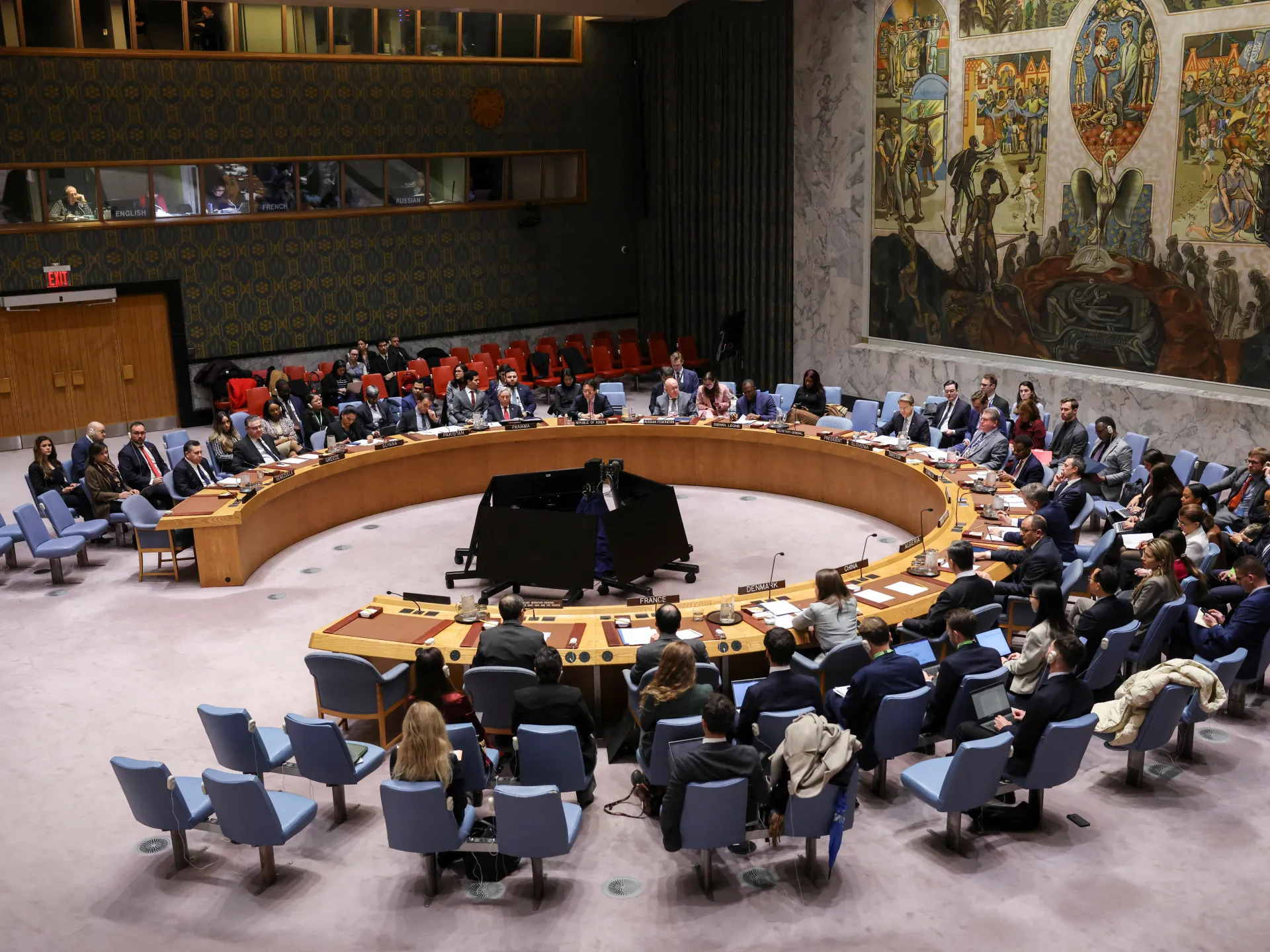
Venezuela warns US ‘aggression’ is first stage amid ‘continental ambitions’ | US-Venezuela Tensions News

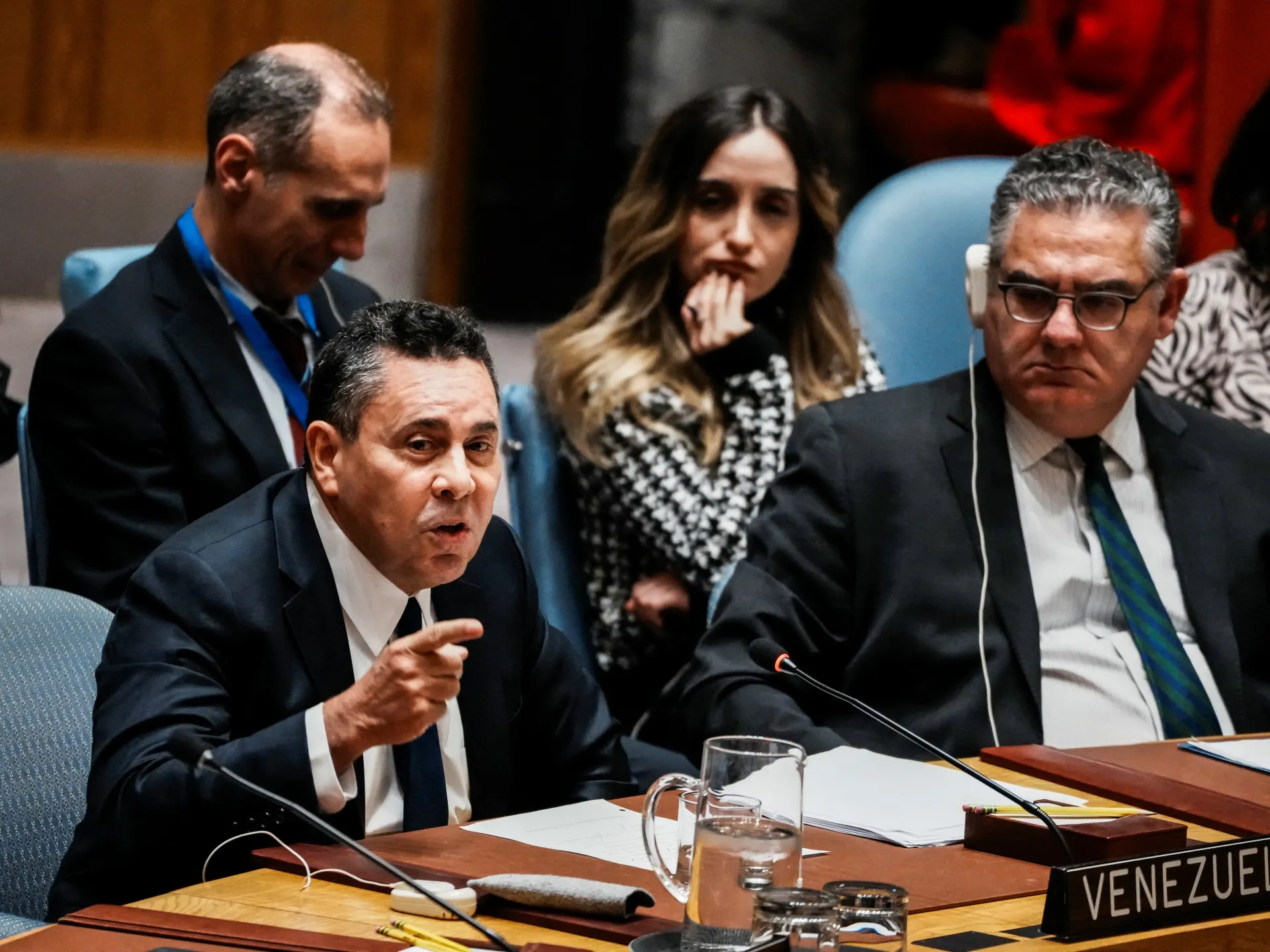
Venezuela’s UN ambassador denounces US military strikes and naval blockade at a meeting of the UN Security Council.

Venezuela has told the United Nations Security Council (UNSC) that the United States has “continental ambitions” over much of Latin America as it wages an unofficial war to remove the government of Venezuelan President Nicolas Maduro.

“It’s not just about Venezuela. The ambition is continental,” Venezuela’s UN ambassador, Samuel Moncada, told a meeting of the 15-member UNSC on Tuesday.

Recommended Stories

list of 4 itemsend of list

“The US government has expressed this in its National Security Strategy, which states that the future of the continent belongs to them,” Moncada said.

“We want to alert the world that Venezuela is only the first target of a larger plan. The US government wants us to be divided so it can conquer us piece by piece,” he said.

Venezuela, earlier this month, requested that the UNSC meet to address the “ongoing US aggression”, which began in September when the White House launched air strikes against vessels in the Caribbean Sea and eastern Pacific Ocean. The White House claimed, without providing any evidence, that the vessels were trafficking drugs to the US.

At least 105 people have been killed so far in the attacks by US forces, which legal experts and Latin American leaders have branded “extrajudicial killings”, but which Washington claims are necessary to stem the flow of drugs to US shores.

At the UNSC meeting, Moncada also accused the administration of US President Donald Trump of violating both international and US domestic law, since the White House has been acting without the approval of the US Congress, whose authority is required to formally declare war on another country.

Moncada said that Trump’s imposition last week of a naval blockade on all Venezuelan oil tankers sanctioned by the US was a “military act aimed at laying siege to the Venezuelan nation”.

“Today, the masks have come off,” Moncada said. “It is not drugs, it is not security, it is not freedom. It is oil, it is mines and it is land.”

US envoy denounces ‘Maduro and his illegitimate regime’

US forces have seized at least two Venezuelan oil tankers and confiscated at least 4 million barrels of Venezuelan oil, according to Moncada, in a move he described as “a robbery carried out by military force”.

The US has defended its naval blockade of Venezuela as a “law enforcement” action to be carried out by the US coastguard, which has the authority to board ships under US sanctions. A naval blockade, by contrast, would be considered an act of war under international law.

The US ambassador to the UN, Mike Waltz, told the UNSC that Latin American drug cartels remain the “single most serious threat” and that Trump would continue to use the full power of the US to eradicate them. Waltz also said that Venezuelan oil is a critical component in funding the cartels in Venezuela.

“The reality of the situation is that sanctioned oil tankers operate as the primary economic lifeline for Maduro and his illegitimate regime,” he said.

The White House earlier this year designated several international drug cartels, including Venezuela’s Tren de Aragua, as terrorist organisations. Washington also added the “Cartel de los Soles,” which it claims is headed by Maduro, to the list in November.

The Venezuelan leader has denied the US allegations and accused the Trump administration of using the drug trafficking claims as a cover to carry out “regime change” in his country.

Russia’s ambassador to the UN separately warned that US “intervention” in Venezuela could “become a template for future acts of force against Latin American states”.

China’s ambassador told the UNSC that the US actions “seriously infringe” on the “sovereignty, security and legitimate rights” of Venezuela.

Source link

Venezuela passes law enacting harsh penalties for supporters of US blockade | US-Venezuela Tensions News

Venezuela’s National Assembly has passed a law enacting harsh penalties for those who support or help finance blockades and acts of piracy, including up to 20 years in prison.

The legislation was passed on Tuesday after the United States seized oil tankers linked to Venezuela, acts that the government of President Nicolas Maduro has denounced as lawless acts of piracy.

Recommended Stories

list of 3 itemsend of list

“This law seeks to protect the national economy and avoid the erosion of living standards for the population,” lawmaker Giuseppe Alessandrello said, while presenting the law before the National Assembly, controlled by Maduro’s governing party.

The US has carried out a series of increasingly aggressive measures over the past several months, deploying sizeable military forces to Latin America, seizing oil tankers, killing dozens of people in military strikes on what it says are drug-trafficking boats, and threatening land strikes on Venezuela itself.

The legality of some of those acts, such as the seizure of oil tankers in international waters, is contested. Others, such as the strikes against alleged drug traffickers, are widely considered illegal.

“We are in the presence of a power that acts outside of international law, demanding that Venezuelans vacate our country and hand it over,” Samuel Moncada, Venezuela’s representative at the United Nations, told the Security Council (UNSC) during a meeting on Tuesday.

“The threat is not Venezuela,” he added. “The threat is the US government.”

China and Russia also criticised US actions. Russia’s ambassador, Vassily Nebenzia, said that the Trump administration was creating a “template” for the use of force that could be used against other Latin American countries in the future.

“We saw clear support for Venezuela from Russia and China, but also from Colombia, and even from some other member states, talking about how the US needs to abide by international law and calling for de-escalation,” Al Jazeera correspondent Gabriel Elizondo said from the UN.

He added that several Latin American countries with right-wing governments, such as Argentina, Panama and Chile, appeared to side with the US.

“The bottom line here is that we have not gotten any better sense from the United States on what their endgame is here, where they plan to take this,” he added.

The Wall Street Journal reported on Tuesday that the US military had moved special operations aircraft and cargo planes with troops into the Caribbean this week.

“We have a massive armada formed, the biggest we’ve ever had, and by far the biggest we’ve ever had in South America,” Trump told reporters on Monday.

Maduro has said the US is seeking to topple his government and seize control of Venezuela’s large oil reserves, which members of the Trump administration have falsely claimed rightfully belong to the US. Trump said on Monday that the US would retain the oil seized from the tankers as well as the tankers themselves.

Addressing the UNSC, the US ambassador, Mike Waltz, said that oil sales were a “primary economic lifeline for Maduro and his illegitimate regime”, repeating an unsubstantiated claim that Maduro oversees a vast criminal enterprise that traffics drugs to the US.

“The single most serious threat to this hemisphere, our very own neighbourhood and the United States, is from transnational terrorist and criminal groups,” Waltz said.

The US pressure campaign has become a useful pretext for the Venezuelan government’s efforts to crack down on internal dissent.

Rights groups have said that Maduro’s government has become more repressive since the presidential election in July 2024, in which Maduro claimed victory despite the widespread doubts about the credibility of the results. The opposition has maintained it was the true winner, and few countries have recognised Maduro’s victory.

Source link

Video: Maduro rejects Trump’s warning against ‘acting tough’ | Nicolas Maduro

NewsFeed

US President Donald Trump warned Nicolas Maduro to ‘not play tough’ and to step down on Monday, while the Venezuelan leader said Trump should focus on the issues in his own country. Trump told reporters the US will keep 1.9 million barrels of oil that were seized near Venezuela in December.

Source link

U.S. seizes second oil tanker near Venezuela amid blockade

A U.S. military helicopter hovers over an oil tanker seized early Saturday morning in international waters near Venezuela. Photo Courtesy of the U.S. Coast Guard

Dec. 20 (UPI) — The U.S. Coast Guard led another seizure of an oil tanker in international waters near Venezuela on Saturday after President Donald Trump declared a blockade of Venezuela.

The U.S. Navy and other federal entities participated in the seizure of the oil tanker, which is not among those sanctioned by the federal government, the Wall Street Journal, CBS News and CNN reported.

Armed U.S. personnel on military helicopters descended onto the tanker’s deck during the early morning hours on Saturday and seized it, Homeland Security Sec. Kristi Noem said in a social media post.

No one aboard the oil tanker resisted, and the United States seized it for carrying sanctioned Venezuelan oil.

The seized tanker displayed a Panamanian flag and was carrying Venezuelan oil that it was to offload in Asia.

Much of Venezuela’s oil is shipped to China, which has privately owned teapot refineries that often buy and refine illicit oil from Venezuela, Iran and other sanctioned nations.

The president on Tuesday ordered a “total and complete blockade” of all sanctioned oil tankers as they enter or leave Venezuelan waters.

Saturday’s raid shows the blockade could affect any vessel that carries Venezuelan oil, as affirmed by Noem.

The United States on Wednesday seized a sanctioned oil tanker after it departed a Venezuelan port and diverted it to Texas, where Trump said the United States could keep the oil in its hold.

That tanker, The Skipper, was flying the flag of Venezuela’s neighbor, Guyana, officials for which said the vessel is not among those registered there.

Such activities are typical of a shadow fleet that uses deceptive tactics to hide where respective vessels are located and transport illicit oil, which often benefits Iran, Russia and other sanctioned states.

Venezuelan President Nicolas Maduro‘s government called The Skipper’s seizure an act of “piracy” and “robbery” and said the blockade is a “grotesque threat” that violates international law, according to CBS News.

Maduro’s regime accuses the United States of trying to “appropriate the oil, land and minerals of the country through gigantic campaigns of lies and manipulations.”

The blockade and tanker seizures are in addition to U.S. military strikes on alleged drug boats carrying illicit drugs destined for the United States and Europe.

Both tactics are efforts to isolate the Maduro regime, which Trump seeks to force out of power by depriving it of its primary revenue sources.

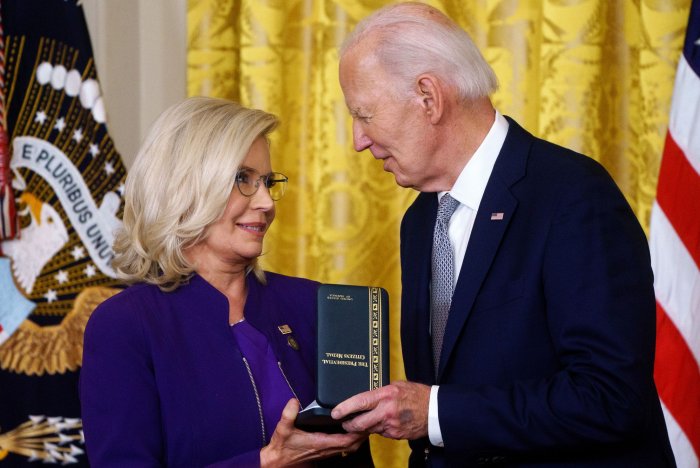
Former President Joe Biden presents the Presidential Citizens Medal to Liz Cheney during a ceremony in the East Room of the White House in Washington, on January 2, 2025. The Presidential Citizens Medal is bestowed to individuals who have performed exemplary deeds or services. Photo by Will Oliver/UPI | License Photo


Source link

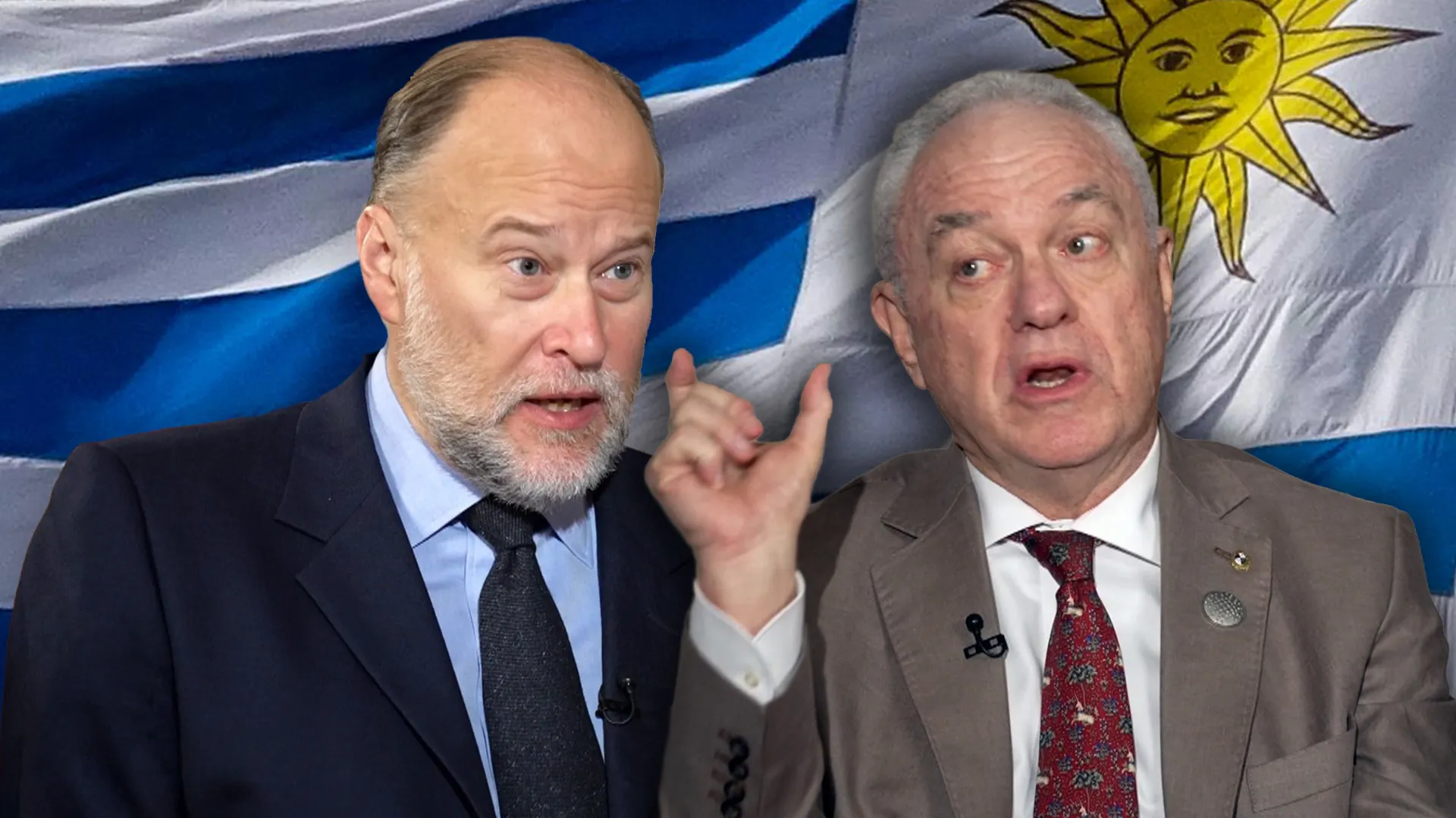
Uruguay’s FM on US claims to police Latin America and rising tensions | Nicolas Maduro

Mario Lubetkin on Washington’s revived sphere-of-influence doctrine, Venezuela, and China’s growing footprint.

The United States is reviving a policy first set out in the 1800s that treats Latin America as its strategic sphere of influence. As Washington expands maritime operations in the Caribbean and eastern Pacific, critics warn of legal violations and rising regional instability.

Uruguay’s Foreign Minister Mario Lubetkin joins Talk to Al Jazeera to discuss US strikes, Venezuela, migration pressures, and China’s growing role in the region — and whether diplomacy can still prevent escalation in a hemisphere shaped once again by power politics.

Source link

US sanctions more relatives, associates of Venezuelan President Maduro | Donald Trump News

The United States Department of the Treasury has announced new sanctions on several family members and associates of Venezuelan President Nicolas Maduro, as the Trump administration increases pressure on Caracas and continues to build up US forces on Venezuela’s borders.

The sanctions announced on Friday come as the US military continues attacks on boats off the country’s coast, which have killed more than 100 people. The US military has also seized a Venezuelan oil tanker and imposed a naval blockade on all vessels arriving and departing from Venezuelan ports that are under US sanctions.

Recommended Stories

list of 4 itemsend of list

Announcing the new sanctions, US Secretary of the Treasury Scott Bessent said in a statement that “Maduro and his criminal accomplices threaten our hemisphere’s peace and stability”.

“The Trump Administration will continue targeting the networks that prop up his illegitimate dictatorship,” Bessent added.

The new sanctions target seven people who are family members or associates of Malpica Flores, a nephew of Maduro, and Panamanian businessman Ramon Carretero, who were named in an earlier round of US sanctions that also targeted six Venezuela-flagged oil tankers and shipping firms, on December 11.

Flores, who is one of three of Maduro’s nephews by marriage, dubbed “narco-nephews” by the US Treasury Department, is wanted because he “has been repeatedly linked to corruption at Venezuela’s state-run oil company, Petroleos de Venezuela, SA”, the Treasury said in a statement.

It was not immediately clear how Flores’s role in Venezuela’s state-run oil company related to “propping up Nicolas Maduro’s rogue narco-state”, which Bessent said in his statement was the reason for widening sanctions to additional family members and associates of the president.

The US has claimed that tackling drug trafficking is the primary reason for its military escalation in the region since September, including the strikes on vessels in the eastern Pacific and Caribbean, which international law experts say amount to extrajudicial killings.

Despite the Trump administration’s repeated references to drug trafficking, its actions and messaging appear increasingly focused on Venezuela’s oil reserves, which are the largest in the world. The reserves have remained relatively untapped since sanctions were imposed on the country by the US during the first Trump administration.

Homeland Security adviser and top Trump aide Stephen Miller said last week that Venezuela’s oil belongs to Washington.

“American sweat, ingenuity and toil created the oil industry in Venezuela,” Miller claimed on X. “Its tyrannical expropriation was the largest recorded theft of American wealth and property,” he added.

US sanctions, particularly those targeting Venezuela’s oil industry, have contributed to an economic crisis in the country and increased discontent with Maduro, who has governed Venezuela since 2013.

For his part, Maduro has accused the Trump administration of “fabricating a new eternal war” aimed at “regime change” and seizing Venezuela’s vast oil reserves.

The European Union has also imposed targeted sanctions on Venezuela, which it renewed last week until 2027.

The European sanctions, first introduced in 2017, include an embargo on arms shipments to Venezuela, as well as travel bans and asset freezes on individuals linked to state repression.

INTERACTIVE - Crude oil reserves vs exports-1756989578


Source link

Trump orders ‘total and complete’ naval blockade of Venezuela

Dec. 16 (UPI) — President Donald Trump on Tuesday ordered “a total and complete blockade” of all sanctioned oil tankers going to or from Venezuela, raising already high tensions between Washington and Caracas by going after the South American nation’s main revenue source.

Trump has sought to oust Venezuela’s authoritarian president Nicolas Maduro since his first term and has ratcheted up the pressure on the socialist leader since returning to the White House in January.

He has accused Maduro of sending an invasion of criminals to the United States and of being the leader of a narcotics trafficking organization, allegations that U.S. intelligence agencies have not publicly supported.

An armada of U.S. naval vessels has been deployed to waters near Venezuela, and the U.S. military has been attacking civilian ships in the region the Trump administration alleges are trafficking drugs to the United States, drawing domestic and international condemnation.

“Today, I am ordering A TOTAL AND COMPLETE BLOCKADE OF ALL SANCTIONED OIL TANKERS going into, and out of, Venezuela,” Trump announced in a statement on his Truth Social media platform.

“America will not allow Criminals, Terrorists or other Countries, to rob, threaten or harm our Nation, and, likewise, will not allow a Hostile Regime to take our Oil, Land or any other Assets, all of which must be returned to the United States IMMEDIATELY.”

It was not immediately clear what U.S. land or assets Trump was referring to, though he has repeatedly stated that the United States has been wrongly denied access to Venezuela’s oil reserves.

“Venezuela is completely surrounded by the largest Armada ever assembled in the History of South America. It will only get bigger, and the shock to them will be like nothing they have ever seen before — Until such time as they return to the United States of America all of the Oil, Land and other Assets that they previously stole from us,” Trump said.

Trump accused Maduro in the statement of using oil revenues to finance drug terrorism, human trafficking and murder.

Venezuela rejected Trump’s demands and called on the residents of the United States and the rest of the world to do likewise, saying the South American nation will “never again be a colony of any empire or foreign power.”

“The President of the United States intends to impose, in an absolutely irrational manner, a so-called blockade on Venezuela with the aim of stealing the wealth that belongs to our Homeland,” Venezuela’s foreign ministry said in a statement.

Source link

Trump orders ‘total’ blockade of sanctioned Venezuela oil tankers | Donald Trump News

BREAKING,

The order comes a week after the US military seized an oil tanker off Venezuela’s coast.

United States President Donald Trump has ordered “a total and complete” blockade of all US-sanctioned oil tankers entering and leaving Venezuela.

“Venezuela is completely surrounded by the largest Armada ever assembled in the History of South America,” Trump said in a post on his social media platform Truth Social.

Recommended Stories

list of 4 itemsend of list

“For the theft of our Assets, and many other reasons, including Terrorism, Drug Smuggling, and Human Trafficking, the Venezuelan Regime has been designated a FOREIGN TERRORIST ORGANIZATION,” Trump said.

“Therefore, today, I am ordering A TOTAL AND COMPLETE BLOCKADE OF ALL SANCTIONED OIL TANKERS going into, and out of, Venezuela,” he said.

Trump’s comments come a week after US forces seized a sanctioned oil tanker off the coast of Venezuela and as Washington has ordered a huge build-up of US military forces off the Venezuelan coast in an operation said to target drug smuggling.

The US military has killed at least 90 people since September in attacks on dozens of vessels in the eastern Pacific Ocean and Caribbean Sea near Venezuela, in what international law experts have criticised as extrajudicial killings.

Washington claimed the vessels were involved in drug trafficking but has provided no evidence to support its allegations.

Caracas has long said the deployment of US forces to the region was aimed at allowing “external powers to rob Venezuela’s immeasurable oil and gas wealth“.

Despite holding the world’s largest proven oil reserves, Venezuela has faced severe restrictions on its exports in recent years under US sanctions first imposed during the first Trump presidency.

This is a breaking news story. More to follow shortly.

Source link

Venezuelan opposition leader Machado injured on covert Nobel Prize trip | Nicolas Maduro News

President Maduro’s rival was hurt as she sped on a boat through choppy waters in secret escape from hiding to reach Oslo ceremony.

Venezuelan opposition leader Maria Corina Machado was injured as she made a clandestine dash to collect her Nobel Peace Prize last week, her spokesperson has said.

Claudia Macero said late on Monday that the right-wing opposition figure fractured a vertebra during a choppy boat ride that had formed part of a risky cloak-and-dagger journey to reach the Norwegian capital, Oslo, for the Nobel award ceremony.

Recommended Stories

list of 4 itemsend of list

Machado has been in hiding since she was banned from running in Venezuela’s July 24 presidential election, fearing that her life is under threat from long-time Venezuelan President Nicolas Maduro.

“The vertebra fracture is confirmed,” Macero told the AFP news agency, adding that no further details would be released beyond what had been reported in the Norwegian daily Aftonbladet.

The newspaper had earlier reported that the 58-year-old Machado sustained the fracture while crossing the sea in a small fishing boat battered by high waves.

The opposition leader was examined by doctors at Oslo University Hospital during her time in the city.

Dangerous dash

Media reports in the United States said Machado’s escape last week involved wearing a disguise, including a wig, and travelling from a small Venezuelan fishing village on a wooden boat to the island of Curacao, before boarding a private plane to Norway.

Machado has said she feared for her life during the voyage, which saw US forces situated in the Caribbean alerted to avoid a strike on the vessel.

Several similar boats have been attacked in recent months in a campaign that the Trump administration asserts is a bid to avert drug smuggling into the US.

Maduro has accused Washington of seeking to engineer regime change in the hope of seizing Venezuela’s large oil reserves.

The leader of the opposition Vente Venezuela party was attempting to reach the ceremony at which she was due to be presented with the Nobel Peace Prize.

She was announced the winner of the prestigious award in October, with the selection committee praising her role in the country’s opposition movement and her “steadfast” support for democracy.

‘Broken soul’

Despite her speedy trip, Machado failed to reach Oslo in time for the ceremony. Her daughter received the award on her behalf and delivered a speech that slammed Maduro and warned of the need to fight for democracy.

Hours after the ceremony, early on Thursday morning, Machado greeted supporters from an Oslo hotel balcony in what was her first public appearance in a year.

Despite the fracture, she climbed over a barrier to greet supporters outside the hotel, AFP reported.

Machado said authorities in Venezuela would have attempted everything possible to prevent her journey to Norway.

Appearing set to challenge Maduro in the vote, the opposition leader was barred from running in the country’s presidential election in July last year.

She then announced that she would be going into hiding within Venezuela due to fear for her life while Maduro is in power.

The Venezuelan president commented dismissively on the reports of Machado’s injury on television on Monday.

Machado “says she has a broken vertebra”, he said. “What’s broken is her brain and her soul because she’s a demon – she hates Venezuela.”

Source link