Ahmad Salkida on Building Africa’s Conflict Reporting Newsroom
When Ahmad Salkida first conceived HumAngle in 2014, the idea was audacious: build a newsroom dedicated to conflict reporting at a time when Nigeria’s media space was shrinking, resources were scarce, and insecurity was widespread. It would take six more years before that vision materialised. In 2020, HumAngle formally launched. Today, as the organisation marks its sixth anniversary, Salkida describes the journey as a roller coaster.
“It takes you to a peak where you feel unstoppable,” he says of building HumAngle. “Then suddenly, you’re reminded of the realities: financial strain, political pressure, operational risks. It’s a constant test of resolve.”
Yet, even amid the highs and lows, Ahmad is certain of one thing: HumAngle has become more than a newsroom. It is a platform of purpose. “I’m glad that HumAngle has been a vehicle that has helped so many young people to discover themselves,” he said.
HumAngle’s roots are deeply personal. On Sept. 6, 2016, Ahmad returned to Nigeria after being declared wanted by the Nigerian Army over allegations that he had withheld information about the whereabouts of the Chibok girls abducted by Boko Haram. Following interrogation, he was released by the Department of State Services without charge.
When he resettled in Abuja, Nigeria’s capital city, Ahmad began refining an idea that had been forming for years: a media platform dedicated to conflict, one that would amplify the voices of victims and survivors rather than merely echo official narratives. He envisioned a newsroom that would not only report on violence but also interrogate its causes, document its human cost, and advocate for a future in which the media could highlight pathways to peace—not just the spectacle of war.

HumAngle was born from that conviction.
Launching in 2020 meant confronting immediate adversity. The COVID-19 pandemic disrupted economies and shuttered newsrooms worldwide. Independent journalism in Nigeria faced chronic underfunding, while security risks loomed over reporters covering insurgency, displacement, and corruption.
Still, HumAngle persisted. Three years later, the peacebuilding advocacy arm, HumAngle Foundation, was launched. What began as a small, mission-driven team evolved into a diverse newsroom of nearly 40 staff members, pushing the boundaries of how conflict is reported in Nigeria and across Africa. The organisation adopted an innovative approach, blending deep investigations with ground reporting, data journalism, GIS mapping, and even virtual reality documentaries.
From stories on insurgency and mass displacement to exposés on bureaucratic failure, climate vulnerability, abductions, disappearances, and systemic corruption, HumAngle carved a niche as a trusted source for underreported narratives.
“It was supposed to be a general interest publication, but considering my long and rough experience with the Nigerian security sector, the escalating insecurity across the country, and the media black hole surrounding various dimensions of the conflicts, it made more sense for it to be a niche platform,” according to Ahmad.
Behind the scenes, however, the burden was immense.

“Every morning, I walked into the HumAngle building, feeling the weight of a mission at odds with its environment—carrying not just the hopes of nearly 40 staff members, but also the invisible pressure to prove that public-interest journalism can exist in a society that has never been structured to sustain it,” he recently wrote.
Amidst the struggle, deep investigations, ground reporting, data stories, GIS maps, VR documentaries and stories of insurgency, displacement, bureaucracy, climate vulnerability, abductions, disappearances and corruption continue to emerge.
Despite acknowledging that HumAngle is “far from achieving its target objectives,” Ahmad speaks with unmistakable gratitude. “I am proud of everything HumAngle has nurtured.”
In Nov. 2025, Ahmad Salkida was selected for the 2026 Yale Peace Fellowship, alongside 13 other global peacebuilding leaders. “Being selected for this fellowship validates the work I am doing with HumAngle, and I look forward to gaining more insight to improve our processes after the fellowship,” he said. “Peace is achievable in our lifetime. And fellowships like this ensure that that belief is not only a feeling, but a destination that can be reached through small incremental steps.”
He maintains that the fellowship, along with several other recognitions the newsroom has received and the impact it has recorded, serves as fuel to do more.
Six years on, HumAngle stands not merely as a newsroom, but as proof that even in fragile environments, journalism can be courageous, innovative, and deeply human.
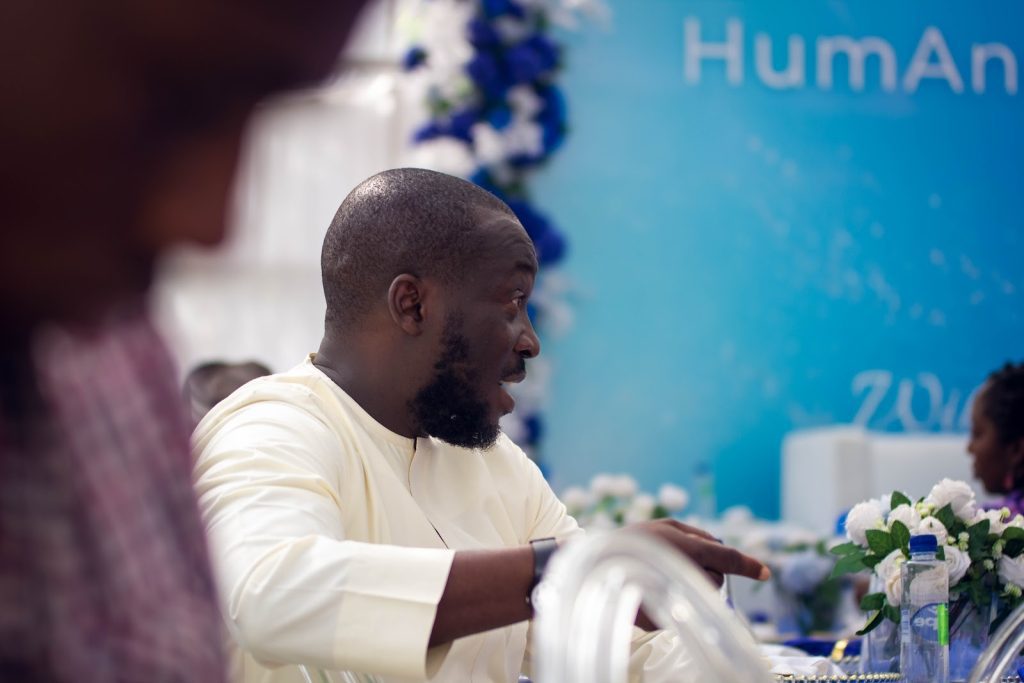
As part of the sixth-anniversary activities, a book-reading conversation was held on Monday evening, March 2, with award-winning Irish journalist Sally Hayden. Her book, “My Fourth Time, We Drowned on the World’s Deadliest Migration Route”, explores the harrowing realities faced by refugees, weaving together shocking personal accounts with a broader investigation into systemic failures—highlighting NGO negligence, corruption within the UN, and the disturbing economics of modern slavery.
Sally, while commending HumAngle’s work in documenting the human cost of insecurity in the Sahel, emphasised the importance of independent journalism in the region and the use of appropriate, generally acceptable language when reporting on conflict and displacement.
“Journalists have the duty to question the languages they use, especially when describing people in the face of conflict, migration crisis or displacement. If I were to rewrite this book today, I would probably correct certain descriptive words or language,” she added.
Ahmad Salkida founded HumAngle in 2020, launching a newsroom dedicated to conflict reporting amidst daunting challenges such as financial strains, political pressures, and operational risks.
Originating from Salkida’s personal encounters with the Nigerian military, the platform aims to amplify the voices of victims and survivors rather than simply echoing official narratives. In its evolution, HumAngle has expanded into a 40-member newsroom known for its innovative approach, incorporating deep investigations, ground reporting, and virtual reality documentaries, setting itself apart in African journalism.
Despite the heavy burdens and unsupportive environment, HumAngle persists, fostering public-interest journalism where it struggles to thrive. Its sixth-anniversary celebrations featured a book-reading event with Irish journalist Sally Hayden, whose work aligns with HumAngle’s mission to highlight underreported stories about migration and systemic failures.
Ahmad Salkida’s selection for the 2026 Yale Peace Fellowship, along with other recognitions, energizes the team to continue advocating for peace and impactful journalism.