Mecca

Turkiye’s parliament ratifies Mecca defence agreement | Military News

Parliament’s approval lays the groundwork for further Turkish involvement in Saudi Arabia’s conflict with the Houthis.

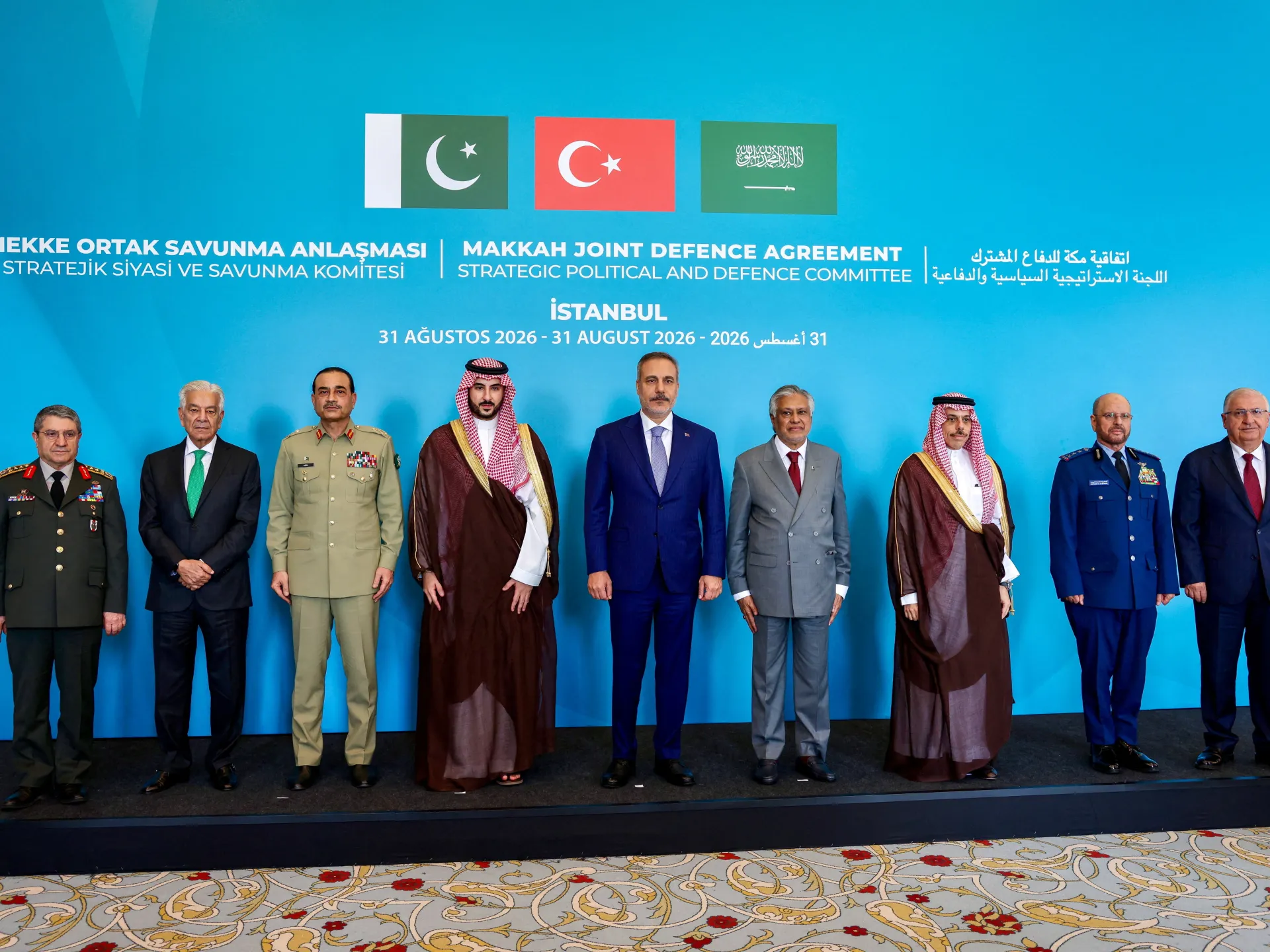
Turkiye’s parliament has ratified a defence pact with Saudi Arabia and Pakistan that includes a collective defence clause, committing NATO’s second-largest military to the group’s aid in case of attack.

The ratification on Thursday comes as Riyadh continues to face attacks by Yemen’s Iran-backed Houthis.

Recommended Stories

list of 3 itemsend of list

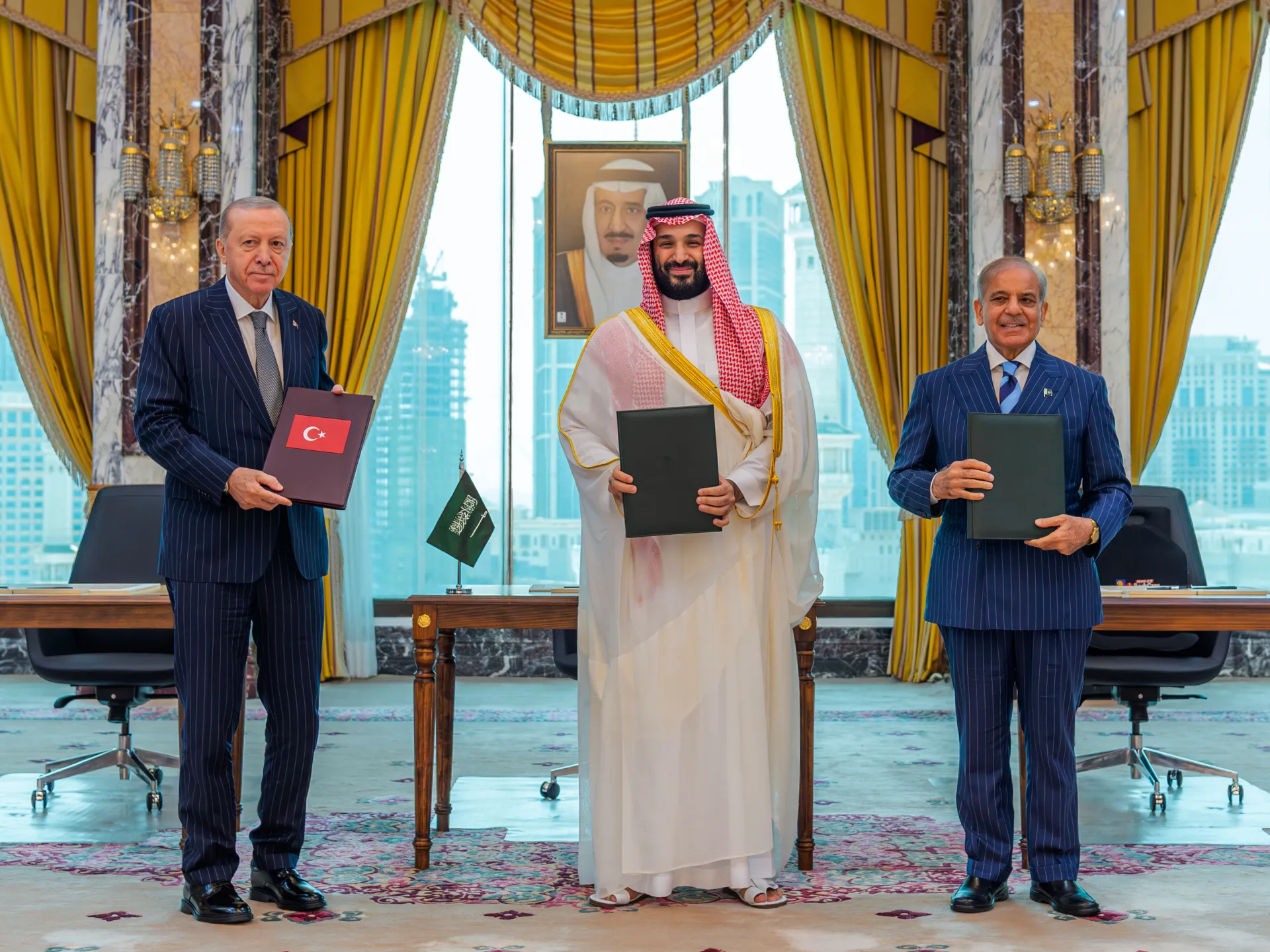
Turkiye first signed the Mecca Joint Defence Agreement in August and sent it to parliament for ratification last month.

Article 1 of a bill approving the pact was adopted by the Turkish parliament on Wednesday.

But afterwards, Deputy Parliament Speaker Celal Adan adjourned the session until Thursday afternoon, the Anadolu news agency reported.

After parliament returned to session, lawmakers continued to debate the other articles in the pact.

The agreement ultimately passed with 279 votes in favour and 119 against, with 398 of the chamber’s 592 lawmakers taking part in the vote.

The pact contains 16 articles, according to a document submitted to the Turkish parliament, seen by the Reuters news agency.

In Article 1 of the accord, the signatories shall use “all necessary means” to eliminate threats to one another’s territorial integrity. Article 1 can be invoked in case of an attack on any member state.

Once the first article is invoked, the document lays out provisions for what follows.

“In the event one of the parties is subjected to an armed attack or military aggression by another country or group of countries, the parties shall immediately provide assistance to the party under attack, utilising the full range of mutual assistance measures available to them,” says Article 2 of the pact.

This key clause mirrors Article 5 of the North Atlantic Treaty, the document that established the NATO military alliance. NATO’s Article 5 establishes that an attack on one member is treated as an attack on all.

Given that Turkiye is a member of both NATO and the Mecca pact, critics have raised questions about whether the country’s government might face a conflict of interest in allocating its military resources.

Turkish officials, however, have dismissed such concerns as unfounded.

Other articles in the Mecca pact concern a mutual agreement to increase defence industry cooperation and military coordination, with the aim of deterring threats.

Those articles, in part, commit member states to conducting joint training, pursuing technological innovation and sharing logistics and intelligence resources.

The draft approved by Turkish lawmakers commits member countries to the pact for 10 years, after which point they may withdraw.

It also leaves open the possibility of other countries joining, with the approval of the pact’s existing members. Syria’s government has already expressed interest.

Despite Thursday’s parliamentary ratification, it is not a foregone conclusion that Turkish troops would be deployed to Saudi Arabia amid the Houthi attacks.

Experts say any Turkish troop deployment would also require other legislative processes.

Turkiye’s Defence Minister Yasar Guler said in October that the scope of potential support for Saudi Arabia would be determined after ratification.

“We absolutely do not foresee entering into any conflict with the Houthis,” Turkish media reported Guler as saying. Instead, Turkish support “would be to strengthen deterrence”.

Tensions between Saudi Arabia and Yemen had abated somewhat following a 2022 ceasefire. But the Houthis have escalated their attacks on Saudi Arabia in recent months, notably launching a series of deadly strikes on King Khalid International Airport in Riyadh.

The region also remains embroiled in the US-Israel war on Iran, which has contributed to cross-border tensions.

On Thursday, Saudi Arabia announced it had intercepted a drone in the region of Medina. Riyadh has accused the Houthis several times of targeting Mecca and Medina, two holy cities in Islam, an accusation the Iran-backed group systematically rejects.
Source link

Mecca defence alliance members in Tehran to defuse Iran-US, Yemen tensions | US-Israel war on Iran News

Tehran, Iran – Ministers and senior security officials from Pakistan, Saudi Arabia and Turkiye – the three nations that signed the Mecca Joint Defence Agreement – are in Tehran to discuss regional security issues amid threats of new US strikes on Iran.

Saudi Defence Minister Khalid bin Salman Al Saud, Pakistani military chief Asim Munir and Turkish intelligence chief Ibrahim Kalin met Iran’s President Masoud Pezeshkian and will discuss tensions with security chief Mohsen Rezaei.

Recommended Stories

list of 3 itemsend of list

The meetings are among the highest-profile dialogues held in Tehran in recent months. While there is still little information on what might be discussed, the meetings come amid a flurry of diplomatic activity to deal with a new escalation between the United States and Iran.

But analysts broadly believe the visit to Tehran by the three signatories of the Mecca Joint Defence Agreement, a regional defence alliance, will be enough to prevent a new outbreak in violence between the US and Iran.

“The Mecca pact’s 11th-hour visit to Tehran is an attempt to tip the balance in favour of those willing to compromise before the guns start blazing again,” said Ali Vaez, deputy director of the Middle East and North Africa Program at the International Crisis Group.

“But unless they arrive with a credible formula to bridge the US-Iran divide, they may find themselves with little more than goodwill in a race against the clock.”

The talks are expected to address the waves of missile and drone attacks carried out by Yemen’s Houthi rebels, who are allied with Tehran, on Saudi Arabia, which supports Yemen’s internationally recognised government.

“I believe that parties to the Mecca agreement lack options of military engagement with the Houthis, but Riyadh is certainly asserting greater pressure for more, and its expectation of its partners has grown in parallel with the offensive from Yemen,” Ayesha Siddiqa, a senior research fellow in the Department of War Studies at King’s College London, told Al Jazeera.

But despite the collective security arrangement in the Mecca defence pact, Saudi Arabia’s allies Turkiye and Pakistan cannot “afford to commit troops on the ground” in Yemen, said Siddiqa.

The latest diplomatic push is likely linked to visits by Pakistani army chief Asim Munir to Saudi Arabia and Iran last week, Siddiqa said, and coincides with Islamabad’s restrictions on overland border trade with Tehran amid the US blockade on Iran.

Iranian authorities have said they favoured “security originating from within the region” as they prepared for the meetings.

Umer Karim, who researches Saudi foreign policy and its implications for regional security, said the Tehran meetings are unlikely to reduce the risk of a renewed war between Iran and the US, which would likely lead to more regional turmoil.

“Therefore, these talks perhaps are more concerned about the security of Saudi Arabia and involve an attempt by Turkiye and Pakistan to compel Iran to reach a compromise,” he told Al Jazeera.

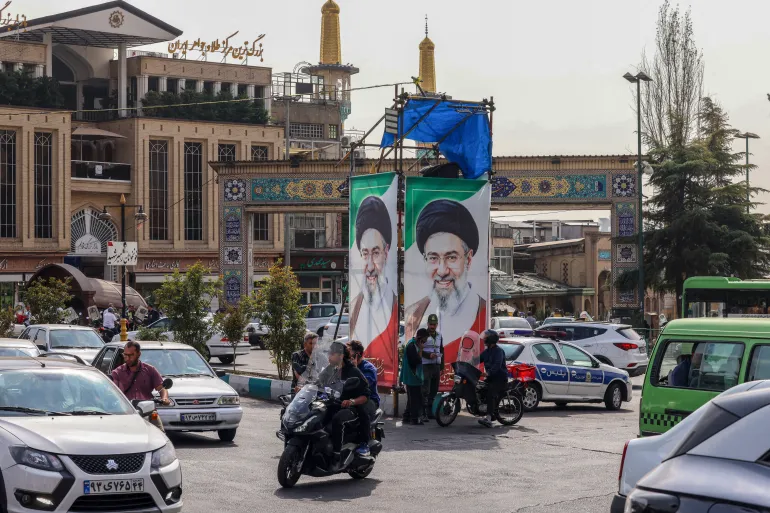
Traffic moves past portraits of Iran’s Supreme Leader Ayatollah Mojtaba Khamenei in Tehran on October 21, 2026
Traffic moves past portraits of Iran’s Supreme Leader Ayatollah Mojtaba Khamenei in Tehran on October 21, 2026 [Atta Kenare / AFP]


US President Donald Trump is said to be considering new attacks to break the diplomatic deadlock with Iran, which has refused to agree to any peace agreement with Washington unless several of its demands are met.

The US and regional powers want international shipping and transit through the Strait of Hormuz to resume without impediments or attacks. Washington also wants to rein in Tehran’s nuclear programme and bring in international inspectors to assess Iran’s highly enriched uranium. Israel says it wants to overthrow the Islamic Republic.

Tehran wants to lift the US naval blockade of Iran’s southern ports, which has halted crude oil exports and disrupted most trade, and return to a memorandum of understanding agreed between the two countries in June.

The US has refused this, with President Trump saying he is left with a choice to “finish the job” by launching major strikes on Iran’s civilian infrastructure. This could prompt Iran to lash out at its neighbours, as it did earlier in the war with strikes on US bases in Arab states and infrastructure.

Meanwhile, the US Department of State issued an October 21 order for nonemergency US government employees and their family ⁠members to leave Saudi Arabia for their safety’s sake, given the Houthi threat.

As talks involving Saudi Arabia, Pakistan and Turkiye continue in Iran, analysts say these Mecca Joint Defence Agreement signatories will likely try to minimise the impact on Saudi Arabia if war does break out again.

“However, since little has changed from an Iranian strategic calculus and the actors involved don’t have the kind of leverage needed to affect Iran’s strategic thinking, these negotiations are going to yield little,” Karim said.

Source link

Officials from Mecca pact states to hold talks in Iran amid regional tensions | News

Planned talks to be first high-level contact between Iran and the bloc since Houthi rebels escalated their attacks on Saudi Arabia.

Delegations from the Mecca Defence Alliance countries – Saudi Arabia, Turkiye and Pakistan – will visit Tehran for talks, according to Saudi and Iranian officials.

Ali Bagheri Kani, deputy secretary of Iran’s Supreme National Security Council, was quoted by state-run media as saying Saudi Defence Minister Khalid bin Salman Al Saud, Pakistani military chief Asim Munir and Turkish intelligence chief Ibrahim Kalin will participate in a joint meeting during their visit to Tehran on Monday.

Recommended Stories

list of 4 itemsend of list

The Iranian delegation will be led by Mohsen Rezaei, secretary of the Supreme National Security Council.

The participating countries could take an effective step towards establishing regional security based on actors in the region, Bagheri Kani said.

Rayed Krimly, the Saudi deputy minister for public diplomacy, also confirmed the meeting, adding that the visit comes as part of the continued efforts by the Mecca Defence Alliance allies “for de-escalation between parties involved in the ongoing crisis and promoting dialogue and diplomatic solutions in support of the mediation efforts carried out” by Qatar and Pakistan.

“The visit underscores the pivotal role of Mecca Joint Defence Agreement countries in reinforcing regional security and stability and working with all countries in the region to achieve that goal,” he wrote on X.

Houthi attacks on Saudi Arabia

The planned talks would be the first high-level contact between Iran and all members of the alliance since Yemen’s Iran-aligned Houthi armed group escalated attacks on Saudi Arabia last month.

Field Marshal Munir last week visited Tehran, where he met President Masoud Pezeshkian and other senior officials.

During the visit, Iranian officials told him there would be no talks with the United States about ending the US-Israel war on Iran until Tehran’s demands were met, according to Iranian media.

Pakistan has been a key intermediary between Washington and Tehran since the US and Israel launched the war in February.

Earlier mediation efforts helped produce an interim agreement in June, but the deal quickly unravelled as fighting between Iran and the US resumed weeks later.

Saudi Arabia intercepted another wave of missiles and drones on Sunday as fighting with the Houthis continued.

Ministers from the Mecca Defence Alliance countries held an emergency meeting in Riyadh this month and agreed to ensure the “rapid deployment” of military forces and capabilities in Saudi Arabia.

The Houthi attacks have become an increasingly destabilising element in the US-Israeli war on Iran, turning US ally Saudi Arabia into a pressure point ⁠⁠⁠⁠⁠⁠⁠⁠in the wider war.

Turkiye, Pakistan and Saudi Arabia signed the Mecca Joint Defence Agreement in August. Under it, an armed attack on one member is considered an attack on all.

The agreement’s first article says the parties shall use “all necessary means” to eliminate threats to one another’s territorial integrity, sovereignty and internationally recognised borders, according to the text publicised at the time.

Efforts by Turkiye’s parliament to ratify the agreement began last week and are still under way while Pakistan approved the pact last week.

Source link