littleknown

We’re travel experts – all the little-known holiday websites and apps we use to save hundreds & even earn FREE cash

WITH decades of years of experience, it’s safe to say the Sun Travel team know their stuff when it comes to saving money on holidays.

We spend hours trawling the internet to find the biggest bargains and tricks so you don’t have to spend much on your next flight or hotel.

Caroline’s trip to the Grand Canyon was best booked with Dial A Flight Source: Alamy
The package included transatlantic flights and 10 days of car hire, plus 5 nights of hotels in the Grand Canyon and Vegas for £2,057 Source: Getty

That means we also know the little known websites that most folk may not have heard of, but that can really save you cash when used.

So here are our all of our top holiday websites and apps that we swear by when we are even booking our own trips abroad – and they could save you hundreds.

Dial A Flight

I have told so many people about how wonderful Dial A Flight is – it was originally recommended to me by my colleague Lisa Minot.

It was before I even made the move into travel journalism and was looking for a company that would sell me a road-trip holiday to Arizona, the Grand Canyon and Las Vegas without a huge price tag. 

We got transatlantic flights and 10 days of car hire, plus 5 nights of hotels in the Grand Canyon and Vegas for £2,057.

Admittedly that was 2014, but the principle of Dial A Flight remains the same – if you bundle flights, car hire and hotels into a package, they can do you an offer that is almost too good to be true. 

Plus, they’re on the other end of the phone when things go wrong (like the time I was flying into New Orleans during a hurricane), and also ATOL protected in case things go REALLY wrong, so long as you’ve bought flights and hotels. 

They work best for long haul holidays, as that’s where they can do the best savings. So if you’re planning a trip, give them a call and see what they can do pricewise. Chances are you’ll be pleasantly surprised. – Caroline McGuire, Head of Travel (Digital)

Jack’s Flight Club

Signing up to Jack’s Flight Club is a fantastic way to be alerted to some incredible savings on flights – up to 80 per cent below the usual rates.

Their team of experts and custom software monitors airlines for hidden price drops, rare mistake fares and unadvertised sales on flights departing from the UK.

Sending subscribers an instant email with the savings, and alerting via their app, the service links you straight to the airline or booking agent so you can buy direct.

See jacksflightclub.com.– Lisa Minot, Head of Travel

Eurostar Snap

You can save up to 50 per cent on Eurostar using Eurostar Snap Source: Alamy

If you have some flexibility on your holiday to Europe, Eurostar Snap is a great little money saver.

The last minute train tickets can be booked up to 10 days in advance and you pick a time slot – usually a morning or evening.

You then get told your train time 48 hours in advance, with tickets up to 50 per cent cheaper.

You can put that money towards some Parisian patisseries or Belgian beer… – Jenna Stevens, Travel Reporter

Dis-loyalty

Dis-loyalty is a travel and food membership that costs £12 a month to join.

In return, you’ll earn points and get discounts on hotel stays, such as 50 per cent off newly opened hotels.

You can also grab a free hot drink each day at one of the membership’s participating locations.

I’ve managed to experience some fantastic five star hotels that I wouldn’t have been able to afford otherwise. – Cyann Fielding, Travel Reporter

AeroLOPA

Okay, so this website won’t save you money persay, but it does let you find the best seat in economy without having to upgrade – so that’s basically saving you cash, right?

AeroLOPA is a website with every airline’s seating plans, with interactive graphics letting you look at them all.

Not only that, but each seat is ranked out of five for how good it is, with green highlights for things like extra legroom or red highlights if it is near the bathroom.

I swear by this for picking out the ‘best’ seat in whichever class you are sitting in, without having to pay extra. – Alice Penwill, Travel Reporter

Google Flights

The Google Flights interface is so easy to use when it comes to choosing destinations, luggage and stopovers Source: Alamy

The inevitable question I get from all my friends when they are booking their holiday – where can I find the cheapest flights?

And I always direct them to Google Flights, as it’s my go-to spot.

The interface is so easy to use when it comes to choosing destinations, luggage and stopovers, that it’s incredibly easy when booking flights. 

I’ve even checked its prices with other booking platforms – and it always comes out on top. – Kara Godfrey, Deputy Travel Editor

Trip.com

Did you know that Trip.com has lots of discounts when it comes to hotels and attractions?

I swear by using the app when it comes to booking anything abroad now as it has extra perks like 10 per cent off hotels and car rentals.

It’s also a bit of a secret gem for finding the best attractions and places to explore that locals actually visit, rather than Google churning out rubbish.

We even tried out their new Traincard which gets 10% extra off train travel – you can save hundreds a year! – Jenna Stevens, Travel Reporter

Too Good to Go

We were shocked to find that you can use Too Good To Go in destinations abroad too Source: Alamy

I felt like I struck gold when I found the Too Good To Go app – over the past few years I have used it across the globe to pick up leftover food that would otherwise go to waste.

From a $3 bag of Chinese food in New York to a €4 bag of six pastries in Barcelona, the app is extremely handy if you need to eat on holiday but don’t want to spend much.

I’ve used it for both lunch and dinner and when you are in big cities there is plenty of choice – I’ve even been lucky enough to score a bag of sushi worth £45 in London for just £3.59.

Different bags have different pick up times too, so you could even get yourself a hotel breakfast buffet bag.– Cyann Fielding, Travel Reporter

Quidco

I’ve made a nice little nest egg thanks to using Quidco every time I book a trip.

There’s eight per cent at Hotels.com, 10 per cent on Expedia and three per cent on loveholidays, while airlines like British Airways, Virgin, Emirates and Jet2 offer cashback too.

I then let all of the cashback sit there and save it up for another holiday or Christmas shopping.

And all you do is go via the website before booking- so it’s free money really… – Sophie Swietochowski, Assistant Travel Editor

Avios

Using your Avios points is a great way to save money Source: Alamy

You may roll your eyes at the term ‘loyalty scheme’, but you’re going to want to hear me out on this one, as Avios will make your other loyalty cards seem utterly pathetic.

Download the app, and every time you do any online shopping, you should check if you can earn points at that retailer by clicking on the ‘collect’ button on the Avios site or on the app.

A few months ago I gained 2,500 Avios simply by renewing my car insurance with Compare the Market, and another 1,790 Avios, just through my regular, everyday shopping.

You can then use those Avios on “reward” flights with the IAG and Oneworld airlines – in two years I nearly have 100,000 points, which is nearly a return flight to Australia. – Sophie Sophie Swietochowski, Assistant Travel Editor

GHIC

Did you know millions of Brits don’t have this free travel card – and that can lead to very expensive bills on holiday.

Called the Global Health Insurance Card (GHIC), it permits you to get free state healthcare when outside of the UK, like A&E visits or routine medical checks when in an EEA country, as well as Montenegro, Australia, Jersey, Guernsey and the Isle of Man, as well as some overseas British territories.

While it doesn’t cover things that travel insurance does like repatriation home or private healthcare, these cards are essential for basic care in these countries, especially when travelling Europe.

Don’t fall for scam websites though – the only way to get the free card (which lasts five years) is via the government website here. – Alice Penwill, Travel Reporter
Source link

Mysterious MQ-25 Stingray-Like Chinese Drone Emerges At Little-Known Flight Test Center

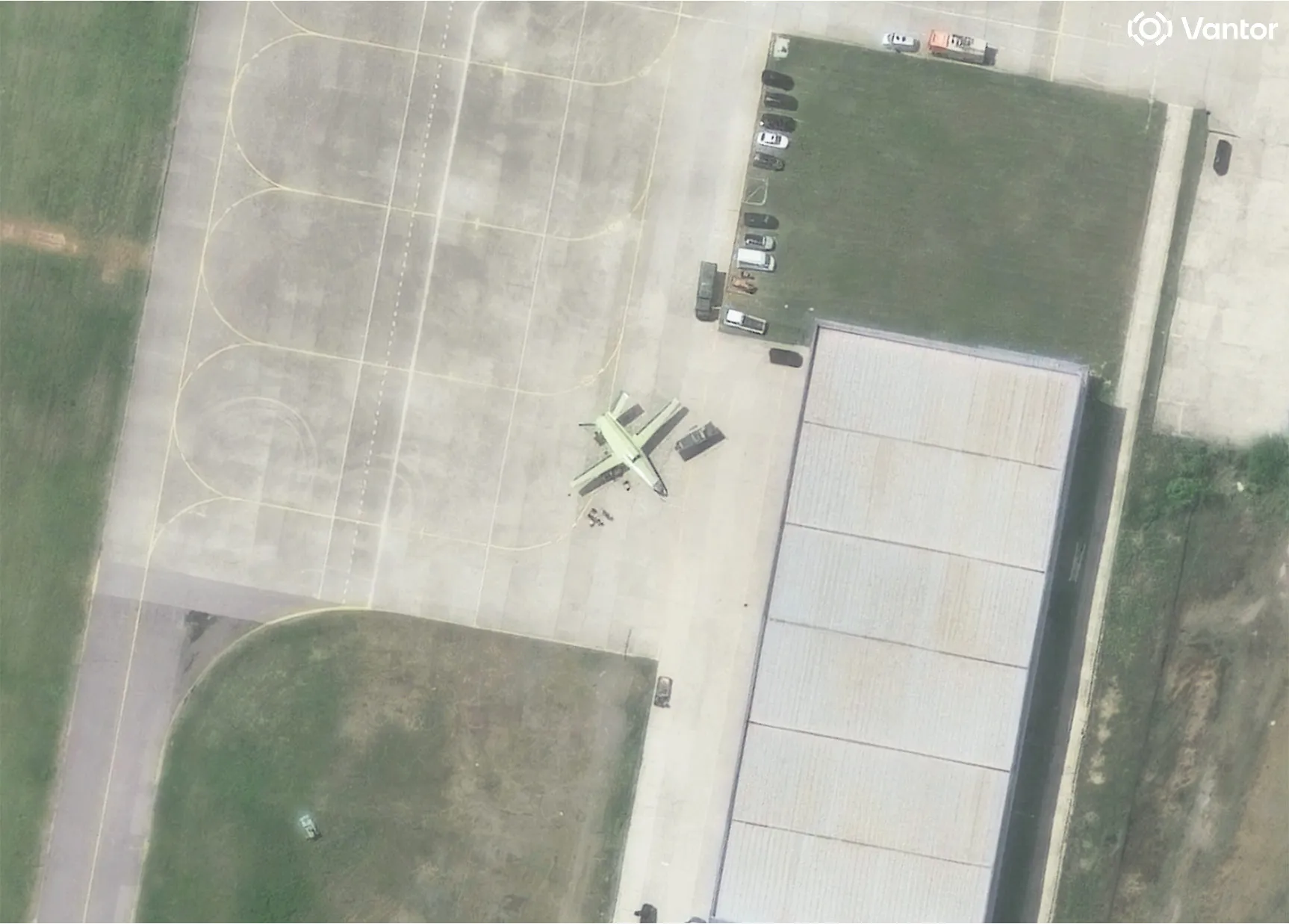
Satellite imagery has revealed an unusual uncrewed aircraft at Pucheng, China, with a configuration that bears very strong similarities to Boeing’s carrier-based MQ-25 Stingray. While we still have no idea about the function of the drone, the facility itself also appears to be an increasingly important hub for China’s expanding uncrewed aircraft industry.

A wider-view satellite image provided to TWZ by Vantor shows the mystery drone at Pucheng on April 23, 2026. Satellite image ©2026 Vantor

The drone initially attracted attention after being spotted in a satellite image of Pucheng Neifu Airport in Shaanxi Province, in northwestern China, available through Apple Maps. A separate image of the drone, where it appears on a runway, is also available through Bing Maps. TWZ subsequently obtained imagery of Pucheng from Vantor showing the uncrewed aircraft in question.

As well as the unidentified aircraft, imagery from Pucheng dating from April of this year also reveals what appears to be a CH-7 stealthy flying-wing drone and an example of the heavyweight jet-powered Jiutian mothership drone.

A CH-7 at Pucheng on April 23, 2026. Satellite image ©2026 Vantor
A Jiutian drone mothership at Pucheng on April 23, 2026. Satellite image ©2026 Vantor

The most obvious comparison for the unidentified aircraft is Boeing’s MQ-25 Stingray.

The MQ-25 is a carrier-based uncrewed aircraft developed primarily to provide aerial refueling for U.S. Navy aircraft, extending the range and operational flexibility of carrier air wings. It also provides a foundation for future uncrewed naval aviation capabilities.

In terms of dimensions, the unidentified Chinese UAV has a wingspan of approximately 66 feet and a length of 49 feet, according to Vantor. In contrast, the MQ-25 measures approximately 75 feet in wingspan and 51 feet in length.

MQ-25 Stingray. Boeing

The Chinese drone appears to occupy a similar general design category, but there are several important differences notable at this stage.

One of the most noticeable is the forward fuselage. Unlike the MQ-25, whose forward section has a relatively flattened, shovel-like appearance, the Chinese aircraft appears to have a more conventional, tapered nose. Perhaps this could incorporate a conical radome housing radar equipment. That theory, and it is just a theory, could be supported by the different color of the nose compared to the yellow primer-painted airframe.

The air intake is also different. Rather than the exotic, flush inlet associated with the MQ-25, the Chinese design has a more conventional dorsal intake that appears serrated to help with radar signature and/or split into two channels. Another possibility is that the aircraft has two engines, although that remains speculative, based on the apparent bifurcated intake.

A side-by-side look at the drone seen in the image of Pucheng, at left, and an MQ-25, offering comparative views of their inlets. Satellite image ©2026 Vantor/Boeing

The tail configuration may also be distinctive, with a laterally flared V-tail, like the MQ-25, but possibly incorporating visible control surfaces instead of an all-moving tailplane design.

Taken together, these features suggest an aircraft that shares some of the MQ-25’s general design philosophy but is not an attempt at a direct clone.

Long-time Chinese aerospace observer and TWZ contributor Andreas Rupprecht, who has been following developments surrounding the aircraft, believes China could be following a development path similar to Boeing’s, potentially producing a carrier-based uncrewed aerial refueling platform that can also undertake intelligence, surveillance, and reconnaissance (ISR) missions.

“I think China is actually following the same path as Boeing here, and it’s heading towards a tanker that can also take on other roles as an ISR platform,” Rupprecht told us.

A radar-equipped aircraft with substantial endurance could potentially perform surveillance and other sensor-related missions when not being used as a tanker.

The potential development of a multirole uncrewed tanker at Pucheng would also fit into a much broader push by China to expand the role of uncrewed aircraft in its naval aviation forces.

One of the most notable developments is the GJ-21, a navalized derivative of the GJ-11 Sharp Sword stealth uncrewed combat air vehicle (UCAV). Featuring folding wings and provisions for catapult launches and arrested recoveries, the low-observable flying-wing design is intended to operate from China’s growing fleet of large-deck warships, including the Type 076 amphibious assault ship Sichuan. In October 2026, Chinese state media reported that the GJ-21 had successfully completed its first takeoff and landing aboard the vessel, a significant milestone in the development of shipborne fixed-wing combat drones.

GJ-21 carrier-based UCAV. via Chinese internet

The GJ-21 effort is taking place alongside the introduction of China’s new catapult-equipped Fujian aircraft carrier, which has begun operating the J-35 stealth fighter, J-15T carrier-based fighter, and KJ-600 airborne early warning aircraft. Taken together, these developments point to an increasingly ambitious effort to integrate uncrewed aircraft into China’s future carrier air wings, potentially spanning stealthy strike platforms, surveillance systems, and other specialized support aircraft. The unidentified Pucheng aircraft could represent another, quite different part of that wider effort — or something else altogether.

At the same time, this aircraft is roughly 20 percent dimensionally smaller than the MQ-25, which would mean it would have less fuel to give. It’s also worth noting that Boeing’s MQ-25 emerged from an unmanned combat air vehicle (UCAV) design that included low-observable features. Multirole UCAV concepts predating it also looked very similar.

The MRE concept from Lockheed during the 1990s looks very similar to the MQ-25 we know today. (Lockheed Martin)

In addition, Collaborative Combat Aircraft (CCA), for instance, the FQ-42 Vengeance, and also the XQ-67 Off-Board Sensing Station share a similar overall design.

With this in mind, and remembering its different nose section, this could just as easily be a true multirole UCAV or even a CCA, such as one designed for force protection of high-value aerial assets, and it may not even be carrier-capable.

Rupprecht cautioned that the manufacturer of the mystery drone remains unidentified. However, one of the more interesting clues about the aircraft’s possible origins comes from Shenyang Aircraft Corporation (SAC).

Rupprecht pointed to a propeller-driven demonstrator unveiled by SAC in 2025, which he believes could fit the development lineage of the larger aircraft now visible at Pucheng.

The sub-scale propeller-driven demonstrator unveiled by SAC in 2025. The background reads (rough translation): “Rollout Ceremony for Final Assembly of Shenyang’s First ‘Surrogate Flight Test’ Pilot-Test Verification Platform UAV.” via Chinese internet

A smaller, propeller-driven demonstrator could provide a relatively inexpensive way to investigate aerodynamic characteristics, autonomous flight controls, mission systems, and other technologies before progressing to a much larger aircraft.

This piston-powered, propeller-driven aircraft with a broadly similar configuration to the MQ-25 was seen in a video flying, as well.

Whether the Pucheng aircraft is related to this SAC demonstrator or if it’s an entirely separate program remains unknown. Beyond the external resemblance, there are no indications that they are linked, and the aircraft could just be a general test surrogate platform. The configuration isn’t totally novel in the advanced UAS world.

The aircraft’s appearance is also interesting given the location where it has been spotted.

Pucheng Neifu Airport is located in Shaanxi Province, and its surrounding aviation facilities include an area identified in Apple Maps as the National Aeronautics Industrial Base Pucheng General Aviation Industrial Park Guanliban.

The industrial park has its own smaller runway, separate from the main airport infrastructure.

A close-up of Pucheng with no drones visible, as of June 16, 2026. Satellite image ©2026

The site had remained relatively obscure to outside observers until roughly the past one to two years, according to Rupprecht. More recently, however, various aircraft manufacturers have apparently been conducting testing there.

This raises the possibility that Pucheng is not simply an individual manufacturer’s flight-test location, but a facility used by multiple organizations developing and evaluating uncrewed aircraft.

Rupprecht also raised the possibility that Pucheng could potentially be a specialized uncrewed aircraft testing facility associated with China’s Flight Test Establishment at Xi’an, commonly known as CFTE.

“I cannot say (yet) whether this — and this is my theory — is effectively a branch of the CFTE at Xi’an, which is for crewed and this is a base for uncrewed ones,” Rupprecht explained.

A satellite image provided to TWZ by Vantor provides an overview of Pucheng as of April 23, 2026. Satellite image ©2026 Vantor

If Pucheng does serve as a shared testing location for multiple manufacturers, it could help explain the appearance of several otherwise unrelated UAV designs at the same site.

Returning to the mystery drone, the combination of its apparent size, configuration, and possible connection to earlier Chinese demonstrator programs makes it an interesting development to watch.

Regardless, for now, the imagery from Pucheng offers a glimpse of a potentially significant new Chinese uncrewed aircraft program.

Contact the author: thomas@thewarzone.com

Thomas Newdick is a staff writer at TWZ, where he covers military aviation, defense technology, weapons systems, and international security. Based in Berlin, Germany, he reports on conflicts, military modernization efforts, and emerging aerospace technologies around the world, with a particular interest in airpower and its role in contemporary warfare. His reporting is informed by deep expertise in modern and historical airpower, particularly in Europe, with a focus on military aviation, air campaigns, and aerospace developments across the continent and beyond.


Tyler’s passion is the study of military technology, strategy, as well as foreign policy, and he has fostered a dominant voice on those topics in the defense and national security space. Tyler was the creator of the hugely popular defense site Foxtrot Alpha before developing TWZ, which he continues to lead as the Editor-In-Chief to this day.


Source link

The little-known way to always get the best seat in economy WITHOUT paying extra

PICKING the best seat in economy no longer just boils down to aisle or window.

Some seats come with extra perks like more legroom or easier access to the bathrooms – but how do you know which one to choose?

There’s a site that will show you all the best places to sit on a plane Source: Getty
AeroLOPA shows highly detailed maps of plane cabins Source: AeroLOPA

There is a little known tool that can tell you everything you need to know about the seats on your flight and help you to find the best one.

AeroLOPA has highly detailed seat maps that are drawn to scale.

To use the website, you need to know the airline and the aircraft you are flying on, although this can be found with a quick Google search.

When you know if, you can check the website for all kinds of extras such as how much legroom there is as well as how far the exit door intrudes into a leg room area.

Read more on travel inspo

GO ON

All the little-known websites for cheap or FREE tickets to gigs, theatre & festivals


BOOK IT

20 ultra cheap girly hols – UK trips, city breaks & all inclusive stays from £59

You can also find out which seats have the best window view.

And the seats even have reviews from other passengers, which are ranked up to 5, with red being bad, amber being fine and green being the best.

Seats that are yellow usually have downfalls, which can include being located near a bassinet-suitable seat, suggesting that you could face noisy children during the flight.

Other things highlight include if the window is aligned behind the seat, when there is no under seat storage and being near the loo.

And it will even show you where you could get extra leg room for free Source: Getty

Any seat highlighted with red are rated as the worst seats on the plane and will be labelled with ‘avoid’ – unless you fancy sitting directly by a possibly smelly and noisy loo.

In our opinion? You will normally find the best seats near the front of economy, due to legroom by the bulkseat, or by the back where you might have a missing seat (so more room for yourself).

AeroLOPA doesn’t just have seat maps either.

You can also access its Super Schedule which shows all the possible flights on a route to choose from.


Source link