Licenses

Supreme Court rejects Florida’s bid to sue Western states over truck licenses for immigrants

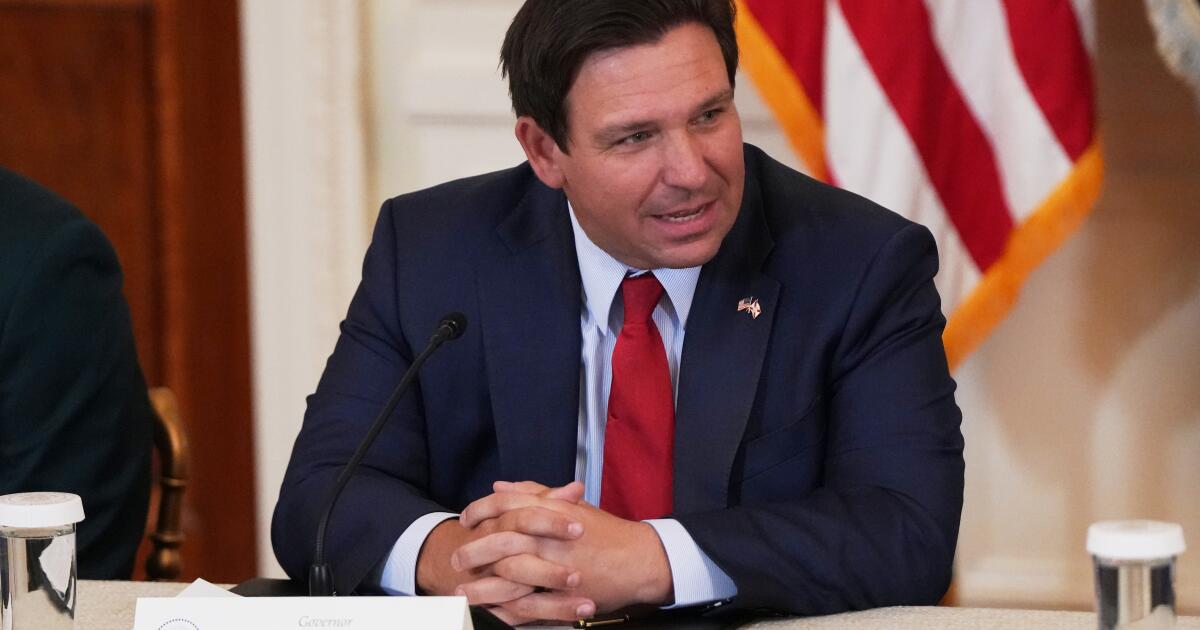
The Supreme Court on Tuesday rejected Florida’s long-shot attempt to sue California and Washington state over the issuance of commercial driver licenses to truckers who don’t speak English and are not authorized to be in the United States.

The case stems from a crash in Florida last year that killed three people. The driver, Harjinder Singh, is accused of making an illegal U-turn that caused the accident. Singh, who is from India, was carrying a valid commercial driver’s license from California and had earlier been granted one by Washington state.

Republican-led Florida has accused the Western states, led by Democrats, of openly defying immigration laws and asked the justices to rule that states lack the authority to issue CDLs to people who are not citizens or legal permanent residents.

The Supreme Court typically hears appeals of lower-court decisions, but it sometimes takes on what are known as original lawsuits in which states sue each other in the nation’s highest court.

Justices Clarence Thomas and Samuel A. Alito Jr. dissented from Tuesday’s order, as they often do when the court rejects an original lawsuit, saying that the court has no choice but to hear such cases.

Separately, a federal appeals court has blocked a Trump administration proposal to impose new restrictions that would severely limit which immigrants can get commercial driver’s licenses to drive a semitrailer truck or bus.

Source link

With Kimmel under fire, FCC moves to review ABC’s TV station licenses

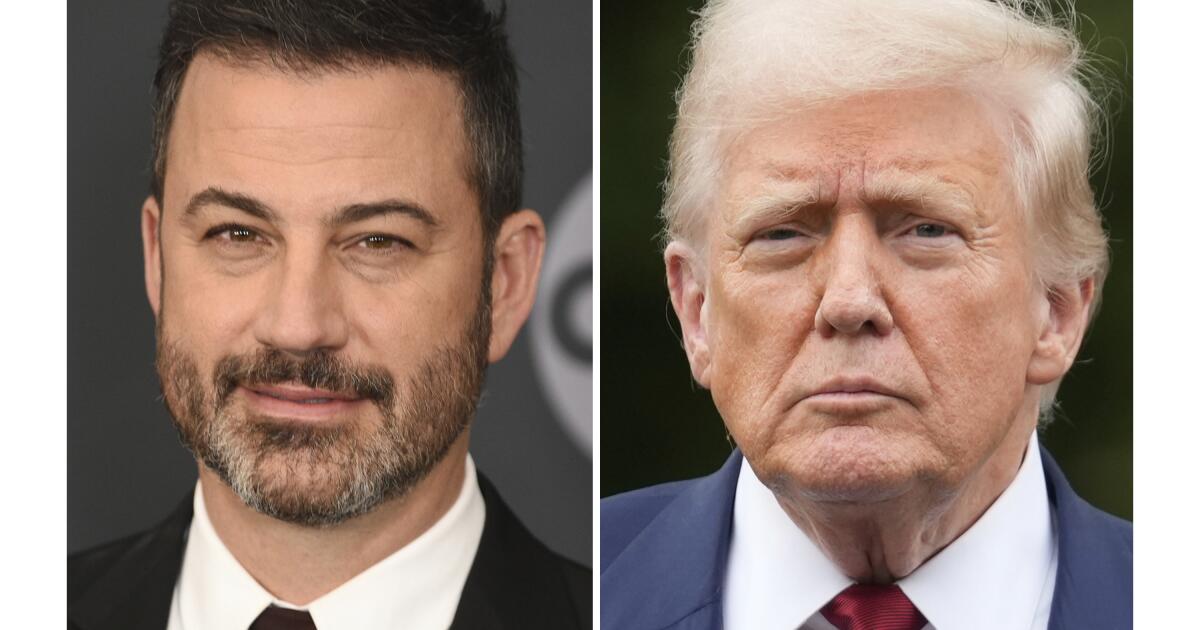
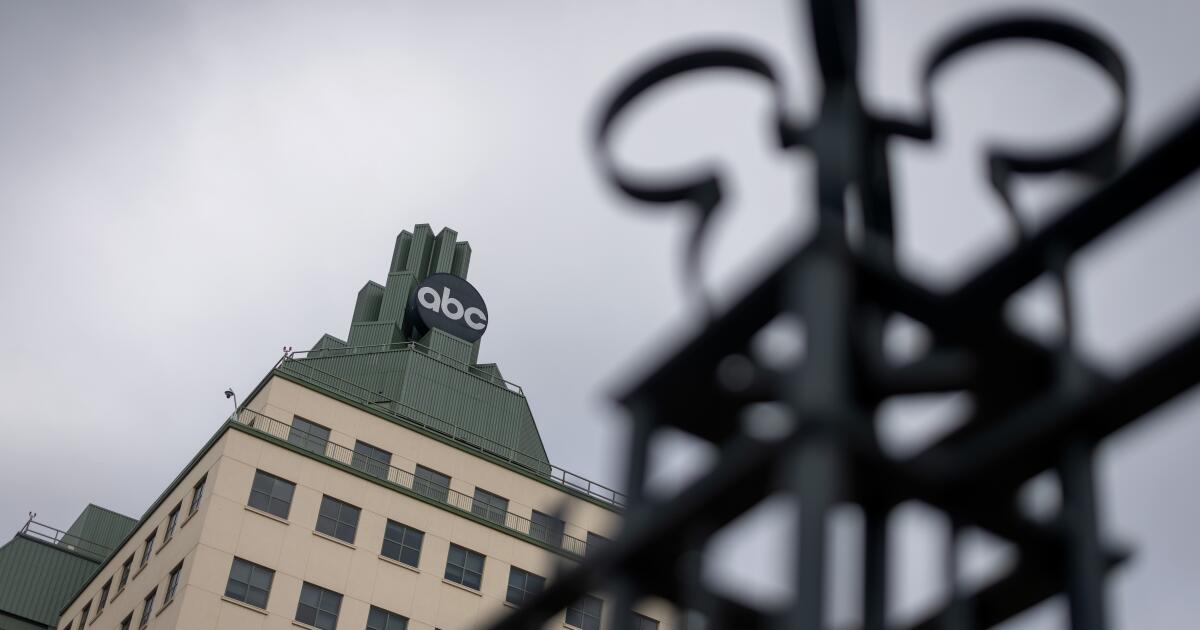
The Federal Communications Commission is considering an early review of the Walt Disney Co.’s broadcast TV licenses amid criticism of ABC late-night host Jimmy Kimmel’s provocative jokes ahead of the White House Correspondents’ Assn. dinner.

The order could come as soon as Tuesday, according to Semafor, which first reported that the review is expected. The licenses for ABC’s stations — which include KABC in Los Angeles — were not scheduled for renewal until 2028.

Disney has not commented on the possibility of a review.

The move was likely in the works before the latest kerfuffle over Kimmel, who is under fire for a comedic bit that satirized the annual Washington gala that Trump attended for the first time. FCC Chairman Brendan Carr, who has targeted the political content on the ABC daytime talk show “The View,” told The Times on Saturday that an action related to ABC programming was coming this week.

Carr has suggested “The View” should not be exempt from the FCC’s equal time rule that requires broadcasters to bring on a politician’s rival to provide balanced coverage and multiple viewpoints.

Carr, who was at the Saturday dinner, made the remark just hours before the event was shut down after a Torrance man breached security at the Washington Hilton while armed with a shotgun, handgun and several knives. The suspect, Cole Tomas Allen, was arrested and faces three criminal charges, including attempting to assassinate President Trump.

Right-wing commentators have gone into heavy rotation with the claim that a routine by Kimmel inspired Allen to act.

During the bit that aired Thursday, a tuxedo-clad Kimmel called First Lady Melania Trump “beautiful,” saying she had “the glow of an expectant widow.” The comic explained Monday that the gag was a reference to the age difference between Trump and his wife.

“It was a very light roast joke about the fact that he’s almost 80 and she’s younger than I am,” Kimmel said. “It was not, by any stretch of the definition, a call to assassination. And they know that.”

Since becoming FCC chairman last year, Carr has repeatedly threatened to use the levers of power he has to punish TV and radio stations that irritate Trump. His behavior has alarmed free speech advocates, including the FCC’s lone Democratic appointee Anna Gomez, who noted that early station renewal reviews are exceedingly rare and largely futile.

“This is unprecedented, unlawful, and going nowhere,” Gomez said in a statement. “It is a political stunt and it won’t stick. Companies should challenge it head-on. The 1st Amendment is on their side.”

Other White House administrations have threatened to pull TV station licenses in response to negative news coverage. At the height of the Watergate scandal in the 1970s, Richard Nixon’s allies unsuccessfully attempted to challenge the TV licenses for three stations owned at the time by the Washington Post.

RKO General, a unit of the General Tire and Rubber Co., was the last company to lose broadcast TV station licenses in 1987, including Los Angeles outlet KHJ. The case was related to corporate malfeasance and not broadcast content on the stations.

The process to revoke the RKO licenses took seven years from the moment the FCC voted in favor of the move.

Source link

Venezuela: Trump Administration Issues Banking Licenses as Rodríguez Eyes ‘Long-Term’ US Energy Ties

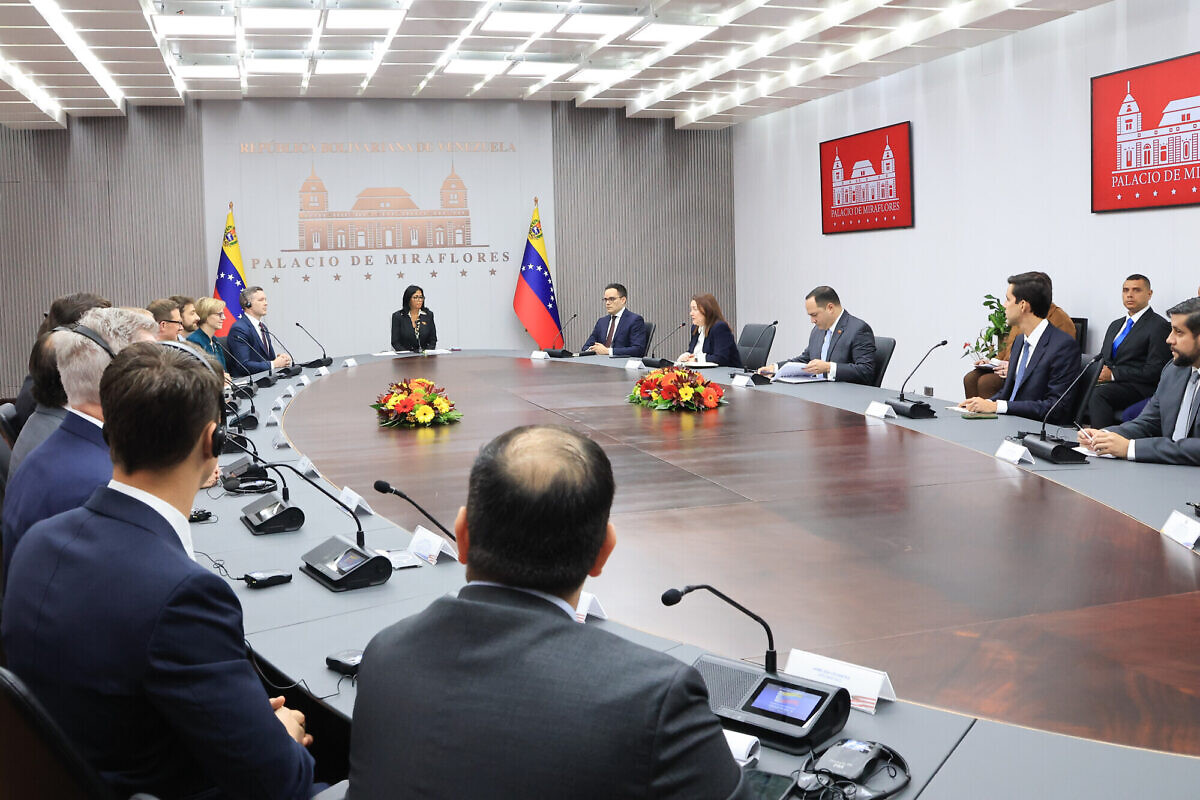
Rodríguez hosted US Energy Assistant Secretary Kyle Haustveit at Miraflores Palace. (Presidential Press)

Caracas, April 15, 2026 (venezuelanalysis.com) – The US Treasury Department’s Office of Foreign Assets Control (OFAC) issued two new general licenses on Tuesday facilitating transactions with Venezuelan state institutions.

 for Venezuela on Tuesday: a commercial license (No. 56) and a financial license (No. 57), signaling a partial easing of restrictions while maintaining key controls.

General License 56 (GL56) authorizes US entities to negotiate and sign “contingent contracts” for future commercial operations in Venezuela. This allows firms to move forward with agreements, investments, or projects, though their final execution remains subject to separate OFAC approval.

The waiver maintains important restrictions, including a ban on payments in gold or cryptocurrencies, as well as prohibitions on transactions involving China, Russia, Iran, North Korea, and Cuba. It likewise forbids transactions involving Venezuelan debt and does not unblock currently frozen Venezuelan assets.

For its part, General License 57 (GL57) permits a broad range of financial operations with the Venezuelan Central Bank (BCV), as well as Venezuela’s public banks: Banco de Venezuela, Banco Digital de los Trabajadores, Banco del Tesoro, and entities in which these institutions hold a 50 percent or greater stake.

The allowed transactions include opening and managing accounts, conducting US dollar transfers, issuing loans, and providing banking services. The BCV was sanctioned in April 2019, effectively isolating Venezuela from international financial circuits and increasing costs for basic transactions.

The latest sanctions waivers are expected to facilitate financial flows to the Venezuelan economy, including the transfer of Venezuelan oil revenues that are currently controlled by the Trump administration. US authorities have returned a confirmed US $500 million out of an initial deal estimated at $2 billion, while US and Venezuelan officials have confirmed the purchase of US-manufactured medicines and hospital equipment using Venezuelan funds.

Analyst Hermes Pérez warned that reincorporation into the SWIFT system and establishment of US-based accounts could take several months due to security and technological requirements. Other economists argued that GL57 could allow the Central Bank to stabilize the Venezuelan foreign exchange system.

For several years, a parallel exchange rate between the US dollar and the Venezuelan bolívar has coexisted with the official one set by the Central Bank, often with a gap above 50 percent that fueled distortions in retail activities and currency speculation.

Since the January 3 military strikes and kidnapping of Venezuelan President Nicolás Maduro, the Trump administration has issued several licenses to expand US influence in the Caribbean nation, particularly in key economic sectors such as hydrocarbons and mining.

In parallel, Venezuelan authorities have promoted several pro-business reforms, while multiple Trump officials and corporate executives have come the South American country and held meetings with the acting government led by Delcy Rodríguez.

The latest waivers coincided with the visit to Caracas of a US Department of Energy delegation led by Assistant Secretary Kyle Haustveit. Rodríguez hosted the official on Wednesday in a work meeting at the presidential palace.

During a short, televised intervention, Rodríguez argued that OFAC licenses do not provide sufficient “legal certainty” and reiterated calls for Trump to lift unilateral coercive measures against the country.

“An investor requires greater legal certainty. A license does not provide long-term legal guarantees because it is subject to temporality,” she argued. Rodríguez claimed Washington and Caracas have “enough maturity” to establish “long-term” energy cooperation ties.

“We are working very hard on changes that can attract investment, and which can build an energy cooperation agenda with the United States,” she said.

Rodríguez additionally disclosed recent meetings with representatives from ExxonMobil and ConocoPhillips, stating that authorities have “taken into account recommendations” from oil majors in recent legislative overhauls. Both ExxonMobil and ConocoPhillips refused to accept hydrocarbon reforms under former President Hugo Chávez in the 2000s, later securing multi-billion-dollar arbitration awards against the Caracas as compensation for the nationalization of their assets.

Haustveit and the Energy Department delegation were also present on Monday during the signing of agreements with Chevron that granted the Texas-based conglomerate an increased stake in the Petroindependencia joint venture and awarded an additional extra-heavy crude bloc for exploration to the Petropiar mixed company. Chevron owns minority stakes in both joint enterprises with Venezuelan state oil company PDVSA.

Shell, Eni and Repsol are among the other energy giants to have recently advanced in deals with the Venezuelan government under the improved conditions of the new Hydrocarbon Law.

US Chargé d’Affaires in Venezuela Laura Dogu was also present at the Chevron deal-signing ceremony and the meeting with Haustveit’s delegation. However, the White House announced Wednesday that her post will be taken over by veteran diplomat John Barrett.

Barrett, who previously served as chargé d’affaires at the US Embassy in Guatemala since January 21, 2026, was recently accused by Guatemalan President Bernardo Arévalo of interference during judicial elections for the Constitutional Court held in March.

Edited by Ricardo Vaz in Caracas.

Source link