South Korea caps gasoline prices at 1,724 won per liter

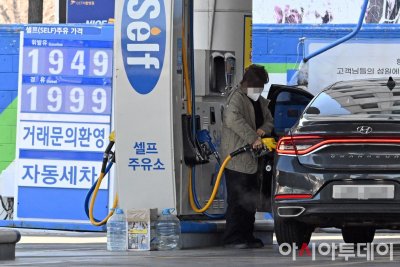
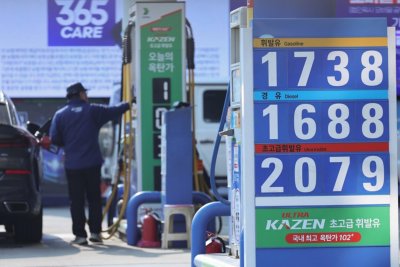
A signboard at a gas station in Seoul shows gasoline and diesel prices in Seoul, South Korea, File. Photo by YONHAP / EPA
March 12 (Asia Today) — South Korea will impose a temporary price cap on petroleum products starting Friday, setting the first ceiling for gasoline at 1,724 won ($1.29) per liter as the government moves to curb surging fuel prices.
The Ministry of Trade, Industry and Energy said Thursday the “petroleum product maximum price system” will take effect at midnight and apply to fuel prices supplied by refiners to gas stations and distributors.
The first price caps are set at 1,724 won ($1.29) per liter for gasoline, 1,713 won ($1.28) for automotive diesel and 1,320 won ($0.99) for kerosene.
The measure will remain in place for two weeks through March 26 and will be reviewed every two weeks based on fluctuations in global petroleum product prices.
The government said the caps are significantly lower than the average supply prices submitted by refiners on Tuesday. At that time gasoline averaged 1,833 won ($1.37) per liter, diesel 1,931 won ($1.45) and kerosene 1,728 won ($1.30).
Compared with those levels the new caps are lower by 109 won for gasoline, 218 won for diesel and 408 won for kerosene.
Officials said the policy aims to quickly slow the recent surge in oil prices and ease instability in the fuel market.
The price cap will apply only to wholesale supply prices set by refiners rather than the retail prices at individual gas stations. Officials expect pump prices to gradually decline as stations adjust prices once lower-cost fuel enters inventories.
Price changes typically appear two to three days after new supply prices take effect, depending on station inventories, the ministry said.
If refiners incur losses because of the price caps the government plans to compensate them through a post-settlement system. Refiners will submit loss estimates which will be verified through accounting reviews before quarterly compensation payments are made.
Minister of Trade, Industry and Energy Kim Jeong-gwan said the policy would allow limited price adjustments in line with international fuel price trends while preventing excessive increases that diverge from global markets.
— Reported by Asia Today; translated by UPI
© Asia Today. Unauthorized reproduction or redistribution prohibited.
Original Korean report: https://www.asiatoday.co.kr/kn/view.php?key=20260312010003859