daily

Daily multivitamin may slow biological aging, study shows

A daily multivitamin may help slow biological aging, based on a study of people who took them for two years and whose DNA showed fewer changes over time than people who did not take the vitamins. Photo by Lawrence Looi UK & Ireland Out/EPA

March 9 (UPI) — A daily multivitamin may slow biological aging — the rate at which our bodies age on a cellular level — significantly, especially for people biologically older than their actual age.

Researchers at Harvard Medical School and Mass General Brigham found that daily cocoa extract and multivitamin slowed biological signals that are predictive of mortality, they write in a study published in the journal Nature Medicine.

Epigenetic clocks can estimate biological aging based on changes in DNA by looking at sites that regulate gene expression and change as people age.

By monitoring these signals, it is possible to track mortality and the pace of aging, as well as the predict it.

“There is a lot of interest today in identifying ways to not just live longer, but to live better,” Howard Sesso, lead author of the study,” said in a news release.

“This study opens the door to learning more about accessible, safe interventions that contribute to healthier, higher-quality aging,” said Sesso, preventive medicine specialist at Mass General and epidemiologist at the Harvard Chan School of Medicine.

Using data from the Cocoa Supplement Multivitamins Outcomes Study, the researchers analysed DNA changes in blood samples from 958 randomly selected healthy study participants who had an average actual age of 70.

The participants were randomized to take daily cocoa extract and a multivitamin, cocoa and a placebo, placebo and multivitamin or only placebo for two years, with researchers analyzing five epigenetic clocks in blood samples from the study’s start, at the end of the first year and at the end of the second year.

Overall, compared to the placebo-only group, those taking a multivitamin saw a statistically significant slowing of biological aging by about four months — especially for those who were biologically older than their age when the study started.

The researchers also found that cocoa extract had no effect on biological aging.

While the results are promising, the researchers concluded in the study that additional work is needed to better determine the clinical relevance of multivitamins on biological aging.

“We plan to do follow-up research to determine if the slowing of biological aging — observed through these five epigenetic clocks, and additional or new ones — persists after the trial ends,” Yanbin Dong, study co-author and researcher at the Medical College of Georgia, Agusta University, said in the release.


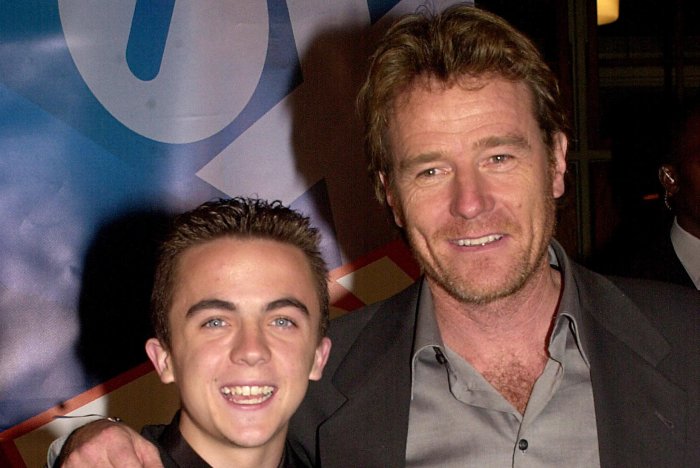
Bryan Cranston (R) and Frankie Muniz of “Malcolm in the Middle” greet the media during the Fox Upfront event in New York City on May 15, 2003. Cranston and Muniz are returning for a limited series sequel to “Malcolm in the Middle.” Photo by Ezio Petersen/UPI | License Photo

Source link

Daily Mail editor denies using PI for info for Prince Harry story

March 2 (UPI) — The royal editor for The Daily Mail on Monday denied using a private investigator to steal information about Prince Harry and his former girlfriend Chelsy Davy.

Prince Harry is suing Associated Newspapers Ltd., which owns The Daily Mail, along with six other plaintiffs including Elton John and Elizabeth Hurley, for using information they obtained illegally.

ANL denies all wrongdoing and said it gathered all information for its stories legally.

The testimony Monday mostly hinged on Mike Behr, a South Africa-based private investigator. Rebecca English, royal editor, said she knew Behr only as “a freelance journalist who could help on Africa stories,” The Guardian reported.

Lawyers asked English about an email from Behr that shared the exact flights that Davy was taking on a vacation with Harry in 2007.

Behr asked in the email if English and the Sun reporter “can plant someone next to her?”

Plaintiffs’ lawyer David Sherborne said the email “could only have been obtained from the computer system” of an airline. That means it came from a “blag” — British slang for a way of obtaining information illegally.

English responded that she didn’t remember the email or ask for those flight details.

“[Behr] was never asked for anything like this, ever,” she said. “That is something I would never even consider doing, now or then,” The Guardian reported.

Sherborne asked about planting someone next to Davy, and English replied: “It’s an absolutely shameful suggestion both by him and by you … clearly there’s no reply to this email, which emphasizes my belief that I never actually saw it.”

He then accused her of using illegal information in a story about a “make-or-break holiday” for the couple. But English said the information was likely from students at the University of Leeds, where Davy was enrolled, “who were friends with Chelsy Davy and part of her circle.”

Sherborne also asked English about a story with the headline, “How Harry fell in love,” from 2004. The story alleged that Harry had shared details of his relationship with Davy with friends at a campfire in Botswana. English said the campfire info came from her coworker Sam Greenhill.

“Sam told me that one of the people that Prince Harry had spoken with ’round the campfire got in touch with the newspaper when news of the relationship broke and gave this information to us,” The Independent reported.

“Prince Harry hadn’t told them who his girlfriend was but had described her so that, when the stories about Chelsy Davy broke, they realized the significance of what they had been told.

“I thought at the time that the tip was from a contact of Sam’s, but now understand it just came in to the news desk. I think that Sam gave it to me because he knew that I was new to my job as a royal reporter and thought it might be helpful to me.”

Harry testified last month that the people at the campfire — his “closest friends” — would not have shared that information, and if they had, there “would be a lot more out there.”

Source link