The injustice in Chagos continues | Donald Trump
President Donald Trump’s description earlier this month of the UK–Mauritius agreement on the sovereignty of the Chagos Islands as “an act of great stupidity” briefly turned the world’s attention to the remote archipelago.
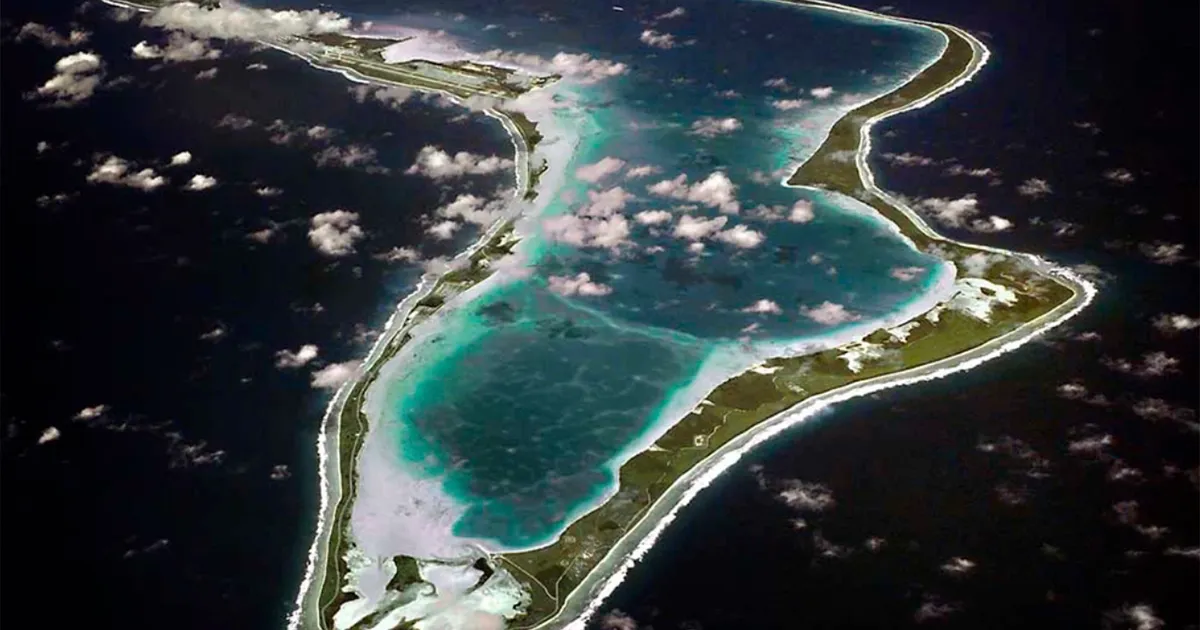
While most of the coverage and debate focused on the US military base on Diego Garcia island, little attention has been given to the sordid story of US and UK involvement in ongoing crimes against humanity against the islands’ Indigenous people – the Chagossians.
The Chagossians, whose island homeland is in the middle of the Indian Ocean, are largely descended from formerly enslaved East Africans. More than 60 years ago, US officials decided that the largest island, Diego Garcia, would be a suitable location for a remote military base.
The US saw the Chagossian population as a problem, as they wanted the island “clean” of inhabitants. Over the next decade, they secretly plotted with the UK – the colonial power governing Chagos – through a manufactured story based on racism and lies, to force the islanders from their home.
One US admiral, Elmo Zumwalt, said the islanders “absolutely must go”. To scare them into leaving, UK and US personnel gassed their dogs. From 1967 to 1973, the UK proceeded to force all the Chagossians – as many as 2,000 people – from all the islands, not only Diego Garcia. The US built and has now operated the Diego Garcia base for more than 50 years.
Today, the Chagossians live in exile, largely in the UK, Mauritius and the Seychelles. Many remain in poverty and have been prevented by the UK and US from returning to live in their homeland, even though generations have continued to campaign to do so. The islands, apart from the US military base, remain abandoned.
The story of US involvement in this forced displacement has been gradually uncovered, including through a congressional inquiry, the work of the academic David Vine, and the indefatigable struggle of generations of Chagossians to uncover the truth and return home. In 2023, Human Rights Watch found that the UK and US were responsible for crimes against humanity and had a duty to provide reparations – an opportunity to right their wrongs.
As a result, the US State Department for the first time acknowledged “regret” for what had happened to the Chagossians. Subsequently, the UK and Mauritius agreed in principle to a treaty to recognise Mauritian sovereignty over the islands, although the UK will maintain formal control of Diego Garcia island and the US military base will remain.
Forgotten in this settlement are the Chagossians. The treaty talks about historical wrongs, but the crimes are ongoing. The Chagossians are still prevented from returning home: Their islands – apart from the base – remain empty. Some Chagossians hope that the treaty will allow them to live on some of the islands, though this will depend on Mauritius fulfilling its obligations. The treaty itself provides no guarantee of their return and says nothing about the reparations owed to the Chagossians.
The US still appears opposed to Chagossians returning to Diego Garcia, even though the base occupies at most half the island. No Chagossian we’ve spoken to wants the base to close; instead, they would like the opportunity to work there. The US has kept a very low public profile in the negotiations – at least until President Trump’s comments – hiding behind the UK.
But the agreement’s terms make it clear that the US has been influencing the negotiations. The US “regret” for the treatment of the Chagossians has yet to translate into ensuring the Chagossians can return to Diego Garcia.
The treatment of the Chagossians is a crime in which the US has been implicated for more than 50 years, and to which Trump has inadvertently drawn attention. Having acknowledged regret, the US and UK governments should now ensure that their actions align with their obligations under international law, including working with Mauritius to enable the Chagossians to return to their homeland and providing appropriate reparations. Until that happens, the injustice remains unresolved.
The views expressed in this article are the author’s own and do not necessarily reflect Al Jazeera’s editorial stance.