Belt and Road

China Pushes Belt and Road, Leads Global South Think Tank Alliance at UN Day 2025

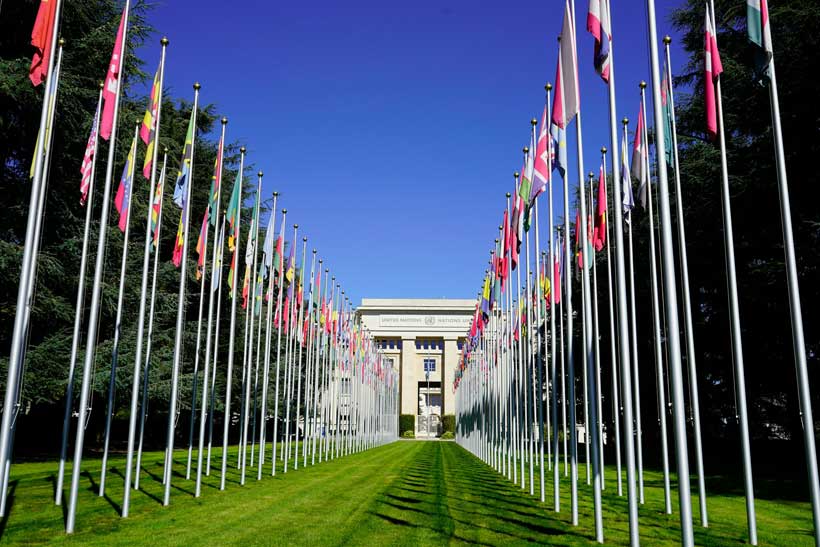
China, through its Belt and Road Initiative, is playing a role in promoting “global prosperity,” as this is the shared goal of the Global South. During the United Nations’ celebration of Global South Day on September 12, 2025, China calls on countries of the Global South to actively participate in and lead the reform of the global economic governance system, which will further unite developing countries and make them companions on the path to development and recovery. Under the leadership of President Xi Jinping, China also supports civilizational dialogue and harmony with diversity among various developing countries of the Global South under the umbrella of China’s Belt and Road Initiative, as this represents the true nature of the world pursued by the Global South. China proposed “enhancing communication and dialogue and supporting each other in taking a modernization path appropriate to national conditions.” China also announced that it would take the lead in establishing a “Think Tank Cooperation Alliance for the Global South,” which will inject new impetus into mutual learning among the world’s civilizations.

  Chinese President Xi Jinping affirmed, while delivering a speech at the “BRICS Plus Leaders’ Dialogue” on October 24, 2024, that “China will take the lead in establishing a (collaborative alliance of think tanks in the Global South). In this context, the Chinese capital, Beijing, hosted the “Conference of Think Tanks of the Global South” on October 21, 2024. Representatives from more than 70 countries from the Global South participated in the conference, which was held under the theme of “Peace, Development, and Security.”

  China positions the Belt and Road Initiative as a key platform for South-South cooperation. From an academic standpoint, I can classify the BRI as South-South cooperation, triangular cooperation, and a hybrid paradigm for many reasons. From my academic perspective, as an internationally renowned Egyptian expert on Chinese politics and the policies of the ruling Communist Party of China, I believe that China’s Belt and Road Initiative serves as a model for cooperation between China and developing countries in the Global South, as well as for trilateral cooperation. The Chinese Belt and Road Initiative, under the slogan of “Working together for modernization and building a community with a shared future,” has led to increased political mutual trust between China, developing countries in the Global South, and all countries that have joined the Chinese Belt and Road Initiative. This has been achieved through coordinating positions and policies to reach consensus on regional issues and global challenges, thus strengthening the power of countries in the Global South and raising the voice of developing countries, led by China.

   Here, Chinese President Xi Jinping put forward new ideas and proposals for building a “high-level community with a shared future between China and developing countries of the Global South,” with China announcing new measures and procedures for practical cooperation with countries of the South, addressing new topics, such as “state governance, industrialization and agricultural modernization, peace and security, as well as high-quality cooperation within the framework of the Belt and Road Initiative,” and others, to the mutual benefit of all, in accordance with Chinese President Xi Jinping’s well-known principle of “win-win and mutual benefits for all.”

 China’s Belt and Road Initiative represents a new Chinese journey toward modernization, the advancement of a community with a shared future between China and the global South, and a new chapter in the friendship between the Chinese people and the people of developing countries, generating strong momentum for global modernization.

  From my academic perspective, China’s Belt and Road Initiative is an attempt by China to propose an alternative global economic system in cooperation with developing countries of the Global South, in opposition to US hegemonic policies. China opposes the current global economic order dominated by the United States and its Western allies, which is based on protectionism, unilateralism, and hegemony. Therefore, Beijing is working to present an alternative vision for a global economic system based on cooperation, a point President “Xi” sought to emphasize at the forum, describing his initiative as a comprehensive alternative to the Washington-led global order.

  Unsurprisingly, in the context of this vision, Chinese President Xi Jinping reiterated his criticism of what he called “unilateral sanctions, geopolitical competition, and bloc policies.” This was an implicit reference to recent US policies toward Beijing, which, in Washington’s view, are a means of mitigating risks, while Beijing views them as aimed at hindering its development and rise.This vision was also expressed in the “white paper,” in which Beijing described the Belt and Road Initiative as an alternative to the current global economic model, which is “dominated by a few countries.”

  Based on the above analysis, we understand the reasons behind China’s support for developing countries in the Global South through its Belt and Road Initiative and its efforts to establish a think tank for an alliance of developing countries in the Global South. For years, China has made no secret of its dissatisfaction with the current US-dominated global order, which it describes as a system built on Western hegemony and treating other countries with duplicity and condescension. It asserts that this system has failed to resolve international crises, emphasizing the need for a new, more just, and effective system. China argues that the current global order is unfair and excludes the interests of developing countries, citing economic disparities, political interventions, and the imposition of Western standards on the majority of the world’s countries.
Source link

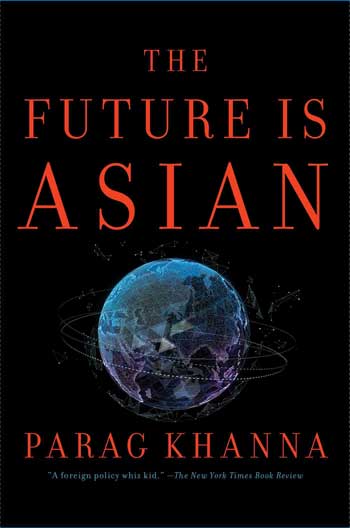
The Future Is Asian- Book Review

Asia dominated the Old World, while the West led the New World—and now we are coming to a truly global world.”– Parag Khanna, “The Future Is Asian, Epilogue

The Future Is Asian (2019) by Parag Khanna takes us on a journey to show how political landscapes are revolving around Asia. The 21st century is not just about the story written in the halls of Washington or the skyscrapers of New York; rather, it is being drafted in the busy streets of Mumbai, Seoul’s high-tech corridors, and the skylines of Shanghai. Parag Khanna, a renowned global strategy advisor, author, and the founder of, makes him well suited to explore the nuances of Asia’s evolving role in the global arena. He gives us a picture of how global focus is shifting eastward and not just only toward China but rather toward a combination of diverse nations whose collective strength is reshaping global dynamics.

This book spans extensive areas in ten chapters covering Asian history, economics, and global relations of Asia with other continents. The book encompasses nearly all information from China’s infrastructure projects in Africa to K-pop with vast data and name-dropping events, which basically shows Khanna’s portrayal of the “Asia First” paradigm, which is not solely a story about China.

Khanna delivers his main arguments in the first chapter of the book, which is “Introduction: Asia First,” and the rest are basically data-oriented logic to support his argument.The basic premise of the book is that while everyone is focusing on China, Asia is not all about China. Khanna highlights the diversity of Asia beyond China by emphasizing that out of the almost 5 billion people living in Asia, only 1.5 billion are Chinese. Around 40 percent of global GDP is represented through this new Asian system consisting of around 5 billion people. Though China, through its BRI project, is reclaiming its historical roots of the ancient Silk Road and has even surpassed the USA in terms of PPP, it will not lead alone. As Asian countries don’t want the modern colonization of China, as they are still proud of their own nationality and history.

Khanna’s stance on U.S. concerns regarding Chinese neocolonialism in Africa and Asia is notably optimistic. His optimism is striking, but it raises questions about whether he is underestimating the risks, mainly the Sino-Russian strategic cooperation.

The fact that this book, unlike most Western history books, takes an Eastern perspective on world history to counterbalance Western narratives by integrating the lives and lessons of the Buddha and ideals of Confucius, the Mughal Empire’s legacy, China’s Ming Dynasty’s maritime explorations, and numerous other pillars of Asian history. This is the most striking factor of Chapter Two.

In the third chapter, Khanna introduces “Asianization,” pointing out that the previous centuries were basically defined by Europeanization and Americanization, but the 21st century is all about Asianization. He describes the broader Asianization of Iran, Pakistan, Central Asia, and Southeast Asia through economic partnerships and integration such as the Regional Comprehensive Economic Partnership (RCEP), the Bangladesh-China-India-Myanmar Economic Corridor (BCIM), and the Association of Southeast Asian Nations (ASEAN) by putting aside geopolitical tension and rivalry. As he states,

Geopolitical rivalries will only speed the Asianization of Asia.”

–            Parag Khanna, “The Future Is Asian, Chapter 3: “The Return of Greater Asia”

Asia-nomics, described in the fourth chapter, portrays how Asia is coming to the forefront in the field of digitization, AI, and also startups and how it is accelerating Asia’s robust economy by referring to the development in digitization sectors of countries like Bangladesh and India and also the AI domination of China.

Chapter 5 expands the influence of Asian diasporas in the Americas and their growing cultural interaction. He gives a detailed overview of how Asian diasporas are becoming important economically and culturally in the US and in Latin America.This bidirectional flow works as a bridge and facilitates trade and innovation on both sides, often through cultural exchanges.

Chapter 6 analyzes the complex and ever-evolving relationship between Asia and Europe. Khanna points out the bittersweet legacies of colonization still remain a major factor in social integration in this case despite strong economic ties. This chapter underscores the paradox of Europe’s admiration of the Asian economy and, at the same time, an everlasting ambivalence toward Asian people.

Khanna explores Asia’s growing ties with Africa in Chapter 7 by framing it as a deliberate and strategic investment in infrastructure that rejects the historical concept of European colonialism. His optimism lies in the fact that Asian states like China, India, and Japan are building a “Pan-African connectivity, ma,” and this process is more developmental than commercial. He identifies Asia’s approach to Africa as noncolonial and pragmatic, showing a clear distinction from past colonial powers. As he states,

“Asians are racing to connect Africa, not to divide it.”

–            Parag Khanna, “The Future Is Asian, Chapter 7: “The Return of Afroeurasia”

Chapter 8 expands on Asia’s growing and often overlooked prospect of South-South cooperation. China holds a key position here as an important trading partner for Brazil, Chile, and Peru while also highlighting Japan’s and South Korea’s high-tech partnerships. This narrative extends to the spread of Asian values and cultural and educational exchange, which is a determiner of soft power.

The ninth chapter, on Asia’s Technocratic Future, is an intriguing argument of this book. Khanna makes the case against democracy in favor of pragmatist, meritocratic technocracy, clearly drawing inspiration from his residency in Singapore. According to him, Asians are more intrigued by the improved outcomes of technocracy. States throughout Asia are adopting a similar approach. Some of these traits are starting to appear in Western democracies as well.

Khanna did an impressive job in the last chapter, which focuses mostly on enhancing the shared perception among Asians of what it means to be Asian by fusing social and cultural exports of growing appeal, from Bollywood to K-pop and even the flavor of various cuisines.

In critically evaluating “The Future Is Asian,” it’s evident that Khanna’s logic is thought-provoking, yet they present some contradictions. The reader is quite impressed by the wide range of topics that this book covers without sacrificing depth. The sarcastic comments, exposition, and suitably appropriate examples are indeed praiseworthy.This book also works as a contribution to policymakers, students, and researchers who want to delve into the complex issues of Asia as a whole for comprehensive study.

While he claims that Asia is not just about China, which serves as a key source of confusion because all the data and facts he presented throughout the book do in fact support China’s ascent to power. Throughout the book, Khanna made references to Asia-nomics and Greater Asia as though the region were a single entity with a distinct global viewpoint. However, national identities remain powerful in Asia.

Khanna seemstoo enthusiastic about technocrats solving the region’s problems, oversimplifying the issues and the differences even by calling Modi a “technocrat” despite his promotion of nationalistic agendas.The future is undoubtedly Asian, but this book ignores the challenges of getting there and any potential drawbacks.

The Future Is Asian is like walking into the future as it is happening, something that people who only see the world from a Western perspective might not fully comprehend. Khanna’s positive view of Asia’s ascent provides a crucial narrative in opposition to the fear-mongering discourse prevalent in Western media. To those who are interested in global trends, realize that the future isn’t only Asian—it’s already here, being shaped in the vibrant streets and artistic places of this continent.

Note on References: All citations are based on the e-book version of Khanna, P.(2019).The Future Is Asian:Commerce,Conflict and Culture in the 21st century(e-book edition).Simon & Schuster

Source link

Rewriting the Rules of Foreign Aid: Geopolitics, Power, and the New Diplomacy

In the world of international relations, foreign aid is not simply about altruism. It is a very complex thing, as Carol Lancaster points out in her fundamental work, Foreign Aid: Diplomacy, Development, and Domestic Politics: Aid is not just about pure altruism or even pure development. It is also about a country’s diplomacy, its domestic politics, and other broader strategic interests. In today’s evolving global landscape, this diplomatic element has increased even further. Today, the world is no longer dominated by one or just two superpowers, but rather a new multipolar order has taken shape, giving rise to a phenomenon or concept that we can call “competitive aid.”

Aid is no longer about who gives more, but rather about a high-stakes game in which countries use it to compete, gain advantage, and consolidate their influence in a country or region. Under these conditions, what does this increased competition mean for recipient countries? Does it really lead to better outcomes for developing countries? Or is it just creating a mess of fragmented efforts, redundant projects, and inappropriate prioritization by geopolitical shifting rather than actual development needs?

Foreign Aid Diplomacy in the New Global Era

To better understand “competitive aid,” we can recall where foreign aid diplomacy came from. For decades after World War II, especially during the Cold War, aid was largely a Western affair, with the United States in the lead. The narrative was often about rebuilding war-ravaged economies or, most importantly, preventing the spread of communist ideology. Aid is a key component of soft power, building alliances and promoting a particular vision of the global order.

Jump forward to the 21st century; the situation seems completely different. We have seen the rise of new economic giants, most notably China, as well as increasingly influential players such as India, Brazil, and the Gulf states. These are not just new faces on the list of donor countries. They bring very different philosophies, historical experiences, and, most importantly, strategic interests. China’s Belt and Road Initiative (BRI) is a very clear example. It is a massive infrastructure financing project that often offers large-scale loans on easier political terms than the approach of traditional Western donors. On the other hand, the European Union emphasizes human rights and good governance in its development cooperation. Meanwhile, US aid often ties its assistance directly to national security concerns, such as stabilizing an unstable region or securing vital supply chains. This diversity of donors, each with their own geopolitical strategies, has undeniably increased competition for aid.

The Dynamics of “Competitive Aid”

So, what exactly does “competitive aid” look like on the ground? It is a complex form of diplomacy where development projects are likened to pawns on a global chessboard. Donor countries are not just writing checks; they are actively competing for influence by offering what they expect to be the most attractive terms, the most impactful projects, or the most strategically aligned visions. The most prominent example of this competitive dynamic is seen in the global scramble for infrastructure development and connectivity. China’s BRI, launched more than a decade ago, has poured massive investment into roads, railways, ports, and digital networks across the continent. While Beijing insists that it is purely about economic growth and trade, it is hard to disregard the undeniable geopolitical implications of expanding China’s economic reach and gaining political influence as a result. A simple example is the Hambantota port project in Sri Lanka. While the project has economic aspirations, its handover to Chinese control due to Sri Lanka’s debt problems has sparked a heated debate on “debt trap diplomacy” and potential strategic leverage for Beijing.

In response, Western powers did not remain silent. The G7’s “Partnership for Global Infrastructure and Investment” (PGII) and the EU’s “Global Gateway” are a direct response and counter-response. These initiatives explicitly aim to provide a “value-based” alternative to infrastructure financing, emphasizing transparency, environmental sustainability, and fair labor practices. It is a clear competition over who will build the next big highway or port, with recipient countries finding themselves persuaded by many different parties offering favors.

However, competitive aid goes beyond just concrete and steel alone. It is also fiercely played out in efforts to gain access to resources. Donors might sweeten the aid package with agreements that guarantee access to vital minerals—for example, cobalt in the Democratic Republic of Congo or lithium in Latin America—or other important energy supplies. This could manifest as direct investment in extractive industries or broader development programs designed to stabilize strategic resource-rich regions. And let’s not forget the drive to grow political influence and shape the international norm. This can involve financial support for democratic institutions, judicial reform, or civil society groups, all aimed at promoting the donor country’s preferred governance model. Sometimes, it is more transactional in nature, with aid subtly or overtly linked to the recipient country’s support for the donor country’s position on international forums, such as votes in the UN or alignment on key geopolitical issues. This competition is not just about physical assets; it is about hearts, minds, and diplomatic solidarity.

So, what does all this competition mean for aid effectiveness and how it is coordinated? To be honest, it’s a double-edged sword that offers both exciting possibilities and significant headaches for recipient countries. On the one hand, a diverse donor landscape can be a good thing. With many players offering aid, recipient countries may find themselves in a stronger bargaining position. They can potentially negotiate better terms, more flexible loan conditions, or projects that are truly aligned with their own development plans. This is a bit like a “buyer’s market” for development, which, in an ideal world, could lead to more aid flows and faster progress. Just imagine a country in need of a new national railroad, perhaps getting attractive bids from Chinese, European, and American consortiums, allowing them to choose the best fit. This competitive pressure may even encourage donors to be more responsive to local needs.

However, the drawbacks of competitive aid are often greater, creating real challenges for aid effectiveness. First, when donors focus primarily on their own strategic interests, it often leads to a lack of coordination that is ultimately underwhelming. Donors may ignore existing national development strategies or multilateral coordination mechanisms and prefer to work bilaterally to maximize their own visibility and influence. This can result in fragmented aid efforts, where projects are undertaken in isolation, without synergy or a cohesive approach to a country’s overall development. Imagine a scenario where multiple donors fund separate, unconnected health clinics in the same district, rather than collaborating to build a comprehensive and integrated healthcare system. This duplication of efforts and resources is simply very inefficient and certainly wasteful.

Second, competitive aid can easily lead to misplaced development priorities. Recipient countries, desperate for funds, may feel pressured to accept projects that primarily serve the donor’s strategic agenda, even if it is not the most urgent or beneficial for themselves. This can result in the infamous “white elephant” projects with large-scale infrastructure that look impressive but are economically unfeasible or poorly integrated into the local economy. They become more about donor prestige than real development goals. And then there is the obvious risk of an increased debt burden. While the “debt trap diplomacy” narrative (the idea that China deliberately traps countries in debt to seize assets) is the subject of ongoing academic debate, the reality is that large, non-transparent loans from multiple sources can pile up very quickly. If these projects do not generate sufficient economic returns, recipient countries can find themselves trapped in ongoing debt and forced to divert critical resources from social services to debt repayment.

Finally, this competitive dynamic could erode multilateralism and established international development norms. If powerful countries consistently prioritize interest-driven bilateral aid over collaborative efforts through multilateral bodies, it will undermine institutions designed to promote coordinated, principles-based development. This could erode trust, create parallel aid structures, and make it harder to address global challenges that truly require collective action, such as climate change or future pandemics, which demand a united front. The recent decline in official development assistance (ODA) from some traditional donors, partly due to domestic refugee costs and shifting geopolitical priorities, further underscores how fragile the aid landscape is in this competitive environment.

A Path Forward: Navigating the New Aid Landscape

It is clear that foreign aid diplomacy has undergone a profound transformation. What was once a tool for post-war reconstruction has become a central player in today’s complex geopolitical arena. The rise of new global powers has undeniably ushered in an era of “competitive aid,” where development assistance is increasingly becoming a strategic asset in the pursuit of influence and advantage. Despite the tempting promise that this competition might offer more choice and leverage to recipient countries, fragmentation, duplication, distorted priorities, and the continuing shadow of debt present formidable obstacles to proper and long-term development.

So, where do we go from here? Responsibility certainly lies on both sides. For recipient countries, it is crucial to develop strong strategic planning capacity and sharpen their negotiation skills. This is not just about receiving money but rather about ensuring that foreign aid actually serves their national development agenda rather than being a mere pawn in a larger geopolitical chess game. For donor countries, while national interest will always be a driving force, there is a strong argument for a renewed commitment to coordination, transparency, and adherence to internationally agreed principles of aid effectiveness. In conclusion, moving beyond a purely competitive mindset towards a more collaborative approach to foreign aid diplomacy is very essential. It’s not just about being generous. It is about how to effectively address global challenges together and build a more just and prosperous world for all. The shifting balance of power demands not only new strategies but also a careful re-evaluation of the purpose and practice of foreign aid itself.

Source link