baths

UK’s ‘most welcoming town’ has independent shops, Turkish Baths and beautiful walks

A pretty UK town packed with independent shops, cosy tearooms and acres of green space, has been named as the ‘most welcoming’ destination, and after a visit, you might never want to leave

There’s a list of beautiful UK towns that offer an idyllic day out, whether that’s taking a stroll along their meandering rivers or exploring their cobbled streets lined with medieval architecture.

Yet there’s one that’s been named the ‘most welcoming town’ of them all, thanks to warm charm you’ll struggle to find anywhere else.

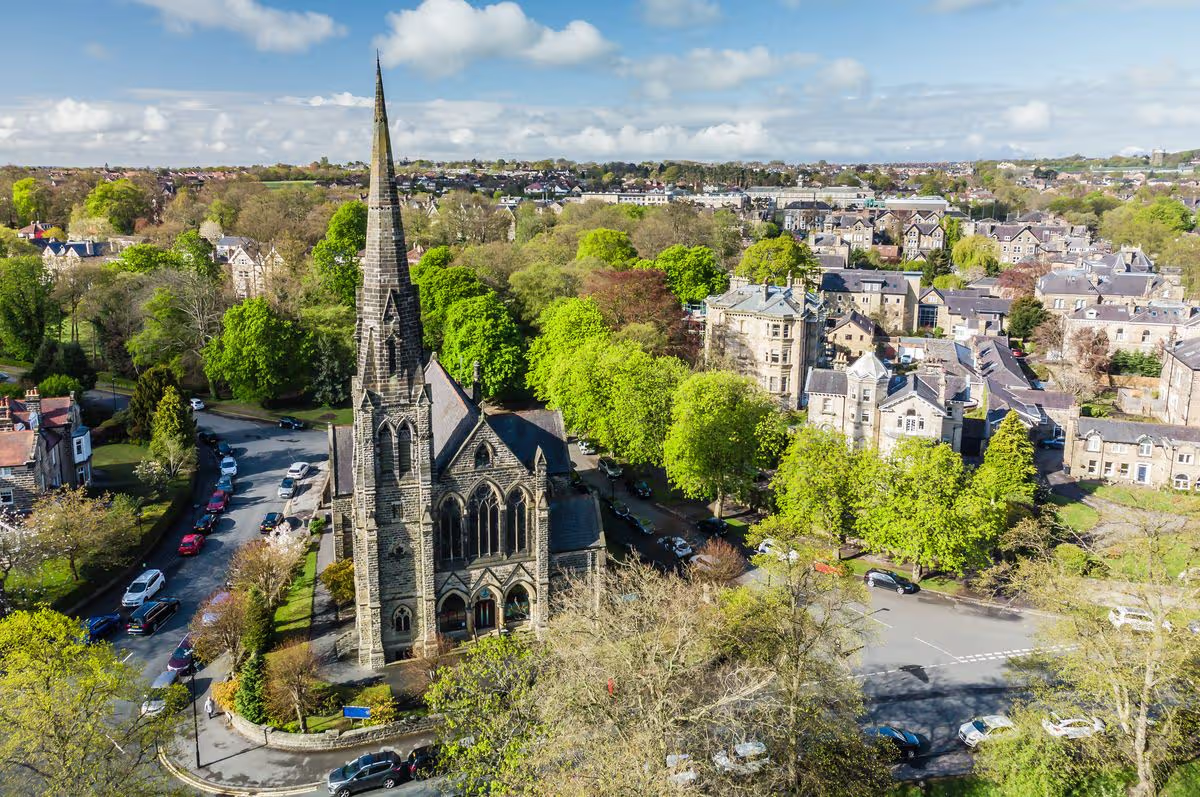
Harrogate, in North Yorkshire, is a Victorian spa town known for its mineral springs, 200 acres of green space at The Stray park, cosy tearooms, independent boutiques, and, famously, the home of Yorkshire Tea. It has often been hailed as one of the happiest places to live and has once again secured the title of the most welcoming town in the UK.

READ MORE: One of Europe’s most walkable cities has £19 flights and amazing street foodREAD MORE: English-speaking hotspot 2 hours from the UK is one of Europe’s sunniest destinations

Thanks to its warm and friendly atmosphere, hospitality, and repeat visitors, Harrogate was named the UK’s most welcoming destination in Booking.com’s 2026 Traveller Review Awards. It’s even thought that its tea heritage and charming tearooms could have something to do with its ranking, as a quarter of Brits associated a visit to the Yorkshire town with a cosy cup of brew.

Whether it’s a warming cuppa in one of their tearooms, cafés, hotels, or even pubs, the town’s history can’t be ignored, as it’s where the black tea blend of Yorkshire Tea has been produced by the Bettys & Taylors Group since 1977. It’s also home to the delightful Bettys Café Tea Room, offering afternoon tea in the imperial room of freshly baked scones and, of course, their signature tea.

But that’s not the only tearoom in this town. There’s also Jenny’s Tea Shop, Mama Doreen’s Emporium, and another Bettys Café Tea Room, just on the outskirts of the town.

Yet, away from its brews, streets are lined with boutiques, with Montpellier Quarter boasting more than 50 independent shops, bars, restaurants, antique shops, and art galleries. There’s also Cold Bath Road, which offers more eateries and shops, all while paying homage to the town’s spa heritage.

Harrogate is known as the ‘English Spa’ thanks to its mineral springs, which were discovered in the 16th century. It quickly became known as a wellness destination, thanks to its open green spaces, spa treatments, fresh air, and famed waters.

Today, there are original Turkish Baths for a relaxing treatment and the Royal Pump Room Museum for a closer look into the town’s spa heritage. Harrogate has remained known as a spa town and continues to attract visitors seeking to unwind from the stress of everyday life.

The town is characterised by Victorian and Georgian buildings, some of which make up its collection of hotels, and there are plenty of B&Bs available in the area. That’s when you can tear yourself away from the ample green spaces, with its position on the edge of the Yorkshire Dales National Park, a haven for avid walkers.

With acres of pristine landscapes, Harrogate is home to beautiful parks and tranquil gardens that offer scenic strolls during the warmer months. One of its most popular attractions, which welcomes around three million visitors a year, is the Grade II-listed Valley Gardens, featuring various areas to admire.

Whether you’re looking for a day out away from the city or a weekend escape, you might just feel at home in Harrogate. Plus, it’s nestled just over a 20-minute train journey from Leeds and half an hour from York, making it even more convenient.

Ryan Pearson, regional manager for UK and Ireland at Booking.com, said: “Booking.com’s Traveller Review Awards celebrate destinations that consistently deliver exceptional hospitality, and Harrogate has earned recognition as one of the UK’s most welcoming towns for this specific reason.

“Guests frequently praise the town’s friendly, attentive hosts and genuinely warm atmosphere, which makes visitors feel instantly at home. While Harrogate charms with its historic spa buildings, elegant streets, and beautiful surrounding countryside, it’s the town’s authentic, personable hospitality that inspires repeat visits and rave recommendations from travellers.”

Do you have a travel story to share? Email webtravel@reachplc.com
Source link

Inside the European town that is the birthplace of spas with thermal baths, therapeutic springs… and a huge F1 circuit

DID YOU know that the word ‘spa’ comes from a European town by the same name that actually is responsible for wellness traditions?

Spa in Belgium is a small town sat in a valley of the Ardennes Mountains and is often known as the Pearl of the Ardennes.

Spa in Belgium is often dubbed the Pearl of the ArdennesCredit: Alamy

It’s one of Belgium‘s most popular tourist destinations and with good reason, because the town is full of natural mineral springs.

Perhaps you also know the name of the town due to the racing Circuit de Spa-Francorchamps, which hosts the annual Formula One Belgian Grand Prix.

But Spa’s spa history dates back a lot longer than the noise of a motor engine…

Way back in the 16th and 17th centuries, the town became known for its iron-rich mineral springs that people used to think could heal them of injuries and illnesses.

Read more on travel inspo

CHEAP BREAKS

UK’s best 100 cheap stays – our pick of the top hotels, holiday parks and pubs


GO ON

All the little-known websites for cheap or FREE tickets to gigs, theatre & festivals

The original experience in the town was ‘drinking therapy’, where people would drink a large amount of the iron-rich water, rather than bathe in it.

Then in 1717, Peter the Great of Russia visited and drank the water for a month and miraculously, was ‘cured’ of his severe health issues including liver and digestive problems.

This was the start of mass tourism heading to the town, with international visitors flocking to Spa for its healing waters.

This trend continued into the 18th century when Spa became a fashionable resort town known as the ‘Cafe of Europe’.

Many elite members of society would travel to Spa to treat health conditions but also participate a number of other activities including gambling.

Then in the 19th century, there was more of a focus on bathing as the town opened new thermal baths.

It’s because of the town’s long history and fame, that the word ‘spa’ was adopted into the English language and used widely as a term for a resort with therapeutic water.

Finally, in 2021, Spa was recognised as part of UNESCO World Heritage Site’s the Great Spa Towns of Europe.

Today, visitors can still relish in the benefits of Spa’s water.

One of the top spots for visitors today is Thermes de Spa – a resort which overlooks the town with peat baths, traditional copper baths, outdoor pools and relaxation experiences.

The town is full of natural mineral springs that are still used todayCredit: Alamy

The spa experience includes a 70C sauna and a 40C to 45C hammam.

For those who want to embrace naturism, there is an area for this with a panoramic sauna, a hammam, a 36C hot tub, a 38C bath, a 20C cold bath and three foot baths.

There are a number of relaxation areas too including a red light therapy area and a blue light room, which if you spend 20 to 30 minutes in, it is equivalent of a day high in the mountains.

And of course, there are a number of baths as well.

The water for all of the spa comes from the Marie-Henriette Spring, which is the oldest of Spa’s waters dating back over 400 years.

If you fancy learning more about the history of the town, head to the Museum of the City of Water.

Inside, visitors can learn about four centuries of history in the town.

You can also venture into one of the first casinos in the world, which opened in 1763.

The town even has a Museum of the City of Water to learn more about the natural springsCredit: Alamy

Many European royals used to visit Casino de Spa and visitors can still head there today.

For those who love being in the outdoors, there’s RAVeL trails, which are converted railway lines and a great way of seeing the Ardennes and its historic villages including Stavelot and Francorchamps.

Or if you prefer a bit of adrenaline, make sure to check out SpaForest, which is an adventure park with tree-climbing courses, ziplines and rope bridges.

When it comes to choosing somewhere to stay in the town, obviously a lot of the options include wellness facilities.

You could stay at the four-star Van der Valk Hotel Spa with direct access to Les Thermes de Spa thermal Baths.

A room costs from £80 per night.

Or you could decide to stay at the Radisson Blu Balmoral Hotel, costing from £97 per night.

It is surrounded by dense forest, features suites with separate living areas and has an indoor pool, sauna and a Turkish bath.

And the town is home to one of the oldest casinos in the worldCredit: Alamy
And of course, the famous Formula One race circuitCredit: Alamy

The easiest way to get to Spa from the UK is by flying to Brussels, which costs from £28 return.

From there, you can jump on a train which takes less than two hours to reach Spa, costing from £13.64 a-way.

Alternatively, you could get the Eurostar to Brussels and switch trains to reach Spa.

For more inspiration on destinations to explore in Europe, there’s one city with 3,000 hours of sunshine a year and it has been named the best destination to visit in 2026.

Plus, these are the 39 best European city break destinations – and the number one spot is very cheap.

The easiest way to get to Spa from the UK is by flying to Brussels, which costs from £28 returnCredit: Alamy

Source link