baseball

Legendary Angels and Padres scout Bob Fontaine Jr. dies at 73

The baseball world was captivated by left-handed pitching prospect Jim Abbott ahead of the 1988 major league draft mostly because he didn’t have a right hand. Seven teams passed on him before the Angels picked him.

Why? Largely because Angels scouting director Bob Fontaine Jr. ignored the potential limitations that others fixated on when evaluating Abbott. Rather than dwelling on the absence of a right hand, Fontaine saw something wondrous coming out of Abbott’s left hand — a cut fastball.

“He’s actually more suited to the pro game than the amateurs with the aluminum bats,” Fontaine told The Times after the draft. “He’s going to be breaking off a lot of these wood bats with that cut fastball.”

As usual, Fontaine, who died Saturday at age 73, was prophetic in his assessment. Abbott became the rare pitcher to go straight from college — he’d starred at Michigan — to the major leagues, skipping the minors entirely and enjoying a 10-year MLB career while inspiring numerous fans in disabled communities.

Bob Fontaine Jr. as director of player development for the Seattle Mariners.

Bob Fontaine Jr. as director of player development for the Seattle Mariners.

(Seattle Mariners)

“I think every scout, if they scout for any length of time, is going to have one player that just is special to you. Jimmy Abbott was that,” Fontaine told JapanBall in 2022. “There were people that were even kind of saying, ‘Oh, they did it for a publicity stunt.’ I remember saying, ‘Yeah, we took the eighth player in the country for a publicity stunt? Give us some credit!’”

Fontaine was showered with plenty of posthumous credit over the weekend. He scouted for six teams, and a highlight of his resume was drafting the nucleus of the Angels’ roster that won the 2002 World Series.

“What a character … what a storyteller … and what a talent evaluator … there is no 2002 World Series title for the #Angels without Bob Fontaine Jr. … RIP,” wrote former longtime Times baseball writer Mike DiGiovanna on X.

“Crushed regarding Bob Fontaine Jr.’s passing, as he was a special man who I was lucky to work closely with three times @WhiteSox @Mariners, and @BlueJays. Fun as hell, elite evaluator, and phenomenal people skills. RIP, Robert,” added former Dodgers general manager Dan Evans.

“A gifted talent evaluator and mentor, Bob helped shape generations of Angels by overseeing the signing and development of numerous Halos, including Jim Abbott, Jim Edmonds, Garret Anderson, Tim Salmon and Darin Erstad,” the Angels said in a statement. “Bob left a lasting mark on baseball by devoting over five decades to the game. Our thoughts are with his family and loved ones.”

The Angels frustrated Fontaine at times by declining to spend big on players from talent-rich Latin America. Rather than sulk, however, he scoured the globe, in 1992 signing three players from Russia and a fast-pitch softball player from New Zealand named Gus Leger.

Asked by The Times’ Bill Shaikin if he had ever played baseball, Leger responded, “I haven’t. Would it help?”

The experiment failed — none of the quartet advanced beyond Class A — yet Fontaine maintained the sunny outlook he inherited from his father. Bob Fontaine Sr. was a scout who worked under the legendary Branch Rickey with the Brooklyn Dodgers before becoming scouting director of the Pittsburgh Pirates for 18 years and the first scouting director of the expansion franchise San Diego Padres. He also served as general manager of the Padres from 1977 to 1980.

“[My father] told me when I got started, ‘Don’t you ever, ever not appreciate where you are and what you’re doing, because you’re lucky. You’re going to a ballpark to make a living, so your bad days aren’t that bad,’” Fontaine Jr. said. “I never forgot that, I never forgot how lucky I am.

“Hey, you’re looking at a guy that barely squeaked through high school, who doesn’t have any ability, and I lasted almost 50 years. It’s because in baseball, if you listen, and you’re not afraid to take a chance once in a while, even somebody with my lack of ability can stay around for a while,” he said.

Fontaine got his foot in the door through his father. His first job as a teenager was as a minor league bat boy with the Pirates. Next he became a peanut vendor at Forbes Field. By age 19, he caught on with the Padres as an area scout.

Both Fontaines were scouts well ahead of the deep empirical and objective analysis of baseball data — sabermetrics is the catchall term — that some believe has made scouts obsolete. Fontaine maintained the best evaluations come when scouting is utilized along with numbers.

“What the traditional scout gives you is personal reference, like with things I learned on players that I missed on,” he said. “Analytics didn’t do that. I’m a firm believer that the best video camera is your eyes, the best model is your brain, and the best way to make a tough decision is with your heart.”

Fontaine’s methods produced results. Under his guidance in 1977, the Padres drafted future Hall of Fame shortstop Ozzie Smith in the fourth round. Four years later Fontaine plucked another future Hall of Famer, taking outfielder Tony Gwynn in the third round.

And when Fontaine moved to the Montreal Expos in 1985, he took a 6-foot-11 left-handed pitcher out of USC named Randy Johnson in the second round — another Hall of Famer.

Fontaine co-authored a memoir in 2021, “In Search of Millionaires (The Life of a Baseball Gypsy): The Accounts of Bob Fontaine Jr.”

“Baseball has provided me with a fabulous opportunity to see the world and work in an industry that most people envy,” he wrote in the book. “I didn’t get rich, except in experiences. To meet and work against so many fine people, as well as some great general managers and owners, has been a privilege.”

Times sports columnist Bill Shaikin contributed to this story.
Source link

Mets outspend Dodgers while Guardians, Rays, White Sox win on the cheap

It seems like a simple equation: $338 million produces 100.

That’s the Dodgers’ season-ending payroll and victory total. But to assume a franchise can merely buy a playoff berth is a stretch.

The New York Mets sit at home — or more likely at lavish vacation destinations, given their perch at the top of baseball’s payrolls at $345.8 million. They finished last in the National League East with a 74-88 record.

The Cleveland Guardians also sit at home, but are quite pleased about it. They earned a first-round bye and berth in the American League Division Series this weekend despite a payroll of only $74.2 million — baseball’s lowest and barely one-fifth that of the Mets.

Twelve of the 30 MLB teams qualified for the postseason, with four best-of-three Wild Card Series beginning Tuesday. Eight of the dozen have payrolls in the top 10, with the defending AL-champion Toronto Blue Jays joining the Mets as supreme underachievers given their No. 5-ranked payroll of $275.4 million.

Yet three playoff teams — the Tampa Bay Rays ($98.3 million) and Chicago White Sox ($98 million), in addition to the Guardians — rank among the six lowest payrolls, according to present-day salary calculations from the MLB Labor Relations Department, or LRD, obtained by USA Today.

The combined LRD payrolls of those three overachievers don’t come close to the Mets or Dodgers, highlighting the enormous disparity between the haves and have-nots that team owners point to while demanding a salary cap during ongoing collective bargaining negotiations.

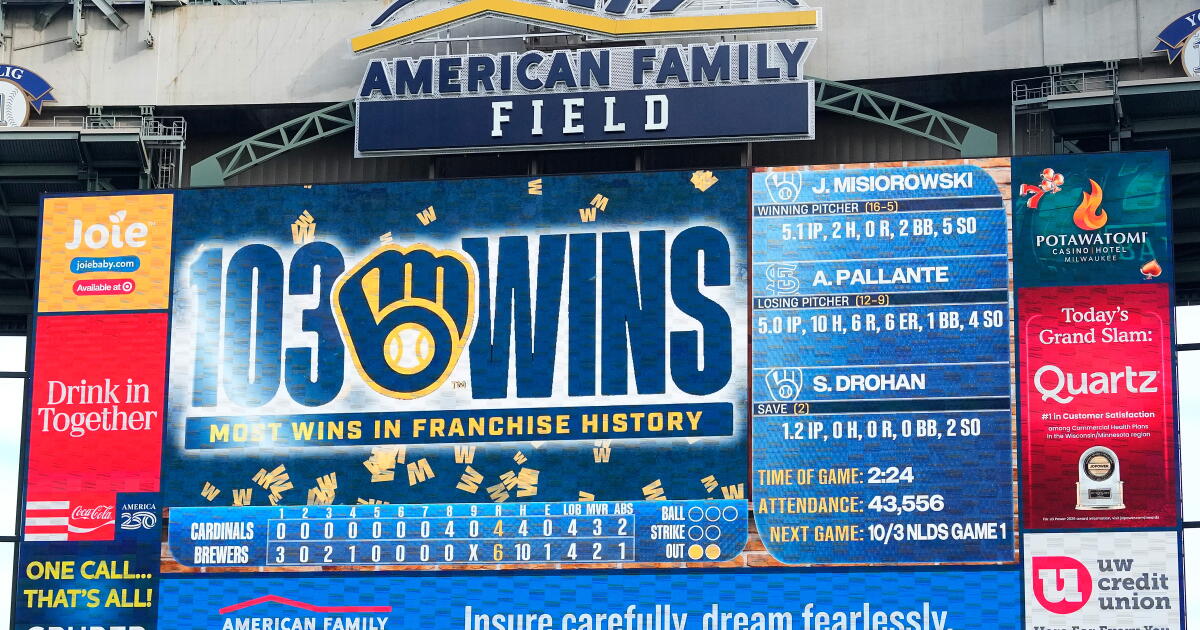
Oddly, only one playoff qualifier is among the 14 mid-range payrolls of roughly $100 million to $200 million — the Milwaukee Brewers, who achieved baseball’s best record at 103-59 while paying its roster $143.5 million. The Angels are also among that group, ranking No. 15 at $179.8, not enough to keep them from losing 100 games for the first time in franchise history.

The LRD payroll tracks a team’s real-time salary commitments for the current season, accounting for the 26-man MLB roster’s base salaries plus a prorated portion of signing bonuses. LRD differs from luxury tax payrolls, which are based on the average annual value of every player contract on the 40-man roster.

Luxury tax payrolls determine whether a team exceeds the league’s luxury tax threshold and owes financial penalties. MLB is using luxury tax payrolls in the CBA negotiations over a hard salary cap and floor, proposing a $245.3-million ceiling and $171.2-million floor for 2027.

Luxury tax penalties from clubs that exceed the thresholds funnel back to low-revenue clubs through revenue sharing. A record $402,637,907 was paid in luxury tax penalties last season, with the Dodgers paying the most at a record $169.4 million. This year, the Dodgers’ luxury tax is projected at $180 million — higher than the LRD payroll of 16 teams.

The Dodgers also have the highest luxury tax payroll at $430 million, dwarfing the Mets’ $363-million number. Reasons? The Dodgers pay more in penalties because they have exceeded the luxury tax six years in a row, they have more players with massive average annual values and they took on additional penalties by acquiring starter Tarik Skubal at the trade deadline.

MLB 2026 payrolls (playoff teams in bold)

1. New York Mets: $346.8 million

2. Dodgers: $338.0 million

3. New York Yankees: $304.6 million

4. Philadelphia Phillies: $291.7 million

5. Toronto Blue Jays: $275.4 million

6. Atlanta Braves: $263.9 million

7. Houston Astros: $249.5 million

8. Chicago Cubs: $248.8 million

9. San Diego Padres: $223.9 million

10. Boston Red Sox: $210.2 million

11. Detroit Tigers: $202.1 million

12. San Francisco Giants: $197.6 million

13. Arizona Diamondbacks: $192.8 million

14. Texas Rangers: $192.5 million

15. Angels: $179.8 million

16. Seattle Mariners: $170.5 million

17. Baltimore Orioles: $169.2 million

18. Kansas City Royals: $149.8 million

19. Milwaukee Brewers: $143.5 million

20. Cincinnati Reds: $128.3 million

21. Colorado Rockies: $117.0 million

22. Minnesota Twins: $109.5 million

23. Pittsburgh Pirates: $107.6 million

24. Athletics: $98.7 million

25. Tampa Bay Rays: $98.3 million

26. Chicago White Sox: $98.0 million

27. St. Louis Cardinals: $94.7 million

28. Washington Nationals: $90.3 million

29. Miami Marlins: $83.0 million

30. Cleveland Guardians: $74.2 million

Source link

Here’s how the MLB playoffs might impact the inevitable lockout

Let’s get the rose-colored story line out of the way, right away.

The postseason starts Tuesday, and it could be the last we see of Major League Baseball for a long, long time. The owners expect to lock out the players when the collective bargaining agreement expires Dec. 1, and the owners have made their pitch loud and clear: No new agreement without a salary cap, for they believe there can be no true competitive balance without one.

You’ll hear a lot about how the way this postseason sets up, or how it plays out, could impact the bargaining.

Don’t believe a word of it. Nothing that happens this October will be relevant to the new labor agreement.

Come on. The team with the lowest payroll — the Cleveland Guardians — won their division. So competitive balance can’t be completely out of whack, can it?

Cleveland hasn’t won the World Series since 1948. The opponent was the Boston Braves, who subsequently moved to Milwaukee and then Atlanta.

What about the team with the best record in the American League: the Tampa Bay Rays, who beat up on big-market bullies in the New York Yankees and Boston Red Sox?

The Rays never have won the World Series.

Well, what about the Milwaukee Brewers? For the second consecutive season, the team in baseball’s smallest market posted baseball’s best record.

The Brewers got swept in last year’s National League Championship Series. They never have won the World Series.

But aren’t the Brewers the best example of a team playing beyond its payroll instead of using it as an excuse?

They got smoked last October by the Dodgers, who won the World Series and then signed Edwin Díaz and Kyle Tucker and traded for Tarik Skubal.

Isn’t that what got everyone agitated? Doesn’t everyone outside L.A. know the Dodgers have destroyed competitive balance, and the owners are trying to fix it?

The owners were ready to fight for more than a year before the Dodgers helped themselves to Díaz, Tucker and Skubal. For years, the commissioner’s office touted baseball’s competitive balance, citing in part how the league championship series and World Series matchups changed almost every year.

After the Dodgers won in 2024, the commissioner’s office redefined competitive balance as how often a small-market team won the World Series, last accomplished by the 2015 Kansas City Royals. The seeds for this winter’s labor war had been planted.

If the Dodgers flop this October, the owners are not going to suddenly back off a salary cap. If, say, the Brewers or Rays win, the owners will say that’s the exception that proves the rule.

There are ways for owners to direct more revenue to small-market teams without the salary cap the players insist they will not accept, and without limiting the definition of success to winning the World Series, which risks devaluing the product among 29 fan bases every year. Whether the owners wish to consider them without the cost certainty that comes with a salary cap will be the story line of the cold winter ahead.

The Dodgers are scheduled to open next season on March 25. Neither owners nor players would have lost any significant revenue by then — ticket sales and broadcasting rights for owners, salaries for players — so a new agreement by then is uncertain at best.

So enjoy the postseason.

So, at least for now, isn’t the postseason tilted toward the Dodgers and Yankees?

Those screams you hear are coming from New York, where Yankees fans are annoyed that their team finished with the second-best record in the AL and still could be eliminated in two or three days. The Yankees finished behind the Rays and received a wild card.

The Yankees lost 13 fewer games than the AL West champion Houston Astros and 10 fewer games than the AL Central champion Guardians, both seeded ahead of them. The Astros are a .500 team, the worst record a division champion has taken into the postseason. The Guardians get a bye, just like the Dodgers.

The Yankees drew the Red Sox, which means painful amounts of national commentary will focus on (1) how the system victimized the Yankees and the Red Sox; and (2) baseball’s most hyped rivalry.

Until baseball realigns its divisions or seeds its playoffs by wins, regardless of division, the Yankees should simply do what Aaron Judge said about how they should respond to criticism of their fundamentally frightening 2024 World Series: “Play better.” And baseball’s best rivalry will be on October display only if the Dodgers and San Diego Padres meet in the NL Championship Series.

Still laughing, though, at sanctimonious Yankees fans believing baseball is somehow unfair to the poor, gutty Yankees.

Can anyone save baseball in 2027?

We should try Pope Leo. He’s a long-suffering Chicago White Sox fan. In his first full year as pope — and after three consecutive 100-loss seasons — the White Sox made the playoffs.

Some fans call it a miracle, a reporter told the pope. Did the pope have anything to do with the turnaround?

He smiled.

“No comment,” he said, then paused.

“Great things happen in Chicago,” he said.

The Cubs made the postseason too. The Cubs and White Sox have shared Chicago since 1901. This is the fourth time both have qualified for postseason play. Deep dish pizza for all, but a World Series in Chicago this fall might truly require divine intervention.

Source link

Japan baseball great and atomic bomb survivor Isao Harimoto dies aged 86 | Baseball

Harimoto, whose record 3,085 career hits still stands, was inducted into the Japanese Baseball Hall of Fame in 1990.

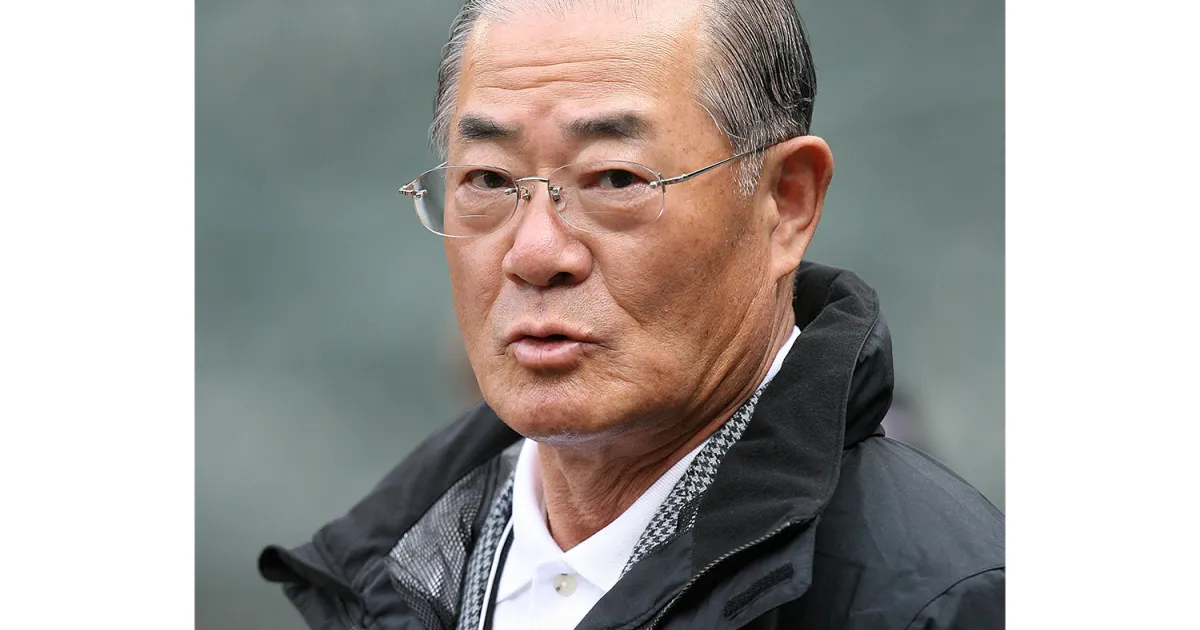
Japanese baseball legend Isao Harimoto, who survived the atomic bombing of Hiroshima and became the first player from his country to reach 3,000 hits, has died aged 86, reports said.

Born to Korean parents in Japan, Harimoto learned to play left-handed when an accident at the age of four left him with severe burns and limited mobility in his right hand.

Recommended Stories

list of 4 itemsend of list

He survived the atomic bombing as a five-year-old, his mother jumping in front of him and his sister to shield them from the blast.

He went on to rack up 3,085 career hits, which still stand as a record in Nippon Professional Baseball.

He played for several teams in Japan, including the all-powerful Yomiuri Giants, and earned himself the nickname “Hit Machine” for his batting prowess.

He retired in 1981 after 23 professional seasons and worked as a TV commentator.

Harimoto was inducted into the Japanese Baseball Hall of Fame in 1990.

Source link