american airlines

‘I’m a pilot and 1 huge sacrifice at work helped me spend more time with family’

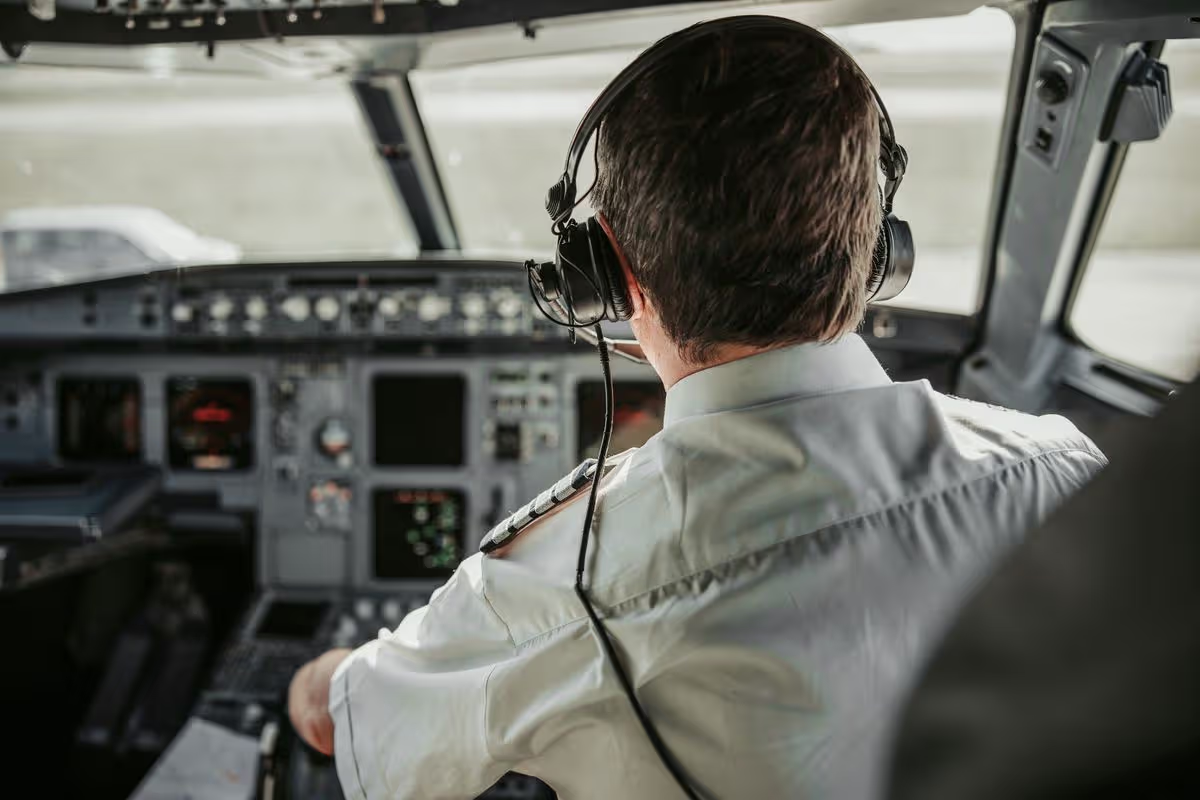
A pilot has revealed his one method of balancing work and family life in the industry, despite the seriously long hours and time away from home that comes with the role

It’s widely recognised that pilots work lengthy shifts and spend considerable periods away from home. While on duty, they usually work between 10-14 hours daily, encompassing flight time, briefings and taxiing, although this can stretch to 16 hours when unexpected situations arise.

Throughout the week, the schedule can become more demanding, with pilots working up to 60 hours across 7 consecutive days, averaging around 20 hours weekly in the air. While travelling to different countries constantly and experiencing the world sounds thrilling, it can prove incredibly challenging for pilots with families.

One pilot has recently shared how he successfully balanced his career with family life. During a TikTok Q&A session, Captain Steve, employed by American Airlines, outlined his approach to making it work.

Following someone sharing their ambition to become an airline pilot, they ask: “What is your advice on a work-life balance in the industry?”

Content cannot be displayed without consent

Steve responds: “Well it’s like anything else if you travel, you have to balance being on the road and being home, the electronics help these days, you can FaceTime, communicate much more effectively and frequently than you did back then.”

When his children were young, the pilot succeeded in spending quality time at home while working as a reserve for the airline.

He added: “I did reserve on the airline and didn’t work as much on reserve, I’d get called a few times a month, maybe for a trip where when you’re regular line holder, you’re going to fly four or five times.

“Was it a big difference? Yeah, it was a huge difference because I got to spend more time with my kids and I still got paid as an airline pilot to be on call.”

While working as a reserve wasn’t straightforward for Steve but he “made the sacrifice”.

He went on: “There were some inconveniences with being on call as well but I made that sacrifice to be with my family so there is a way to work it up, where there’s a will, there’s a way.”

Numerous elements influence working hours. Short-haul pilots might complete 4-6 legs per day (consecutive flights). Long-haul pilots typically endure lengthier stints, such as 12-15 hours on a single extended flight.

Early starts, such as 5am, can cut into allowable duty hours owing to fatigue regulations. Between shifts, pilots must receive a minimum of 10 hours of rest, incorporating 8 hours of uninterrupted sleep.
Source link

Passengers told ‘never use seat back pocket on planes’

American Airlines pilot Captain Steve Scheibner has shared crucial travel tips for passengers – warning them to avoid the seat back pocket he calls a “black hole of despair”

An airline pilot has issued a stark warning to passengers never to stash their personal belongings in the rear pocket of plane seats for one straightforward reason.

Captain Steve Scheibner is an American Airlines pilot widely recognised by his huge YouTube following as Captain Steeeve. He revealed the advice in a recent video where he offered a string of travel tips for air travellers.

He regularly encounters people at the agent’s desk because of their use of the rear pocket during their journey, experiencing a “fingers crossed” situation where they face “diminishing” chances.

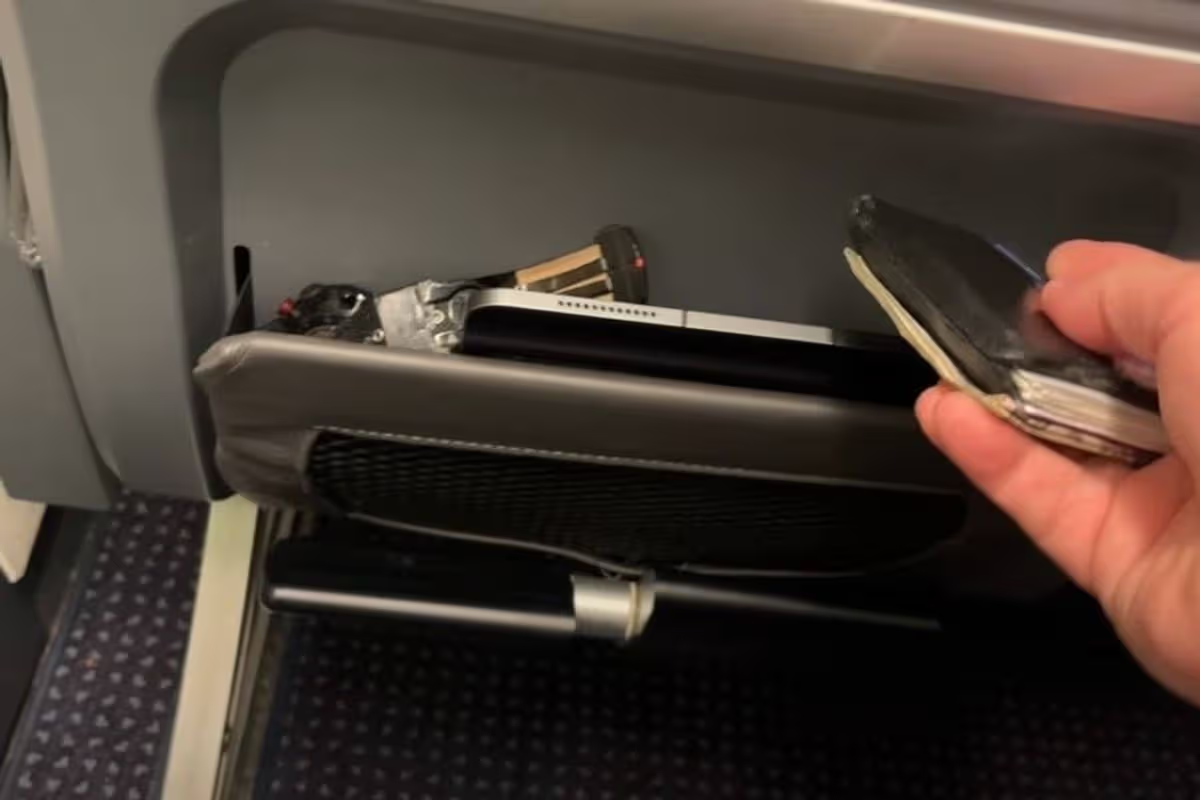
Captain Steve labelled the pocket the “black hole of despair” and cautioned people against placing anything valuable in it whilst they’re flying unless they “don’t ever want to see it again”.

He stated: “Stop putting personal items in the seat back pocket in front of you. If you want to lose it and never see it again, put it in that dark hole that is the seat back pocket in front of you.”

Captain Steve revealed he’d encountered numerous passengers who’d disembarked the aircraft but abandoned personal items in the seat pocket, and were subsequently unable to return to the flight to retrieve them.

He continued: “If the airplane is still at the gate, fingers crossed that somebody who cares can go out there and find the thing that you left in that seat back pocket.

“But the odds are diminishing with every minute that ticks by after you leave that seat and you leave it in that black hole of despair. So, my friends, do not put your personal items in that seat back pocket, unless of course, you don’t ever want to see it again.”

This comes as reports suggest budget airline passengers could soon experience a peculiar new way of flying – standing-only seats. The novel upright seats, allegedly designed for flights lasting under two hours, would allow passengers to lean rather than sit.

Initially unveiled by Italian company Aviointeriors back in 2018, the ‘Skyrider’ seats would enable airlines to “increase the passenger number by 20%”, resulting in “increased profits”, according to a company spokesperson.

They also maintained that the seats would provide an “increased upright passenger position” whilst ensuring “adequate comfort”. Nevertheless, one expert believes the seats could pose a challenge regarding “perception”.

Dr Akhil Bhardwaj, a former engineer and senior lecturer at the University of Bath’s School of Management, told the Express that such a development would demand “very strict oversight”.

Dr Bhardwaj stated: “The idea of a flying bus that packs passengers might seem appealing, but it might undermine the perception of how the industry thinks about safety. At the very least, such a move requires a very strict oversight and a very clear explanation to the flying public why this is safe.”

Source link