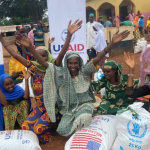

Cameroon is experiencing a severe shortage of HIV/AIDS test kits following a 74 per cent reduction in financial assistance from the United States Agency for International Development (USAID). The US agency funding in Cameroon has focused on health initiatives, including HIV/AIDS, malaria, and tuberculosis; humanitarian aid, such as food security and support for refugees, and governance. However, significant cuts to this funding in 2025 have adversely affected many health projects, forcing Cameroon to revise its budget.
The United States is the largest bilateral donor of humanitarian assistance in Cameroon, contributing over $650 million annually since 2014. This funding has provided emergency food assistance to more than 1.4 million people, delivered essential relief supplies, and promoted maternal and child health initiatives.
The Adamawa region of the country is facing a significant shortage of HIV/AIDS test kits, making it one of the hardest-hit areas. According to the Regional Technical Group for the fight against HIV/AIDS, the situation in the region is critical. Approximately 5.5 per cent of individuals living with the virus are unaware of their serological status, and 4 per cent of those infected have not yet started antiretroviral treatment.
Among those receiving effective treatment, 9.4% have not yet achieved the goal of suppressing the viral load, a necessary condition for slowing down the transmission of the virus. Recently, a sensitisation march took place in Ngaoundere, the regional capital of Adamawa. During this event, the Regional Technical Group for the fight against HIV-AIDS urged the community to remain vigilant. They also encouraged individuals living with HIV to consistently adhere to their medication regimen.
Despite a 74 per cent reduction in USAID funding, Cameroon continues to provide antiretroviral treatment to AIDS patients.
At the HIV-AIDS unit of the Protestant Hospital of Ngaoundere, which serves approximately 2,000 patients, access to testing, the critical first step, is currently very limited. This restriction complicates the identification of new cases and hinders referrals to available treatment options.
In 2024, Cameroon was estimated to have 480,232 people living with HIV, with approximately 10,000 new cases recorded that year. Although HIV remains a significant public health challenge, there has been encouraging progress, including a 50% reduction in HIV prevalence among individuals aged 15 to 64 over the past 14 years. According to the most recent Demographic Health Survey (DHS) conducted in 2018, the prevalence decreased from 5.4 per cent in 2004 to 4.3 per cent in 2011, and further down to 2.7 per cent in 2018.
Hamsatou Hadja, the permanent secretary of Cameroon’s National AIDS Control Committee, attributed the decline in HIV cases to a targeted strategy. “The fight against HIV is organised around a national vision aimed at eliminating AIDS as a public health threat by 2030. This involves reducing new infections, deaths, and the stigma associated with HIV,” Hamsatou said.
The country is on track to achieve the global “95-95-95” target, which aims for 95 per cent of people living with HIV to know their status, 95 per cent of those who know their status to be on treatment, and 95 per cent of those on antiretroviral therapy to have a suppressed viral load. According to the Committee, the rates in 2022 were 95.8 per cent, 92.3 per cent, and 89.2 per cent, respectively.
USAID funding cuts in 2025 have had widespread consequences across Africa, undermining health systems and humanitarian programs. Cameroon’s HIV/AIDS crisis is part of this broader trend, where reduced U.S. support has disrupted testing and treatment services.
Cameroon faces a severe shortage of HIV/AIDS test kits following a 74% funding reduction from USAID in 2025. USAID has been the largest bilateral donor in Cameroon, providing over $650 million annually and supporting health, humanitarian, and governance projects. The cut adversely affects HIV/AIDS testing and treatment, especially in the Adamawa region, where a significant portion of the population is unaware of their HIV status.
Progress has been made in reducing HIV prevalence, with a decrease from 5.4% in 2004 to 2.7% in 2018, and Cameroon is working towards the global “95-95-95” target for HIV. Despite funding cuts, the country continues to provide antiretroviral treatment, but the USAID cutbacks have generally disrupted health services. The National AIDS Control Committee attributes progress to targeted strategies and is committed to overcoming these challenges to eliminate AIDS by 2030.