A New Security Frontier
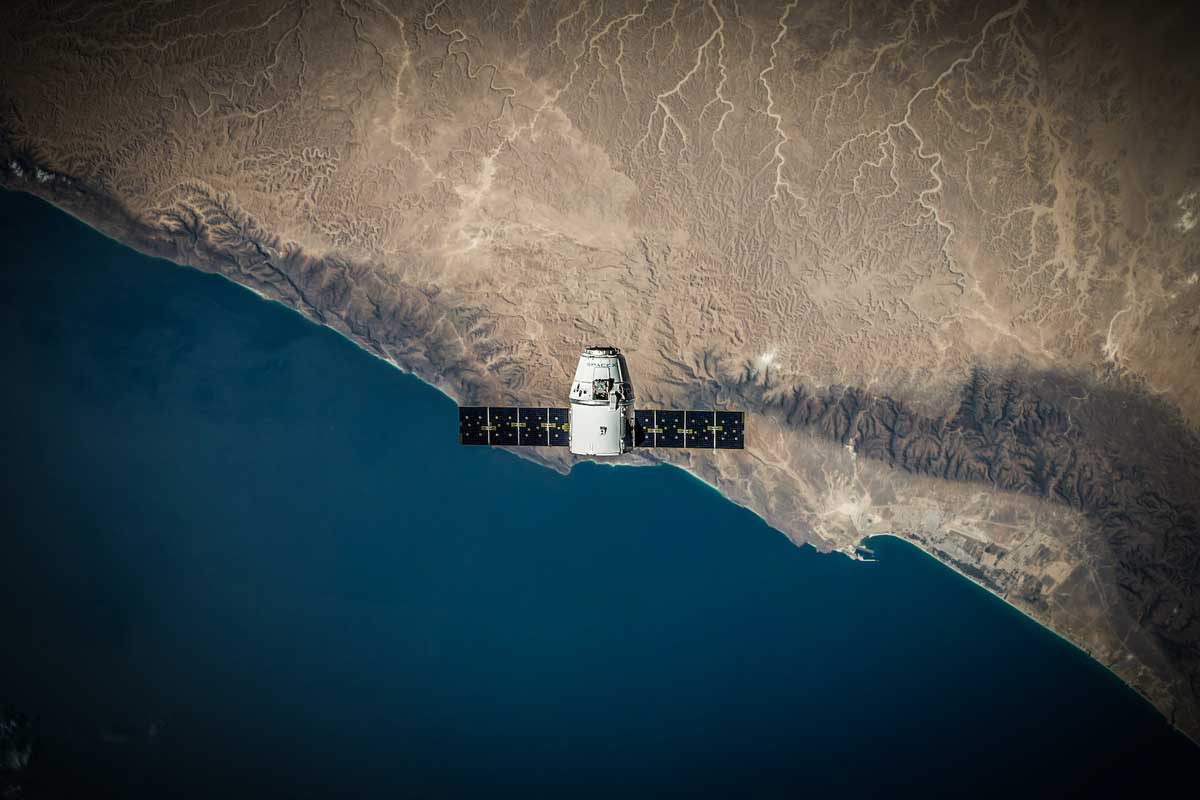
Outer space is becoming crowded at the same moment the world is growing more dependent on satellites. We rely on them for communication, navigation, weather forecasting, financial timing, and intelligence. As our reliance increases, the potential for mistakes decreases. A single malfunction or intentional act can have far-reaching consequences. When Russia conducted its anti-satellite test in 2021, the debris spread through low Earth orbit, forcing operators to reconsider the safety of their systems (2021 Russian direct-ascent ASAT test). The conflict in Ukraine demonstrated that commercial satellites can significantly impact the battlefield. And the joint security exercises between the United States and Japan in 2024 highlighted concerns about the vulnerability of their orbital infrastructure (U.S.-Japan 2024). Together, these developments indicate that anti-satellite weapons are no longer a distant concern; they have quietly emerged as a serious threat to global stability.
Why ASAT Weapons Matter More Than Ever
Modern militaries now treat satellites as the nervous system of their operations, but that reality only became obvious once the world saw it unfold in Ukraine. Drones, precision-guided weapons, and early-warning systems rely on information from satellites. In Ukraine, commercial imagery and satellite links kept Ukrainian units functioning even when ground networks failed (CETaS analysis of the Russia-Ukraine War). Civilians are also at risk, because in isolated areas satellites are the only way for communication. Forecasters depend on space-based sensors to track storms, financial systems rely on GPS timing to maintain stable markets, and airlines use satellite navigation for safe routing. When just one satellite goes down, the effects quickly spread into daily life, causing dropped calls, market delays, flight disruptions, and slower emergency responses (Why ASAT Matters).
The Emerging ASAT Arms Race
A new anti-satellite arms race is taking shape, and this competition is more unstable than the one that existed during the Cold War (The Emerging ASAT Arms Race). The United States is developing both missile-based and on-orbit systems. China has been pushing forward with programs that let its satellites slip close to other objects in space, a capability that raises obvious concerns about what those maneuvers are meant for (China expanding capabilities). Russia continues to test co-orbital technologies that alarm governments around the world. Other states are also entering the field (White House monitoring Russian space weapon). France is also moving in this direction through its EGIDE project, expected to be ready around 2030, which officials describe as a means to protect French satellites rather than threaten others. India has demonstrated new on-orbit maneuvering capabilities that suggest interest in more advanced rendezvous technologies. And a recent assessment from the Secure World Foundation illustrates just how widespread these abilities have become. Of twelve countries studied, only South Korea and the United Kingdom lacked the ability to interfere with satellites, a significant change from the more predictable past (Secure World Foundation global counterspace report).
The Core Risk: Debris and the Kessler Syndrome
The risks created by this competition are amplified by the state of Earth’s orbit. Bits of old rockets, dead satellites, and leftover fragments have piled up so quickly that space agencies can barely keep track, and the number of functioning satellites has exploded just as fast. As of October 2025, there are more than 13.000 active satellites, a 23% increase from the previous year and a dramatic rise from fewer than 2.000, 6 years ago. Mega constellations dominate the traffic. Starlink accounts for thousands of satellites, followed by China’s expanding fleets and Europe’s OneWeb network. Catalogued debris has also surged past 31,000 objects (Trade & Industry Development report about satellites). With orbit this crowded, one destructive anti-satellite strike could easily throw off thousands of sharp, fast-moving shards that drift unpredictably and smash into whatever lies in their path. What was once termed “Kessler Syndrome” now feels dangerously close, a disaster that could arise not from malice but from a single miscalculated move in orbit.
Strategic Instability in a Crowded Orbit
Regulation has not not evolved to match the risks. The Outer Space Treaty was created in 1967 during a time when no one envisioned satellites colliding in orbit or interfering with each other’s signals (The 1967 Outer Space Treaty). It was built for a far simpler space environment. It offers no meaningful way to verify what states are actually doing in orbit, and it sets no boundaries for how close one spacecraft can come to another. In this legal gray area, even minor uncertainties can create risks. A maneuvering satellite that appears to be approaching a rival’s asset could be interpreted as a hostile move. A jamming attempt could be mistaken for an attack. A test of an experimental spacecraft could be misread as preparation for conflict. And complicating matters even more is the rise of commercial players. Companies like SpaceX and OneWeb now run systems that governments depend on for everything from disaster response to military coordination (Maneuvering Commercial Satellites). Their increasing role blurs the line between private operations and national security, raising questions about responsibility when something goes wrong.
Case Studies: Recent Signals of Escalation
The early signs of an unfolding anti-satellite escalation are already visible, though they’re easy to miss amid other global crises. Russia’s destructive test in 2021 forced the International Space Station to take evasive action (Russia’s 2021 ASAT test). China’s Shijian satellites have carried out close proximity operations that appear capable of grappling or disabling other spacecraft (China’s Shijian satellites). In response, the United States and Japan have tightened their coordination, sharing surveillance intelligence and planning how to respond to any hostile moves in orbit (U.S.-Japan coordination). None of these events is isolated. Together, they revealed a clear pattern and a slow but undeniable increase.
What Happens if an ASAT Attack Occurs?
A strike on a satellite would not stay in orbit. Even a small attack would spark immediate diplomatic fallout, force militaries to reassess their readiness, and incite a frantic effort to determine whether the strike was a signal or the first step toward a more serious situation. The political instability would be matched by the physical fallout: debris from the impact could drift unpredictably, damaging other satellites and disrupting essential services. The worst-case scenario could lead to a partial or regional blackout of systems. In a more extreme case, substantial sections of the satellite network could fail simultaneously. A significant disruption of GPS alone could create confusion in flight paths and unsettle global financial systems. Communication channels might sputter, and the early-warning networks that governments depend on during periods of tension could fall silent at the worst possible moment. In short, an anti-satellite attack would be an attack on the infrastructure that allows the modern world to function (Law and Limitations of ASAT).
Toward a Framework for Space Stability
Preventing that future requires concrete action, not just comforting words. One of the clearest places to begin is with greater openness. A practical step is improved transparency. Countries can reduce the risk of miscalculation by announcing missile tests in advance, providing more detailed tracking information, and clarifying any unusual satellite movements. Another important move would be a halt to anti-satellite tests that create debris, since those explosions pose long-term risks to everyone using space (Space Strategic Stability).
The current Outer Space Treaty also needs an update. It was drafted for a world that no longer exists, and it offers no clear definitions of what constitutes threatening conduct or how states are supposed to verify one another’s actions. Updating these elements would transform the treaty from a symbolic document into one with real significance. And because a universal agreement will be hard to achieve in the short term, smaller groups of committed states can begin setting their own standards. If the United States, Japan, and the European Union work together, they can establish practical standards that enhance safety in orbit long before a comprehensive deal can be negotiated.
Conclusion: Preventing the Next Big Crisis
Space has become a vital part of modern life, even as the conditions that maintain its stability become more fragile. Since everything from communication and navigation to disaster response, global finance, and national defense depends on satellites, a single misstep or provocation in orbit could lead to consequences that no government is prepared to handle. What once seemed like a distant frontier has become a crowded zone of strategic competition, and the world faces a choice: set clear rules while there is still time, or struggle to contain the damage after a crisis occurs. The window for preventive action is closing, and once it closes, restoring stability will be much more costly.